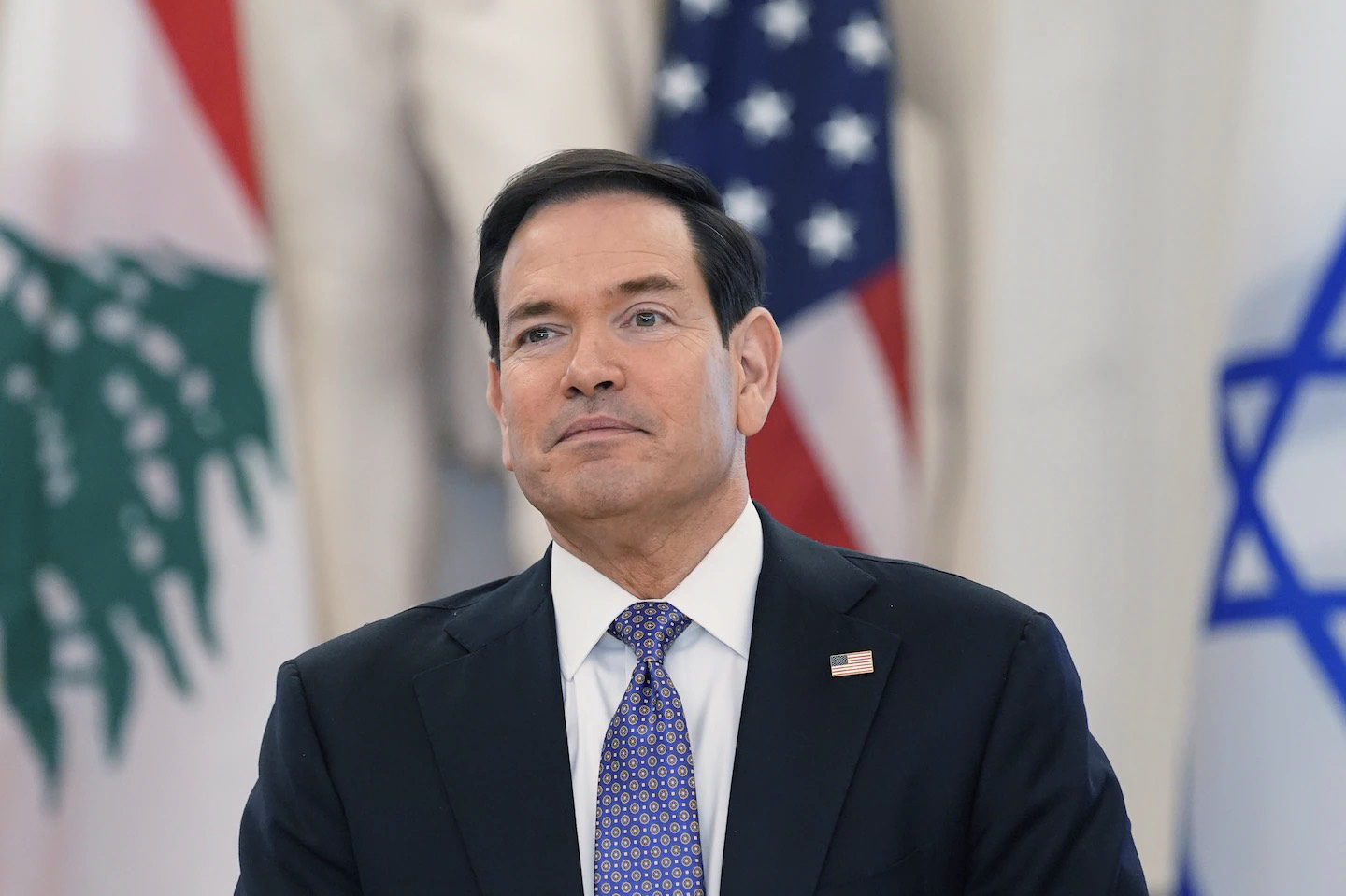
Secretary of State Marco Rubio smiles during a meeting at the State Department in Washington, Tuesday, April 14, 2026. (AP Photo/Jacquelyn Martin)
By Kareem Chehayeb and Abby Sewell
BEIRUT— Lebanon and Israel’s first direct talks in decades this week, spurred by the latest war between Israel and the Iran-backed Lebanese militant group Hezbollah, have been met by both high hopes and condemnation.
Officials have sought to temper expectations of what might come out of the negotiations, but the fact that they are happening at all represents a significant step.
The two countries have had a rocky and often hostile relationship since Israel’s inception in 1948. Like the majority of Arab countries, Lebanon has no formal diplomatic relations with Israel, and a 1955 law in Lebanon forbids Lebanese citizens from having any contact with Israelis – although the law is selectively enforced.
Here’s why they are talking now, what has come out of previous diplomatic efforts, and what might come out of this one.
What led to the current talks
On March 2, two days after the U.S. and Israel launched their war on Iran, Hezbollah entered the fray by firing missiles across the border. Israel responded with an intense bombing campaign and ground invasion.
Lebanon’s current government came to power in early 2025 on a reformist platform that included disarming non-state actors. Officials were angered by Hezbollah’s decision to enter a new war. The government moved to criminalize the group’s military activities, declared Iran’s ambassador persona non grata, and banned the Iranian Revolutionary Guard.
President Joseph Aoun offered direct negotiations with Israel – the first in decades – in exchange for a cessation of hostilities. Neither Israel nor the Americans responded. French President Emmanuel Macron backed Aoun, but even then, the calls fell on deaf ears.
That changed after the announcement of a truce between Iran and the United States and talks between the two brokered by Pakistan.
Tehran included as a condition for permanent ceasefire that the cessation of hostilities should include Lebanon. Though Pakistan said it was part of the agreement, Israel dismissed Lebanon’s inclusion in the ceasefire, and Washington later followed suit.
The Lebanese state, meanwhile, had reservations about Lebanon being a card in the Iranian negotiations and wanted to separate the war in Lebanon into its own diplomatic track
Hezbollah and its supporters said that, given Lebanon’s weak position, Beirut should rely on Tehran’s leverage and not directly negotiate with Israel while under fire. The group accused the government of offering “free concessions” to an enemy state.
After Israel launched over 100 airstrikes in Lebanon, including in some of the busiest areas in the heart of Beirut killing over 350 people, on April 8 Prime Minister Benjamin Netanyahu announced that he had agreed to direct talks with Lebanon.
What is expected to come out of the talks
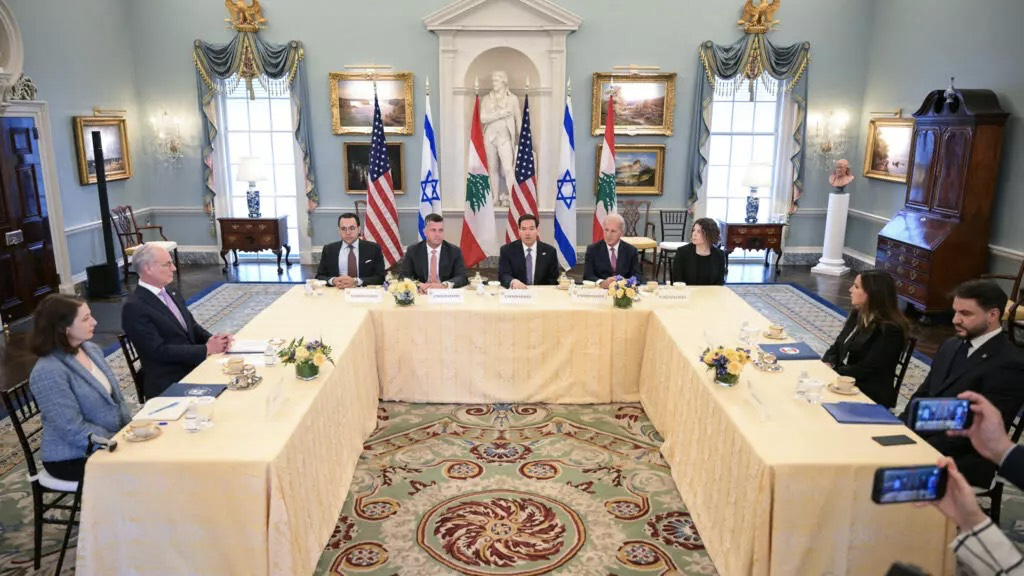
US Secretary of State Marco Rubio (C) speaks during a meeting with Lebanon’s Ambassador to the US Nada Hamadeh Moawad (2R) and Israeli Ambassador to the US Yechiel Leiter (2L) at the State Department in Washington, DC, on April 14, 2026. © AFP, Oliver Contreras
The direct negotiations kicked off Tuesday, when Lebanon and Israel’s ambassadors to the United States met in Washington in-person preparatory meeting.
The two countries are framing these talks very differently, and many in Lebanon fear that Beirut has little leverage.
Lebanon wants to follow the model of the talks in Pakistan, with a truce in place before beginning talks for a permanent ceasefire. Israel has said there will be no ceasefire, though it has halted its attacks in Beirut since last Wednesday, as per Washington’s request.
Apart from calling for a ceasefire, Lebanon wants the withdrawal of Israeli forces from southern Lebanon, the release of Lebanese prisoners held in Israel, the return of the displaced, and reconstruction. Lebanon has also pushed for boosting international funding for the military so it can deploy across the country and assume full-sovereignty over the country’s geography.
srael has framed these talks as peace talks largely focusing on disarming Hezbollah. Israeli Ambassador to the U.S. Yechiel Leiter hailed what he called a convergence of opinion about removing Hezbollah’s influence from Lebanon, saying he was encouraged by a “wonderful exchange.”
At Tuesday’s meeting in Washington – a preliminary session focused on logistics rather than substance – Lebanon and Israel’s ambassadors sat quietly face-to-face while Secretary of State Marco Rubio and other U.S. officials sat in between. The meeting ended with no ceasefire. The two sides said formal negotiations will proceed, without giving a date.
“This is a process, not an event,” Rubio said. “This is more than just one day. This will take time.”
Previous rounds of peace negotiations between the two countries have often gone nowhere or resulted in agreements that were never fully implemented or later revoked.
In 2022, following indirect negotiations mediated by the U.S., Israel and Lebanon agreed on delineation of their long-disputed maritime border as a precursor to moving toward a land border agreement. The agreement was touted at the time as decreasing the risk of armed conflict.
(AP)
