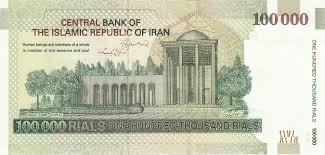
This 100, 000 Iranian rials banknote would have been worth about $1420 in 1978 before the Islamic Revolution , but today Iranians needed more than 30 of these banknotes to buy only one US dollar
Iran’s currency plunged to a record low on Sunday, past the psychological threshold of 3 million rials to the US dollar, amid rising inflation, hardening US sanctions and a widening embargo.
The US dollar was sold at around 3.04 million rials, up from 2.938 million on Friday
Iran is facing one of its worst inflation surges in decades, driven by the nine-month-old Iran war, with a particularly sharp rise in food prices.
The US reimposed its naval blockade on Iranian ports in July, and earlier this month announced Task Force Iron Gate to restrict the movement of weapons and sanctioned materials across Iran’s land borders and the Caspian Sea.
“Iran’s economy is underwater, and its leaders are panicking,” US Treasury Secretary Scott Bessent said in a statement earlier this week after imposing new sanctions aimed at isolating Iran from the global economy and disrupting its shadow banking networks.
Iranian Central Bank Governor Abdolnaser Hemmati said on Saturday that Iran had sufficient hard currency to pay for basic goods and medicine for months to come, but added that the foreign exchange market was affected not only by economic fundamentals but also by psychological factors.
“Foreign exchange is affected by many factors such as the economy, expectations and politics … We are trying to stabilise the market as much as we can,” Hemmati told state television.
Many Iranians seeking safe havens for their savings have been buying dollars, other hard currencies or gold.
Consumer prices in Iran in October were 88.7% higher than a year earlier, while annual average inflation accelerated to 76.8%, according to the Statistical Centre of Iran. Food and beverage prices rose 112.6% year-on-year.
Iran’s currency plunged to a record low in August, crossing the threshold of 2 million rials to the US dollar, while annual inflation reached 66% in July.
REUTERS
