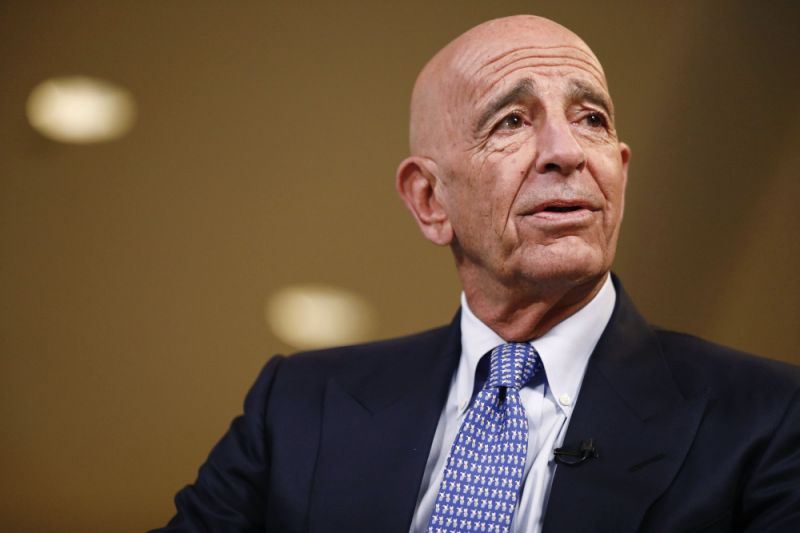
File photo of US envoy Tom Barrack
“Diplomacy demands accuracy, not reckless generalizations that compromise human lives.” “Tom Barrack’s comments and “lack of understanding” of the region have “brought a lot of damage to the whole Middle East”, experts say
Israeli Druze figures and regional experts condemn US envoy Tom Barrack’s accusations against Syria’s Druze, warning they risk fueling sectarian violence.
US envoy Tom Barrack’s claims that the area between Sweida and Daraa was “the captagon manufacturing operation of the world” and that a Druze sheikh was using perceived American and Israeli backing to “persecute other Druze” have drawn criticism from the Druze community, with some Israeli experts telling The Jerusalem Post on Sunday that the remarks had led them to question his suitability for the role.
Speaking in an interview with Lebanese-Australian podcaster Mario Nawfal on Friday, Barrack alleged that Druze in the area were living off the manufacture and sale of illicit drugs.
“It’s not Israel that worries me. It’s a particular Druze sheikh who utilizes the perception of Israeli backing of some alignment with America to persecute other Druze,” Barrack said.
Although Barrack did not name the sheikh, his comments have been widely interpreted in Arab media as referring to the highly respected Sheikh al Aql Hikmat al-Hijri, a spiritual leader of the Druze community who has called for International support and independence from the Syrian regime of Ahmed Al Sharaa .
Growing calls for Syrian Druze independence
Calls for independence among Syria’s Druze community have grown more frequent since Syrian President Ahmed al-Sharaa came to power in late 2024.
Hay’at Tahrir al-Sham, the formerly designated terrorist organization led by Sharaa, has a documented history of persecuting Druze, while the sectarian massacres in July 2025 and sporadic violence since have further fueled fears of Damascus’s Islamist government.
He founded al-Nusra Front in Syria, which operated as an official affiliate of al-Qaeda in the Syrian Civil War and fought against the Druze community in Syria
Al-Sharaa (formerly known by his nom de guerre Abu Mohammad al-Julani) officially cut ties with al-Qaeda in 2016 and joined ISIS. He then rebranded his group as Jabhat Fatah al-Sham, and later merged it to form Hay’at Tahrir al-Sham (HTS). He later focused on the domestic fight against Bashar al-Assad’s regime.
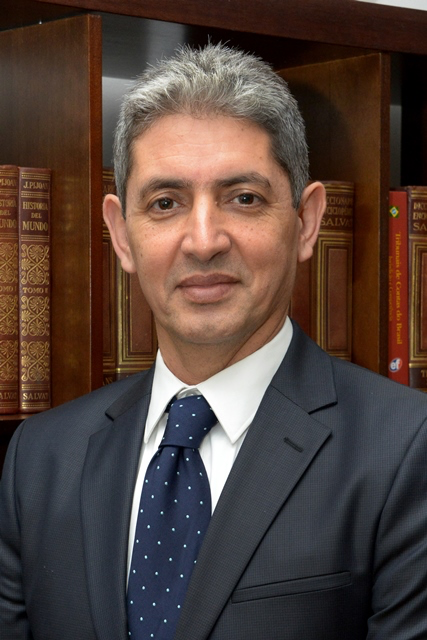
Dr. Reda Mansour , an Israeli Druze poet, historian and diplomat. At the age of 35 he was the youngest ambassador ever appointed in Israeli history. Mansour has a Ph.D. from the University of Haifa‘s Middle East History Department and a graduate of Harvard Kennedy School . He has published three books of Hebrew poetry and received the University of Haifa Miller Award
Against this backdrop, Israeli Druze diplomat and historian Dr. Reda Mansour criticized Barrack’s remarks in a post on X/Twitter, describing his attribution of the global Captagon trade to the Druze region and his criticism of its local leadership as “highly irresponsible” and untruthful.
“By baselessly criminalizing an entire ethnic minority, these statements put the vulnerable Druze community in southern Syria at direct risk of sectarian violence and targeted jihadi attacks. Painting a minority enclave as an illicit hub paints a dangerous target on their back for extremist networks,” Mansour wrote.
“Diplomacy demands accuracy, not reckless generalizations that compromise human lives. We stand in solidarity with the Druze community in Syria.”
Concerns rise amid ongoing violence against Druze community
Mansour’s concerns come amid continued violence against the community. More than 1,300 Druze were killed in the July 2025 massacres in Sweida and surrounding villages, according to UN figures, while subsequent outbreaks of sectarian violence have continued to see civilians abducted and killed.
Dr. Mordechai Kedar, a research fellow at the Begin-Sadat Center for Strategic Studies, told the Post that Barrack’s comments and “lack of understanding” of the region have “brought a lot of damage to the whole Middle East.”
Doubting Barrack’s knowledge of the issue of Sweida or the sectarian violence, Kedar said that he thought Barrack was relying on information provided to him and not the information on the ground or from the people affected by the violence.
Jonathan Hessen, a senior fellow at the Jerusalem Institute for Strategy and Security, added that Barrack’s remarks were not just “dismaying” because they showed a disregard for the safety and security of a community that has already been subjected to multiple massacres but because his statements were factually unfounded.
He noted that Barrack has a pattern of minimizing the suffering of those across the Middle East where the impact would disrupt his broader plans, referencing both Barrack’s comments last week, where he insisted that the Islamic regime of Iran was “not evil,” and past commentary on Syrian violence.
Jerusalem Post
