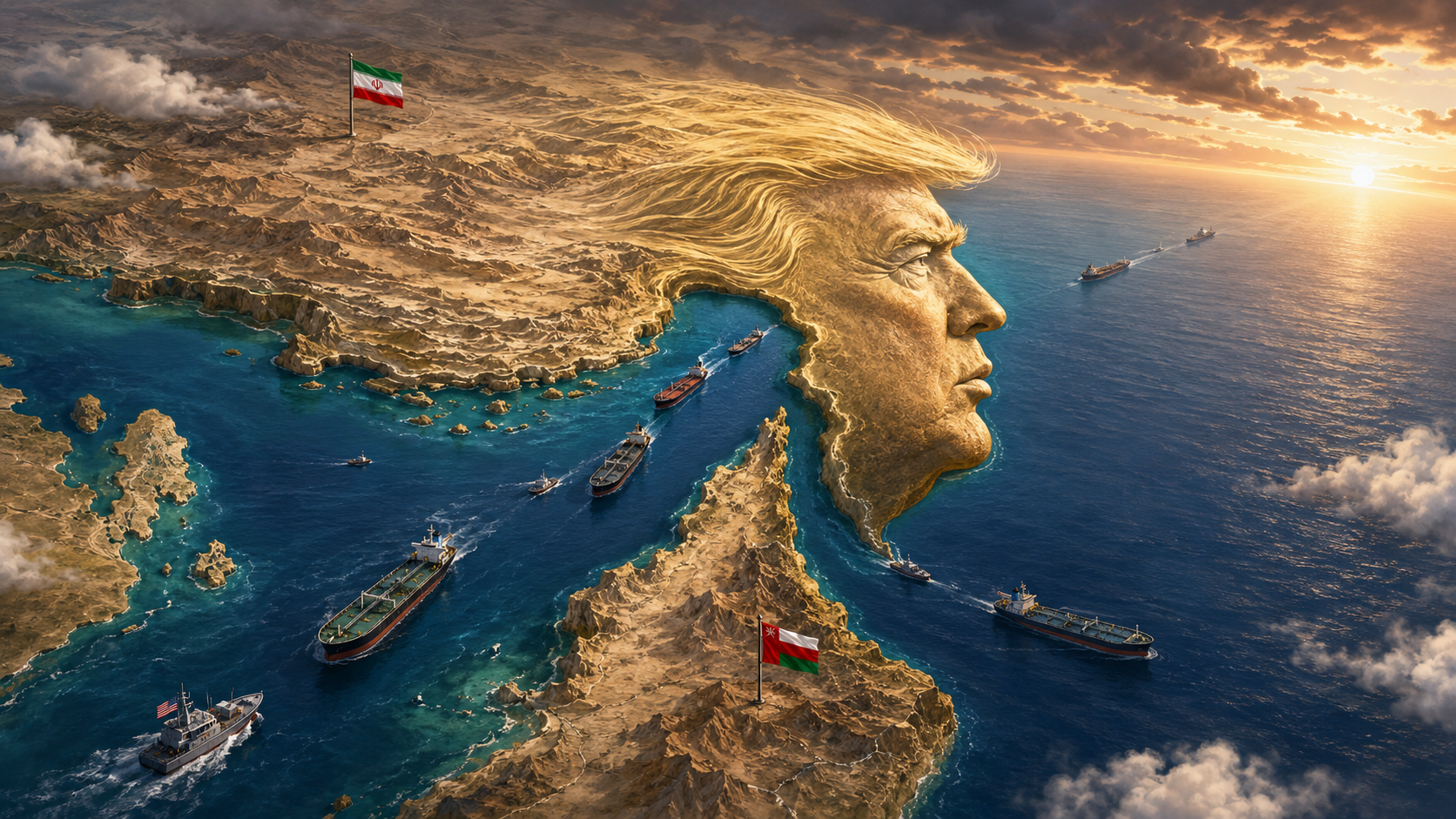
Photo illustration President Trump suggested renaming the Strait of Hormuz after himself but only after securing permanent freedom of navigation for all
President Trump rejected Iran’s seven-day proposal to reopen the Strait of Hormuz and enter a ceasefire and is considering renewed military strikes against the country after the midterm elections in November.
According to a report from the Wall Street Journal citing U.S. officials, the president is skeptical over Iran’s ability to honor its end of the deal and told officials that he is contemplating resuming military strikes.
Under the proposal, Iran would reopen the strait and resume negotiations over its nuclear program.
Tehran is seeking several concessions from the U.S. in return, including an end to the U.S. naval blockade of Iranian ports, waivers on sanctions targeting Iranian oil sales and a ceasefire that would extend to Lebanon, according to the Associated Press.
Trump publicly responded to the proposal Saturday morning, telling reporters at the White House, “Well I’m rejecting their deal.”
“They want to make a deal where they open the strait immediately because they’re losing so badly,” Trump continued. “You know you don’t read that, you don’t see that in the fake news.”
The president went on to tell reporters that Iran wants the ability to reopen the Strait of Hormuz “because they’re dying.”
“You know why they’re dying? Because they have no money coming in. Because they get their money from the Hormuz Strait,” he continued.
The president reiterated his demand that Tehran not obtain a nuclear weapon and put an end to its uranium enrichment efforts, posting “IRAN CAN NOT HAVE A NUCLEAR WEAPON!!!” on Truth Social Saturday.
Trump also posted an image Friday labeling the Strait of Hormuz, one of the world’s most important energy routes carrying roughly 20 percent of global oil supplies, the “Trump Strait.”
Iranian Foreign Minister Abbas Araghchi said Friday that the decision to reopen the Strait of Hormuz “now rests with the United States,” after Tehran offered a plan that it says could restore normal shipping through the critical waterway within a week.
“If the necessary conditions are met, the strait can be reopened, and normal maritime passage restored within seven days,” Araghchi told reporters on the sidelines of the United Nations General Assembly in New York. “The choice now rests with the United States.”
Araghchi said Iran conveyed a “concrete seven-day plan” to the U.S. through mediator Qatar following talks between the two countries this week.
“The seven-day timeline starts as soon as the United States accepts this plan,” he said. “If they accept this plan tomorrow, the seven days will start from tomorrow.”
Araghchi said the U.S. could carry out the steps required under the proposal within four or five days.
He argued that some were already included in commitments Washington made in a memorandum of understanding signed in June between the two countries that laid out plans for a temporary ceasefire, which later collapsed.
THE HILL
