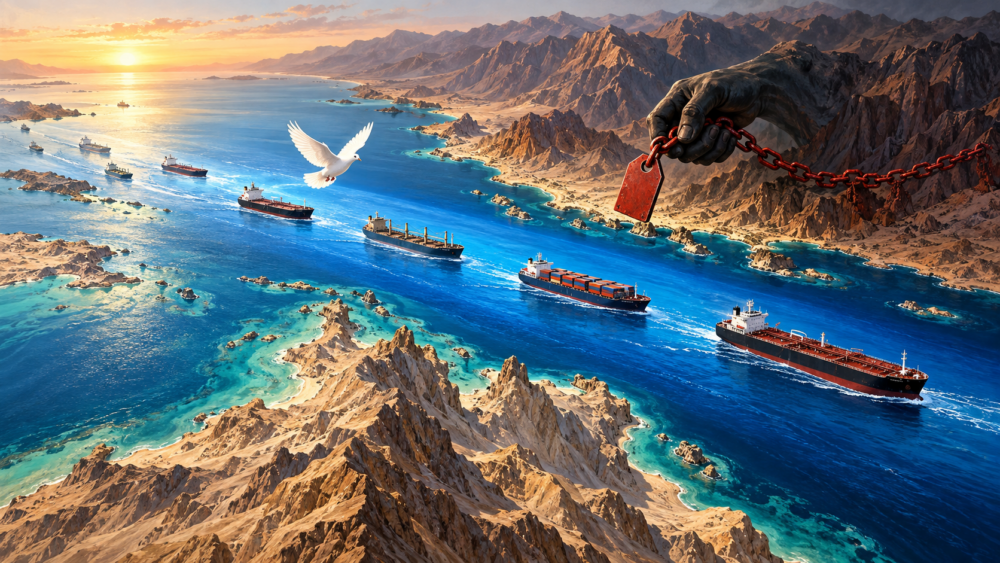
Phot illustration- The Strait of Hormuz belongs to international navigation. No country should be allowed to put a price on passage.
The Strait of Hormuz is an international passage, not a bargaining chip. Reopening it must never become the price of meeting Tehran’s demands.
By: Ya Libnan Editorial Board, Opinion
Iran has offered to reopen the Strait of Hormuz within a week if the United States eases military pressure and lifts its blockade of Iranian ports. At first glance, that might sound like an opening for diplomacy. Look more closely, and the danger becomes clear: Tehran is treating safe passage through an international waterway as a concession it can trade for political and military advantage. www.reuters.com
President Donald Trump is right to resist that bargain. Washington can and should pursue an end to the war. It can negotiate over sanctions, military operations, security guarantees and the terms of a durable peace. But it must not accept the premise that Iran may close Hormuz and then claim credit for opening it after its conditions are met.
The distinction matters. Iran has a coastline on the strait, as does Oman. Both have responsibilities for maritime safety. Neither owns the passage or has the right to turn it into a tollgate for its demands. The international rules governing straits used for navigation protect transit passage; states bordering those straits must not hamper it. The International Maritime Organization has likewise insisted that freedom of navigation be respected by all parties. www.un.org
Iran’s offer asks the world to pay for the restoration of a freedom it should never have been denied. That is why I call it maritime blackmail. A country cannot obstruct a vital route and then present removal of the obstruction as a generous compromise.
The consequences would reach far beyond the Gulf. If a powerful country accepts the idea that access to Hormuz can be withheld until demands are met, what lesson will other governments or armed groups draw? Bab el-Mandeb links the Red Sea to the Gulf of Aden. The Suez Canal connects the Red Sea to the Mediterranean. Other narrow passages sustain commerce across the globe. Each has its own legal and political circumstances, but the temptation to turn ships into hostages would spread.
This is more than a dispute over oil prices. Sailors face danger, Gulf states need to export their products, and families far from the Middle East pay more when supply routes are threatened. Civilian shipping should not be made a weapon in a conflict it did not choose.
None of this means the United States should refuse diplomacy. A ceasefire and a broader settlement are urgently needed. Negotiators could arrange simultaneous steps to reduce hostilities while making clear that safe transit is an obligation, not a favor purchased from Tehran. Any agreement should reject unilateral fees or political conditions on ordinary passage and provide a credible way to verify that ships can travel safely.
Some may argue that any formula reopening the strait is worth accepting because the immediate economic relief would be substantial. That relief matters. But an agreement that leaves Iran believing it can repeat the maneuver whenever it wants another concession would purchase a brief respite at the cost of lasting insecurity.
Trump should hold the line on this principle while keeping the door open to a serious peace agreement. Hormuz must be open because international navigation cannot be held hostage. The world must not teach Iran—or anyone else—that closing a chokepoint is a successful way to negotiate.
