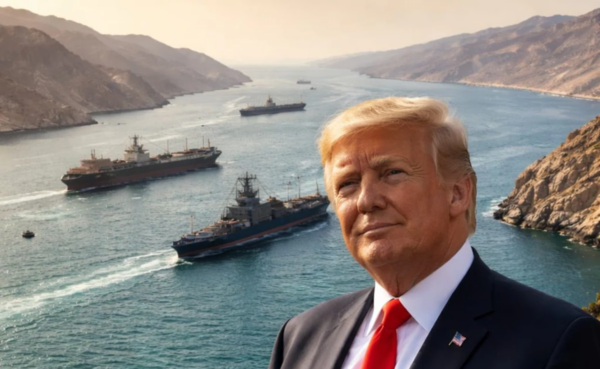
HERE IS THE LATEST:
- A U.K. navy agency said a second tanker was hit by a projectile in the Strait of Hormuz early Friday, hours after reporting another vessel coming under attack in the vital waterway. Iran claimed to have struck a ship attempting an “illegal crossing” of the strait.
- President Trump said Thursday he is poised to make a “big decision” on whether to launch a major assault to “annihilate” the Iranian regime. “It’s a big decision,” Mr. Trump told Axios ahead of a planned meeting with Persian Gulf leaders next week. “Anything could happen with me.”
- There are “reasonable grounds” to believe two U.S. strikes on Iran early in the war constitute war crimes, a U.N.-commissioned panel of human rights experts said Thursday.
Saudi Arabia launched 26 strikes in Yemen over 24 hours, Houthis say
Yemen’s Houthis said on Friday that Saudi Arabia had launched 26 strikes against areas under their control in the past 24 hours, as the pro-Iran group and Yemen’s Riyadh-backed government clash in the country’s revived civil war.
The number of Saudi strikes on its positions had reached 300 over the last week, saying they targeted areas across Houthi-held Yemen, the group said.
The fighting in the southwestern part of Yemen has increased in intensity over the last week as the Iran-backed Houthis pushed toward the coast of the Red Sea in a surprise campaign.
The Saudis have assisted the Yemeni government forces in trying to take back some of that ground. Saudi interests in Yemen are high as it takes millions of barrels of oil out through the Bab el-Mandeb Strait, the southern exit of the Red Sea.
Yemen’s Mokha gripped by fear after Houthi takeover
Life has ground to a halt for locals in the Yemen city of Mokha since Houthi fighters seized the strategic Red Sea port city last week, with shops closed, schools deserted and families confined to their homes.
“I haven’t gone out to work for a week. If I do go out, it’s only to go to the grocery shop out of necessity,” resident Mahmoud, 34, told AFP by phone.
The bus driver spoke on condition of anonymity for fear of reprisals by the Houthis, who took control of the southwestern city in a lightning offensive this month against the internationally recognized government’s forces.
Large numbers of civilians have fled the city, also spelled Mocha, which once played a key role in the coffee trade and gives its name to the eponymous drink.
Shops that used to stay open in the evenings now close much earlier, said Mahmoud.
“People are afraid. There is electricity, but at 8 p.m. the whole city is plunged into darkness,” he said.
U.S. blockade has now redirected 105 vessels, military says
The U.S. blockade on the Strait of Hormuz has now redirected 105 commercial vessels heading into or out of Iranian ports, according to U.S. Central Command.
The total is an increase of one ship in the past 24 hours.
It’s been learned that over 30 million barrels of Iranian, or likely Iranian, crude has been kept in the Persian Gulf by the U.S. blockade.
There’s another 60 million-plus barrels of Iranian oil valued at nearly $9 billion on sanctioned vessels outside the Gulf, avoiding the blockade. That oil is being unloaded, but at a much lesser pace than would be the case normally.
Nearly 3,000 people ( mostly women and children ) have fled Yemen for Djibouti
Thousands of people in Yemen are fleeing across the Bab el-Mandeb Strait to the African country of Djibouti as the war in the Middle East expands and the Iran-backed Houthi militia fights Saudi-backed Yemeni government forces.
Nearly 3,000 people, more than half women and children, have fled Yemen in less than a week amid intensified fighting between the two sides, according to the U.N. High Commissioner for Refugees. The report said thousands more people are waiting to cross the narrow waterway that has become the center of fighting.
“At reception centres in Djibouti, new arrivals recount fearing for their lives in Yemen having fled sudden bombardment, shelling and gunfire,” the UNHCR said in its press release. “Mothers quickly gathered their children and whatever they could carry before heading to the coast and boarding small boats.”
More than 100,000 people have already been internally displaced, according to UNICEF, and UNHCR said it was preparing for an additional 10,000 people to make their way to Djibouti.
Fighting between the Houthis and government forces restarted in recent weeks after breaking a truce that was signed in April 2022. The fight this time centered on the Houthis beginning to target Saudi oil tankers exiting the Red Sea through the Bab el-Mandeb Strait in solidarity with Iran’s blockade on the Strait of Hormuz.
Houthi forces quickly overran the army of the internationally recognized Yemeni government and took control of the coastal city of Mokha, which overlooks the strait, earlier this week.
Traffic in Bab el-Mandeb Strait lagging well behind prewar numbers
Saudi exports through the Bab el-Mandeb Strait continue to suffer, with weekly traffic since the start of August at under a third of this year’s seven-day average, data shows.
Traffic through Bab el-Mandeb has been disrupted following recent Houthi gains on the Red Sea coast, hitting Saudi exports particularly hard.
The Iran-backed group now controls the narrow Bab el-Mandeb Strait, a vital artery for Saudi oil exports, as the wider Middle East war also chokes off the Strait of Hormuz shipping route.
Data from maritime tracking firm Kpler shows just five laden vessels carrying Saudi products have left the Red Sea via the vital route in the past seven days.
The figure has not been higher since the week of July 24, when 11 vessels laden with Saudi products exited the Red Sea through the strait.
The Houthis say there is no threat to navigation in the Bab el-Mandeb Strait except for Saudi vessels, but any attacks in the waterway have the potential to make it less attractive to shippers.
Kpler data suggests commodity tanker traffic through the strait over the past seven days was lower than usual but had not stopped.
Israeli, Lebanese armies face off in village after Israel advances
Israel’s military moved forward on Friday in a south Lebanon village, facing off against a Lebanese army position after deploying tanks and detonating stun grenades, according to an AFP news agency photographer and other media in the area.
Israel has been occupying a swath of southern Lebanon since war broke out in March against Iranian-backed militant group Hezbollah. The Lebanese army is supposed to gradually take control of the area under a framework agreement between the two countries, moderated by the U.S.
Under the deal, Hezbollah is meant to disarm and Israel to withdraw from Lebanon, but progress has been slow, with Israel warning it will stay put as long as its foe remains a threat.
In the village of Deir Mimas on Friday, located on the edge of territory occupied by Israel, two Israeli tanks advanced along a road toward the settlement, the AFP photographer saw.
The tanks stopped in front of a barricade made from earth, beyond which Lebanese army vehicles were stationed.
“An Israeli force advanced on the outskirts of the village of Deir Mimas, up to a junction near a recently established Lebanese army position,” where they launched “six stun grenades in the surrounding area,” Lebanon’s state-run National News Agency reported.
According to the AFP photographer, the Lebanese army then withdrew by about 100 meters but remained in a position facing the Israeli tanks.
Iran War Updates: 2 ships attacked in Strait of Hormuz as Trump says next move could be to “annihilate” regime
By Frank Andrews
Updated on: September 18, 2026 / 3:00 PM EDT / CBS News
What to know about the Iran war today:
- A U.K. navy agency said a second tanker was hit by a projectile in the Strait of Hormuz early Friday, hours after reporting another vessel coming under attack in the vital waterway. Iran claimed to have struck a ship attempting an “illegal crossing” of the strait.
- President Trump said Thursday he is poised to make a “big decision” on whether to launch a major assault to “annihilate” the Iranian regime. “It’s a big decision,” Mr. Trump told Axios ahead of a planned meeting with Persian Gulf leaders next week. “Anything could happen with me.”
- There are “reasonable grounds” to believe two U.S. strikes on Iran early in the war constitute war crimes, a U.N.-commissioned panel of human rights experts said Thursday.
Saudi Arabia launched 26 strikes in Yemen over 24 hours, Houthis say
Yemen’s Houthis said on Friday that Saudi Arabia had launched 26 strikes against areas under their control in the past 24 hours, as the pro-Iran group and Yemen’s Riyadh-backed government clash in the country’s revived civil war.
The number of Saudi strikes on its positions had reached 300 over the last week, saying they targeted areas across Houthi-held Yemen, the group said.
The fighting in the southwestern part of Yemen has increased in intensity over the last week as the Iran-backed Houthis pushed toward the coast of the Red Sea in a surprise campaign.
The Saudis have assisted the Yemeni government forces in trying to take back some of that ground. Saudi interests in Yemen are high as it takes millions of barrels of oil out through the Bab el-Mandeb Strait, the southern exit of the Red Sea.
Yemen’s Mokha gripped by fear after Houthi takeover
Life has ground to a halt for locals in the Yemen city of Mokha since Houthi fighters seized the strategic Red Sea port city last week, with shops closed, schools deserted and families confined to their homes.
“I haven’t gone out to work for a week. If I do go out, it’s only to go to the grocery shop out of necessity,” resident Mahmoud, 34, told AFP by phone.
The bus driver spoke on condition of anonymity for fear of reprisals by the Houthis, who took control of the southwestern city in a lightning offensive this month against the internationally recognized government’s forces.
Large numbers of civilians have fled the city, also spelled Mocha, which once played a key role in the coffee trade and gives its name to the eponymous drink.
Shops that used to stay open in the evenings now close much earlier, said Mahmoud.
“People are afraid. There is electricity, but at 8 p.m. the whole city is plunged into darkness,” he said.
By AFP
U.S. blockade has now redirected 105 vessels, military says
The U.S. blockade on the Strait of Hormuz has now redirected 105 commercial vessels heading into or out of Iranian ports, according to U.S. Central Command.
The total is an increase of one ship in the past 24 hours.
It’s been learned that over 30 million barrels of Iranian, or likely Iranian, crude has been kept in the Persian Gulf by the U.S. blockade.
There’s another 60 million-plus barrels of Iranian oil valued at nearly $9 billion on sanctioned vessels outside the Gulf, avoiding the blockade. That oil is being unloaded, but at a much lesser pace than would be the case normally.
By Mark Osborne, Aaron Navarro
Nearly 3,000 people have fled Yemen for Djibouti this week, U.N. says
Thousands of people in Yemen are fleeing across the Bab el-Mandeb Strait to the African country of Djibouti as the war in the Middle East expands and the Iran-backed Houthi militia fights Saudi-backed Yemeni government forces.
Nearly 3,000 people, more than half women and children, have fled Yemen in less than a week amid intensified fighting between the two sides, according to the U.N. High Commissioner for Refugees. The report said thousands more people are waiting to cross the narrow waterway that has become the center of fighting.
“At reception centres in Djibouti, new arrivals recount fearing for their lives in Yemen having fled sudden bombardment, shelling and gunfire,” the UNHCR said in its press release. “Mothers quickly gathered their children and whatever they could carry before heading to the coast and boarding small boats.”
More than 100,000 people have already been internally displaced, according to UNICEF, and UNHCR said it was preparing for an additional 10,000 people to make their way to Djibouti.
Fighting between the Houthis and government forces restarted in recent weeks after breaking a truce that was signed in April 2022. The fight this time centered on the Houthis beginning to target Saudi oil tankers exiting the Red Sea through the Bab el-Mandeb Strait in solidarity with Iran’s blockade on the Strait of Hormuz.
Houthi forces quickly overran the army of the internationally recognized Yemeni government and took control of the coastal city of Mokha, which overlooks the strait, earlier this week.
By Mark Osborne
Traffic in Bab el-Mandeb Strait lagging well behind prewar numbers
Saudi exports through the Bab el-Mandeb Strait continue to suffer, with weekly traffic since the start of August at under a third of this year’s seven-day average, data shows.
Traffic through Bab el-Mandeb has been disrupted following recent Houthi gains on the Red Sea coast, hitting Saudi exports particularly hard.
The Iran-backed group now controls the narrow Bab el-Mandeb Strait, a vital artery for Saudi oil exports, as the wider Middle East war also chokes off the Strait of Hormuz shipping route.
Data from maritime tracking firm Kpler shows just five laden vessels carrying Saudi products have left the Red Sea via the vital route in the past seven days.
The figure has not been higher since the week of July 24, when 11 vessels laden with Saudi products exited the Red Sea through the strait.
The Houthis say there is no threat to navigation in the Bab el-Mandeb Strait except for Saudi vessels, but any attacks in the waterway have the potential to make it less attractive to shippers.
Kpler data suggests commodity tanker traffic through the strait over the past seven days was lower than usual but had not stopped.
By AFP
Israeli, Lebanese armies face off in village after Israel advances
Israel’s military moved forward on Friday in a south Lebanon village, facing off against a Lebanese army position after deploying tanks and detonating stun grenades, according to an AFP news agency photographer and other media in the area.
Israel has been occupying a swath of southern Lebanon since war broke out in March against Iranian-backed militant group Hezbollah. The Lebanese army is supposed to gradually take control of the area under a framework agreement between the two countries, moderated by the U.S.
Under the deal, Hezbollah is meant to disarm and Israel to withdraw from Lebanon, but progress has been slow, with Israel warning it will stay put as long as its foe remains a threat.
In the village of Deir Mimas on Friday, located on the edge of territory occupied by Israel, two Israeli tanks advanced along a road toward the settlement, the AFP photographer saw.
The tanks stopped in front of a barricade made from earth, beyond which Lebanese army vehicles were stationed.
“An Israeli force advanced on the outskirts of the village of Deir Mimas, up to a junction near a recently established Lebanese army position,” where they launched “six stun grenades in the surrounding area,” Lebanon’s state-run National News Agency reported.
According to the AFP photographer, the Lebanese army then withdrew by about 100 meters but remained in a position facing the Israeli tanks.
AFP/CBS
France will convene G7 energy summit, Macron says, as fuel prices soar
President Emmanuel Macron said Friday that France would convene a G7 meeting dedicated to energy in the weeks ahead as fuel prices soar amid the U.S.-Iran war.
“In the coming weeks, we will have a G7 meeting devoted to these energy issues, both to strengthen cooperation and to avoid unnecessary tensions between the G7 countries and our main partners,” Macron said. “It will also be an opportunity to consider options for a possible release or unlocking of strategic reserves.”
Oil prices have fallen several percentage points this week on hopes that Saudi Arabia was moving to restore about half of crude shipments within days after they were disrupted by drone strikes on its East-West pipeline to the Red Sea.
But international benchmark Brent crude continued to hover around $104 a barrel on Friday, up from $88 exactly three weeks ago.
Democratic senator urges Trump to press Xi Jinping on report Iran used Chinese satellite info
Democratic Sen. Elissa Slotkin is urging President Trump to press Chinese President Xi Jinping on evidence that the Iranians used satellite images from Chinese entities to carry out the July attack on a military base in Jordan that killed three U.S. service members and wounded four others.
In a letter sent to the president on Friday and obtained by CBS News, the Michigan senator urged the president to make that issue “a centerpiece of your talks with President Xi” during his White House visit next week.
Mr. Trump has spoken deferentially of Xi during the war with Iran, in spite of questions that have arisen about possible Chinese assistance to Tehran. Last week, The Wall Street Journal, citing U.S. officials, reported Tehran had acquired images of the base from the Chinese.
Israel to seek compensation from the U.S. after Saudi F-35 deal
Israel will seek additional weapons and weapons systems from the United States following Washington’s decision to sell 48 F-35 fighter jets to Saudi Arabia, according to Israeli news site Walla.
An Israeli official told the outlet that Israel will seek weapons not previously approved for sale, including bunker-busting missiles.
Despite the Saudi deal, Israeli officials said Israel would retain a clear operational advantage over the Middle East’s skies. The Saudi deal will cost them $24.3 billion, according to the U.S. State Department.
Walla reported the Israeli army would prefer no other Middle Eastern country to acquire the stealth fighter, while noting that Saudi Arabia would not receive its first aircraft for at least five years if the deal is signed soon.
EU’s condemns Houthi attacks on Saudi Arabia as “unacceptable”
The European Union’s top diplomat condemned Houthi attacks on Saudi Arabia as “unacceptable” Friday.
In a post on X, Kaja Kallas, the EU’s High Representative for Foreign Affairs, wrote, “Houthi attacks on Saudi Arabia are unacceptable and sabotage the global economy.”
She added that passage through the Strait of Hormuz “must be unimpeded and toll-free.”
“Europe is helping protect shipping in the Red Sea from Houthi attacks,” Kallas wrote but did not elaborate
Her comments come after weeks of turmoil in Yemen, especially along the western Red Sea coast, where the Iranian-backed Houthis have taken key strategic territory from the Saudi-backed Yemeni government.
The Saudis accused Houthi forces of targeting the holy city of Mecca on Wednesday, which the group swiftly denied.
Saudi Arabia’s Aramco won’t supply oil to European buyers next month: Report
Saudi Arabia’s state oil company, Aramco, has told at least two oil refining customers in Europe they won’t sell them any crude oil next month, Bloomberg reported Friday.
Customers in Europe normally receive Aramco crude on what are known as contracts, but were informed there would be no supply coming in October after a key Saudi pipeline to the Red Sea was attacked last week.
The decision applies to all European customers, the sources told Bloomberg.
The kingdom paused the flow of crude oil through its East-West pipeline last week after it was struck by attack drones reportedly by the Iran backed Shiite militias in Iraq. The pipeline, which allows Saudi oil to avoid the Strait of Hormuz, remains offline though U.S. Energy Secretary Chris Wright said this week it would be reopened “relatively soon.”
The Economic Times reported Friday that Saudi Arabia will also not send crude oil to India until further notice because of the attack.
Pakistan keeps promising to defend Saudi Arabia
Pakistan will go “to any extent” to defend Saudi Arabia against attack, military spokesman Lt. Gen. Ahmed Sharif Chaudhry said on Thursday, as Houthi attacks put pressure on new collective defense arrangements between the two countries.
“Pakistan fully stands with the Kingdom of Saudi Arabia, both diplomatically and physically,” Chaudhry told Saudi state-backed Arab News. “We will go to any extent.”
But according to analysts Pakistan has been making the same promises for the past 10 days but never delivering on them , neither has Türkiye
Only weeks after Saudi Arabia, Pakistan and Türkiye signed their celebrated Joint Defence Agreement in Mecca, the pact has already encountered the very test it was supposedly created to meet.
He claimed that Pakistan’s commitment included protecting Saudi Arabia and Islam’s two holiest sites in Mecca and Medina, adding, “We are there and we will continue to defend Kingdom of Saudi Arabia against any aggression.”
Chaudhry also described Pakistan’s commitment to Saudi security as “unconditional.”
Trump says he has a “big decision coming up” on whether to “annihilate” Iran’s ruling regime
President Trump said Thursday that he is poised to make a “big decision” on whether to “annihilate” the Iranian regime.
“I have a big decision coming up,” Mr. Trump told Axios. “Do I want to go in and annihilate them or do I not? It’s a big decision. Anything could happen with me.”
His comments came ahead of a planned meeting between Mr. Trump and Persian Gulf leaders expected to take place next week on the sidelines of the U.N. General Assembly.
“I want to find out where they are and how they are doing. We have been very protective of them,” Mr. Trump said of the Gulf states, many of which host American military forces and were targeted by Iran in retaliation for the war launched jointly by the U.S. and Israel at the end of February.
Asked whether he would meet with Israeli Prime Minister Benjamin Netanyahu next week, too, Mr. Trump said, “I may.”
U.S. to sell 48 F-35 Lightning fighter jets to Saudi Arabia
Saudi Arabia will be getting a major upgrade to its air force with the purchase of 48 F-35 Lightning II Joint Strike Fighter aircraft from the United States, according to the U.S. State Department.
The jets will cost the Saudis about $24.3 billion, according to the State Department. The fighter jets are built by Lockheed Martin. The planes are in common use by many U.S. allies, including the U.K., Italy, Netherlands, Australia, Canada and more.
The jets will be of the F-35A variety, which means a conventional takeoff as opposed to the F-35B, which can take off vertically.
“The proposed sale will improve Saudi Arabia’s capability to deter current and future threats by strengthening its homeland defense, and improving interoperability with U.S. forces, and other regional and NATO forces,” the State Department said.
The F-35 Lightning II is one of the most common stealth fighters in the U.S. arsenal, with hundreds being used across the Air Force, Marines and Navy. There was a record 191 F-35 fighters delivered to the U.S. in 2025, according to Lockheed Martin.
CBS
