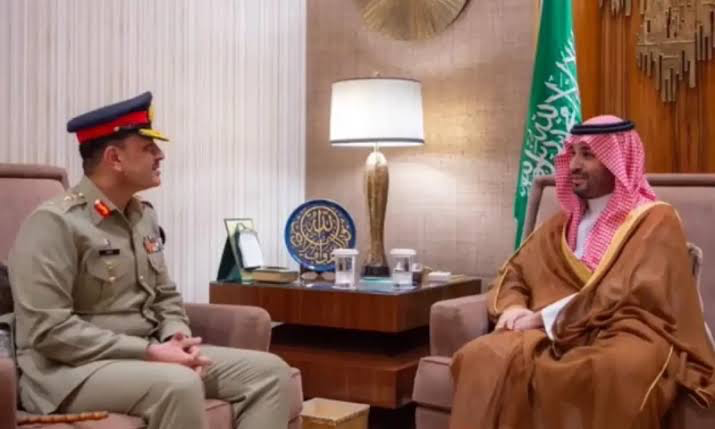
File -Asim Munir , Pakistani army chief and MBS
Pakistan appears to have softened its warning to the Houthis just 24 hours after taking a much tougher line. Following Houthi attacks on Saudi cities and energy infrastructure, Islamabad said on September 10 that no military response was currently under discussion.
Foreign Ministry spokesperson Sajjad Haider Khan told Reuters that Pakistan would act under its defence agreement “when time comes.” The clarification raises an awkward question for the new Saudi-Turkey-Pakistan mutual-defence arrangement: with MBS under attack, is Islamabad already hesitating to confront the Houthis and risk upsetting its delicate relationship with Iran?
Following Iran-backed Houthi drone and missile strikes targeting Saudi cities and energy infrastructure, questions arose about whether Islamabad, Riyadh, and Ankara would trigger the pact’s collective defense clause. The Mecca Joint Defense Agreement—signed in August 2026 by Saudi Arabia, Turkey, and Pakistan—stipulates that an armed attack on one member is considered an attack on all
Pakistani Prime Minister Shehbaz Sharif strongly condemned the assaults on social media, but Islamabad did not deploy military forces or announce active defense operations despite they fact that they have thousands of troops stationed in Sadi Arabia
Pakistan’s Foreign Ministry spokesperson stated that while the Mecca Agreement remains a valid defensive alliance focused on deterrence, “there is no such thing under discussion right now” regarding a joint military retaliation, adding that Islamabad “will act under the agreement when the time comes.
