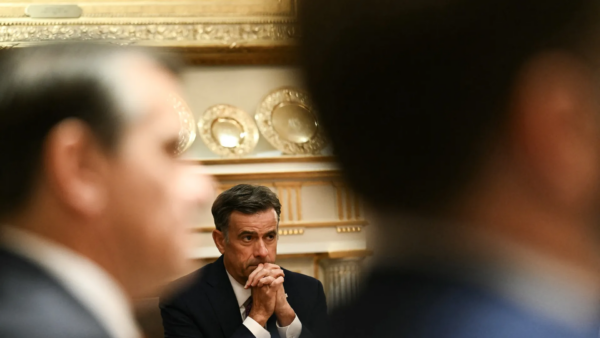
Photo- CIA Director John Ratcliffe at a cabinet meeting in May. Photo: Kent Nishimura/AFP via Getty
CIA Director John Ratcliffe told President Trump and other senior officials that intelligence gathered by U.S. intelligence agencies raised serious doubts about Iran’s willingness to make the nuclear concessions the U.S. is seeking in any final deal, according to three sources familiar with those discussions.
Ratcliffe isn’t the only skeptic in Trump’s top team. Secretary of State Marco Rubio and Secretary of Defense Pete Hegseth have both expressed concerns and raised questions about the deal in internal discussions, while Vice President Vance and U.S. envoys Steve Witkoff and Jared Kushner advocated for it, according to two of the sources.
There were a series of high-level meetings about the deal between Trump and his advisers in the lead-up to Sunday’s announcement.
- During those meetings, Trump and his team discussed intelligence gathered by several U.S. intelligence agencies which showed that the way Iranian officials were discussing the deal among themselves was inconsistent with what they were telling the mediators and the U.S., two sources said.
- Ratcliffe and Rubio said that based on that intelligence, they doubted the Iranians would agree to take the nuclear steps the U.S. was seeking, according to two sources.
- “The intelligence reflects that the Iranian intentions are not in line with their commitments under the deal,” the source said.
- “President Trump listens to all opinions on any given issue — but everyone understands he is the final decision-maker,” a White House official said in response to questions for this story.
- “This MOU meets all of the redlines that the administration has long articulated by ensuring that Iran can never possess a nuclear weapon, they cannot keep their highly enriched uranium, and they cannot hold the world’s energy supply hostage,” the official said, adding that Trump would only agree to a “good” final agreement.
- The CIA and State Department declined to comment. The Pentagon did not respond.
- Zoom out: The nuclear elements of the memorandum of understanding that was signed on Sunday are dependent on the parties reaching a more detailed nuclear deal over the next 60 days.
- Vance, Witkoff and Kushner are expected to meet on Friday with Iranian Parliamentary Speaker Mohammad-Bagher Ghalibaf and Foreign Minister Abbas Araghchi, along with Pakistani and Qatari mediators, to discuss that next phase.
- The full text of the 14-point initial deal has yet to be published, but a source familiar with the text contended that the Iranians will get more than they give under the MOU — unless they agree to sign a nuclear deal that meets the U.S. objectives.
- The big picture: The deal is designed to extend the ceasefire and launch 60 days of negotiations, which can be extended by mutual consent.
- In the context of those talks, Iran reiterates its past commitment to never acquire or procure a nuclear weapon.
- The source said the MOU says the U.S. and Iran commit to “resolve the disposition of stockpiled enriched material” and “discuss the issue of future enrichment and other mutually agreed matters related to Iran’s nuclear needs based on a satisfactory framework being agreed upon in the final deal.”
- The text says Iran will maintain the status quo of its nuclear program so long as negotiations continue. For its part, the U.S. won’t impose new sanctions or deploy additional forces to the region.
- If a final nuclear deal is reached, the U.S. will remove the forces it mobilized for the war within 30 days and terminate all sanctions against Iran under an agreed-upon schedule, according to the source’s description of the text.
- Breaking it down: Internal skeptics of the deal contend that Iran is unlikely to sign a nuclear deal on the U.S. terms, and in the meantime will benefit more than the U.S. from the MOU.
- However, two senior U.S. officials contended in a briefing with reporters on Monday that the benefits for Iran all depend on taking meaningful steps.
- Axios
