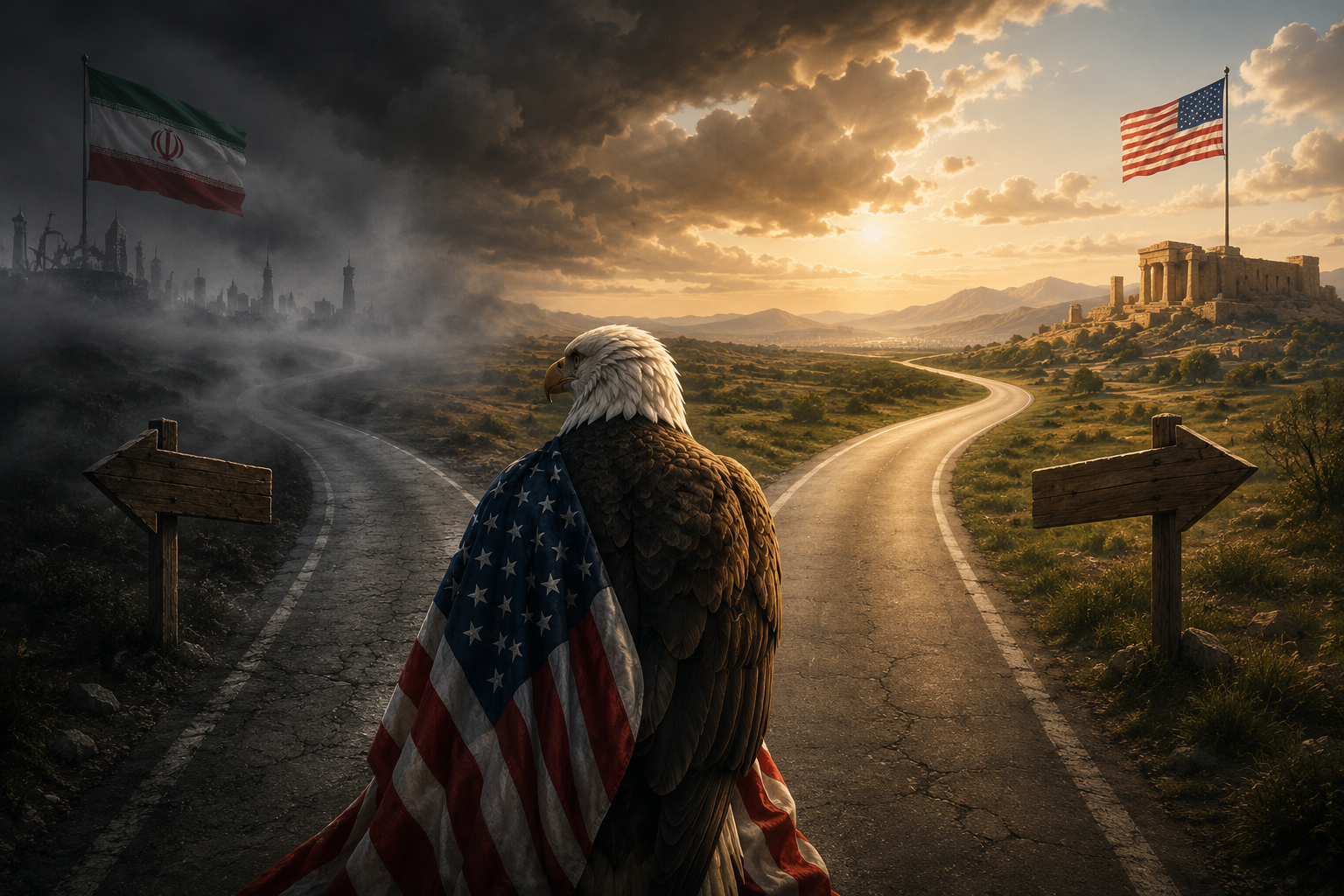
Illustration- When the path ahead is uncertain, wisdom lies not in moving faster—but in choosing carefully
When America’s own intelligence leaders have serious reservations, caution is not weakness—it is common sense
By : The Editorial Board, Opinion
President Trump deserves credit for wanting to end a war rather than prolong it. Wars are costly, unpredictable, and often produce consequences far beyond what their architects intended. But ending a war and signing a good agreement are not the same thing.
According to recent reports, CIA Director John Ratcliffe, Secretary of State Marco Rubio, and Defense Secretary Pete Hegseth have all expressed concerns about whether Iran is prepared to make the nuclear concessions the United States seeks. Their concerns are reportedly based on intelligence assessments and direct discussions within the administration.
If America’s top intelligence and national security officials have serious doubts, that should give everyone pause.
This is not a question of whether Iran can be trusted. International agreements are not built on trust. They are built on interests, leverage, verification, and results.
The more important question is whether the reported memorandum of understanding serves American interests and whether it advances the objective that was used to justify the war in the first place.
From what has been reported so far, the answer is far from clear.
The nuclear issue—the central issue—is apparently deferred for another sixty days. Yet Iran appears positioned to gain significant benefits immediately. Reports suggest there could be a path toward sanctions relief, the release of frozen Iranian assets, and the eventual withdrawal of U.S. forces mobilized during the conflict.
At the same time, Iran’s leadership remains in power. Its military remains intact. Its missile capabilities remain intact. And the nuclear concessions Washington seeks have yet to be secured.
That raises a simple question:
What exactly is the United States receiving in return?
The purpose of diplomacy is not merely to sign documents. The purpose of diplomacy is to solve problems. If the problem that led to war remains unresolved, then any agreement that rewards one side before the central issue is settled deserves careful scrutiny.
The concerns do not stop there.
Iranian officials have publicly discussed imposing fees on international shipping through the Strait of Hormuz once the sixty-day period expires. Iranian Foreign Minister Abbas Araqchi has reportedly stated that Iran will charge for the use of Hormuz and declared that “the sword of Iran” will always remain above the strategic waterway.
Iranian media have also claimed that portions of Iran’s frozen assets could be released, while President Trump has suggested that some of those funds should instead be used to compensate Gulf states that suffered damages from Iranian attacks.
The fact that both sides are already presenting different interpretations of key elements of the agreement should itself be a warning sign.
Good agreements leave little room for confusion. Bad agreements begin with confusion and end with disputes.
President Trump may have wanted to conclude this process before his birthday and before attending the G7 summit. That is understandable. Every leader wants to demonstrate progress. But diplomatic timetables should never be dictated by political calendars.
If America’s own intelligence agencies are raising doubts, if key provisions remain disputed, if the nuclear question remains unresolved, and if Iran appears positioned to receive substantial benefits before delivering concrete concessions, then caution is not weakness.
It is common sense.
The old rule of business applies equally to diplomacy: when the facts are uncertain, do not rush to sign. Verify first. Negotiate harder if necessary. Walk away if required.
A bad agreement can do more damage than no agreement at all.
If there is genuine doubt about whether Iran will deliver what the United States seeks, then the answer is simple:
The United States should not sign.
