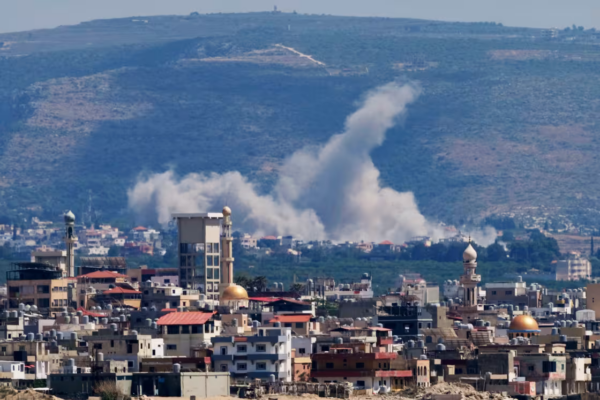
Smoke rises from an Israeli airstrike Tuesday that hit Qlaileh village, as seen from the southern port city of Tyre, Lebanon.Mohammed Zaatari / AP
President Donald Trump said “all shooting will stop” in Lebanon and that talks with Tehran were ongoing. Iran had signaled it could pull out of peace negotiations over Israel’s intensifying assault.
The Israeli military launched deadly new strikes in Lebanon on Tuesday after accusing Hezbollah of launching attacks overnight, despite President Donald Trump saying both sides had agreed to de-escalate after Iran threatened to pull out of peace talks.
Trump said Monday night that he had spoken with both sides and that they agreed “all shooting will stop” after Tehran signaled that Israel’s intensifying military operations in Lebanon could derail efforts to end the U.S.-Israeli war with Iran and reopen the Strait of Hormuz. Talks with Tehran were ongoing, Trump said.
The Lebanese Embassy in Washington said Hezbollah had accepted the terms of a U.S. proposal for a “mutual cessation of attacks,” which would also block Israel from attacking Beirut. Its threat to do so had sparked panic in the Lebanese capital, after the U.S. ally’s deepest incursion into its neighbor in 26 years.
Separately, U.S. Central Command said Tuesday that the U.S. military had disabled a Botswana-flagged tanker as it headed toward Kharg Island, Iran’s main oil terminal. The attack places additional pressure on a shaky ceasefire between the U.S. and Iran.
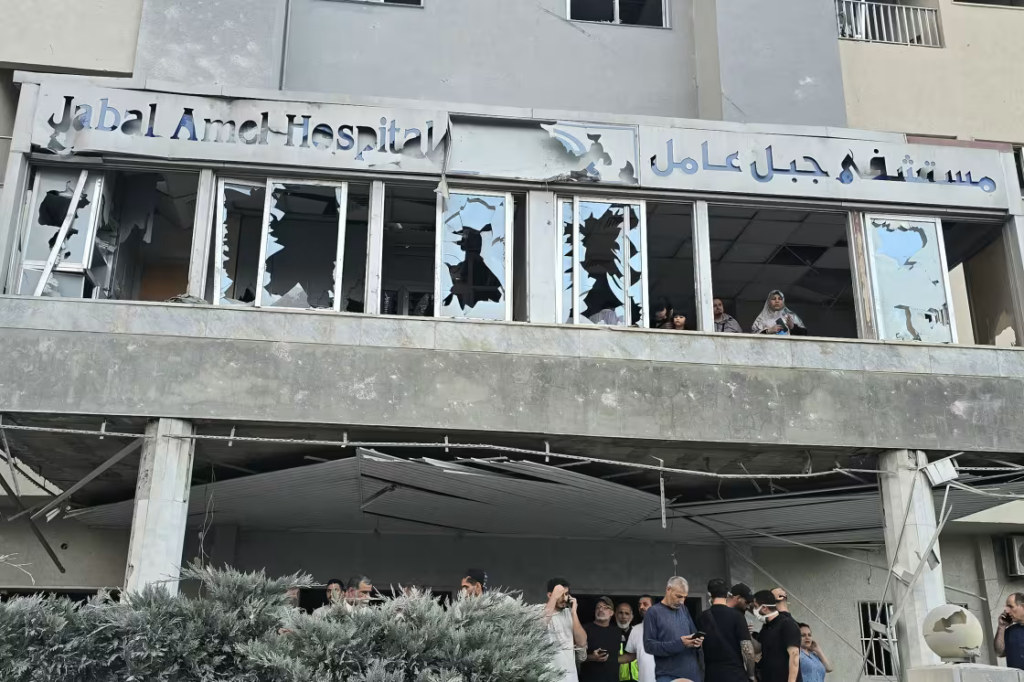
A hospital damaged by an Israeli strike that hit nearby, in the southern Lebanese city of Tyre on Monday.Kawnat Haju / AFP via Getty Images
“The ship’s crew ignored repeated warnings, failing to comply with directions from U.S. forces multiple times over a 24-hour period,” CENTCOM said in a post on X. “A U.S. aircraft ultimately disabled the vessel by firing a Hellfire missile into the ship’s engine room, preventing the tanker from reaching Iran.”
The post also noted that the U.S. military has “disabled six commercial vessels and redirected 122” since a blockade against Iran’s ports was started on April 13.
Despite the claims of a renewed ceasefire in Lebanon, clashes continued Tuesday morning.
Israel continued to launch its own strikes on Lebanon, with the Lebanese Civil Defense saying on its Facebook page Tuesday that six people had been killed in an Israeli strike Monday night in the village of Marwaniyeh in southern Lebanon. It was not clear exactly when that strike was launched.
The agency said Tuesday that one of its centers, in Nabatieh in southern Lebanon, had been subject to “direct targeting as a result of a hostile Israeli airstrike.” It said the building was damaged, along with equipment inside.
The Lebanese army later reported that two soldiers had been wounded as a result of being targeted by an Israeli hostile drone in Nabatieh.
The Israeli military told NBC News that it had launched at least one strike in Nabatieh, but said it was targeting what it described as Hezbollah infrastructure.
It said earlier that it had intercepted at least two projectiles overnight that had crossed from Lebanon into Israeli territory, with no injuries reported. Hours later, it said sirens had sounded in northern Israel and that it had identified a “suspicious aerial target” in an area where Israeli soldiers were operating in southern Lebanon.
Trump said on his Truth Social platform Monday that he had a “very productive” call with Israeli Prime Minister Benjamin Netanyahu — and that there would be “no Troops going to Beirut, and any Troops that are on their way, have already been turned back.”
Trump lashed out at Netanyahu and called him “crazy” in the “expletive-laden” call, Axios reported, citing multiple sources. The White House and Netanyahu’s office did not immediately respond to requests for comment from NBC News.
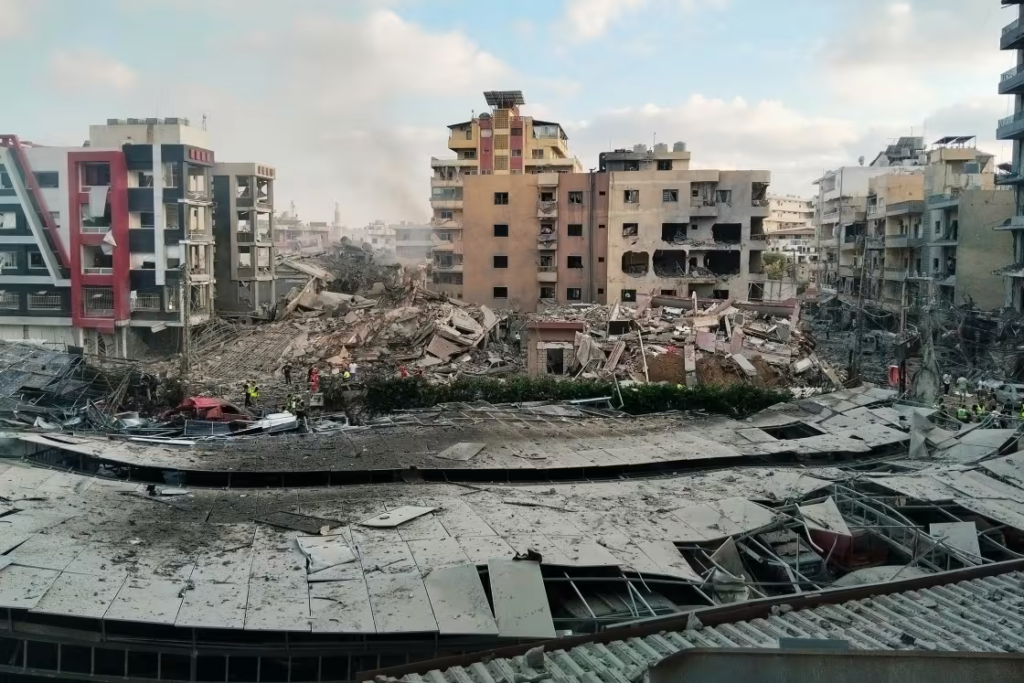
Rescuers work at the site of an Israeli airstrike that hit a building and damaged a hospital in the southern port city of Tyre, Lebanon, on Monday.STR / AP
A U.S. official familiar with the call and another source familiar with the call told NBC News that the call was tense but not as aggressive as has been reported.
The source familiar with the call said there were two conversations between Trump and Netanyahu on Monday. One of the calls was described by the U.S. official and the source familiar with the call as not pleasant, but they said it did not include the kind of language that has been reported elsewhere.
That call included language that was not unusual for Trump to use in his relationship with Netanyahu, according to the source familiar with the call who added that sometimes the two leaders don’t see eye to eye.
Trump did tell Netanyahu during the call that the prime minister needs to scale back Israeli attacks in Beirut because they risk derailing a possible deal with Iran, the U.S. official familiar with the call said.
The call came after Netanyahu said he had ordered strikes on “terror targets” in Beirut’s southern suburbs in response to attacks from Hezbollah.
That sparked panicked scenes with people rushing to flee the capital, where thousands of displaced Lebanese sought shelter after being displaced from their homes in the south by Israel’s aerial and ground assault.
Netanyahu later posted on X that Israel would strike Beirut if Hezbollah attacks do not stop.
NBC News
