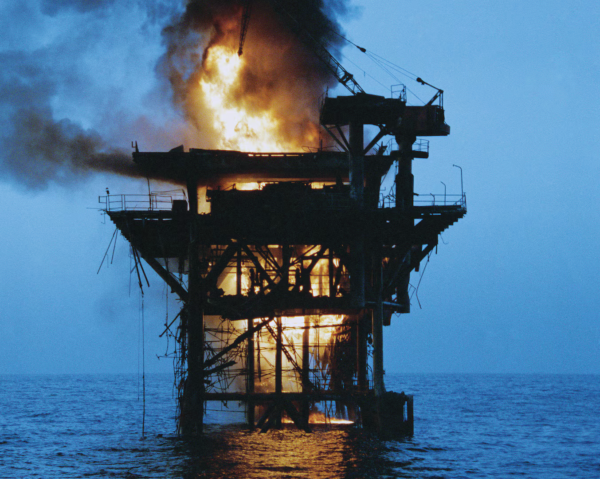
Iranian oil platform Rashadat is set afire after being shelled by four U.S. Navy destroyers during Operation Nimble Archer, October 19, 1987 (U.S. Navy/Henry Cleveland)
When objectives are unclear and alliances absent, even justified fears fail to mobilize the world
By :The Editorial Board, Opinion
Washington and Tel Aviv entered the Iran war with two stated goals: stop Iran’s nuclear trajectory and weaken—if not transform—its regime. They achieved neither. Instead, the conflict destabilized the world’s most critical energy corridor while exposing a deeper failure: the inability to build a credible international coalition behind a cause that, on paper, should have united the world.
No serious actor wants a nuclear-armed Iran. That concern spans Washington, Europe, the Gulf, and Asia. Yet when the moment came, support was limited, hesitant, and in many cases absent. That is not a failure of principle—it is a failure of strategy.
Coalitions Are Built Before Wars—Not During Them
History is clear. In 1987, Ronald Reagan secured freedom of navigation in the Gulf by organizing a multinational effort to protect shipping during the tanker war. The mission was focused, lawful, and internationally understood.
In 1991, George H. W. Bush assembled one of the broadest coalitions in modern history to expel Saddam Hussein from Kuwait. The objective was simple: reverse aggression and restore sovereignty.
In both cases, legitimacy preceded action.
Today, that sequence has been reversed.
A War Without a Narrative Cannot Win Support
The Iran war lacked a unifying framework. Was it about:
- Nuclear deterrence?
- Regime change?
- Regional containment?
Without clarity, allies hesitated. Governments cannot mobilize public support—or commit resources—when the end state is undefined.
This is where leadership matters most. A compelling case must be made not only to domestic audiences, but to the world. That effort was either insufficient—or unconvincing.
Hormuz: The Strategic Contradiction
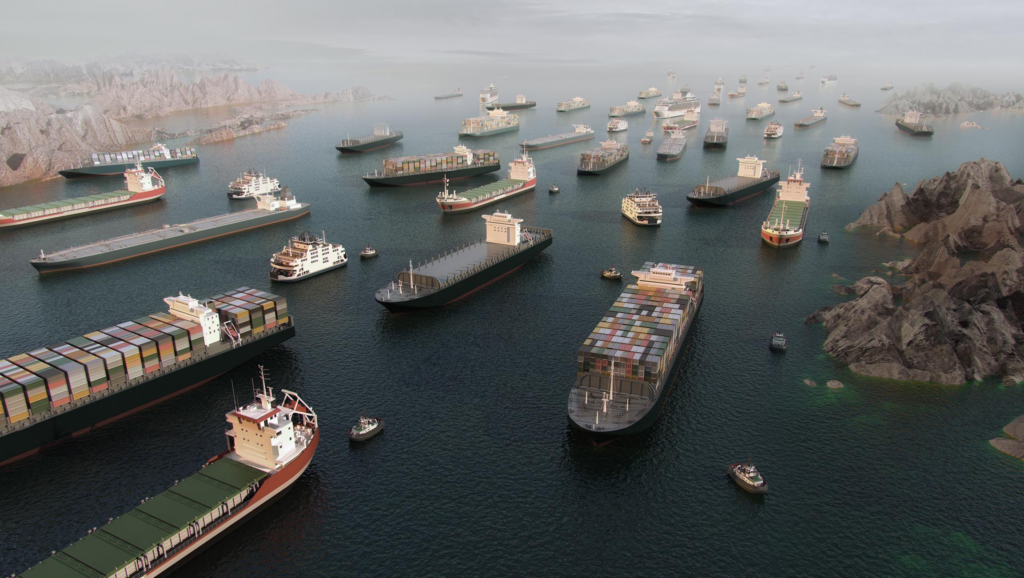
The greatest irony lies in the Strait of Hormuz.
Europe and Asia depend far more on this corridor than the United States. Yet many of these nations refrained from meaningful involvement, even as the waterway became unstable.
That hesitation speaks volumes.
If those most economically exposed chose distance over engagement, it suggests they viewed the conflict as:
- Poorly defined
- Poorly coordinated
- Or unnecessarily escalatory
In strategic terms, that is a red flag.
Domestic Priorities Cannot Be Ignored
At home, public appetite for another prolonged conflict is limited. Americans have seen the cost of open-ended wars—in lives, in debt, and in credibility.
When a war lacks clear progress and visible results, public support erodes quickly. Without that support, sustaining long-term strategy becomes nearly impossible.
The Real Lesson
This war is not just a military episode—it is a case study in strategic communication and alliance management.
Power alone is not enough. Even justified concerns—like nuclear proliferation—require:
- Clear objectives
- Defined outcomes
- Broad legitimacy
Without them, even strong nations find themselves isolated.
Final Word
In 1987 and 1991, America led—and the world followed. In this war, America acted—and the world watched. That difference explains everything.
