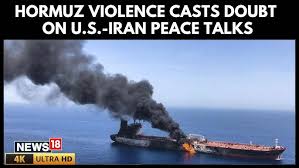
Saudi Arabia called on Tuesday to de-escalate the conflict in the Middle East after Iran and the United States traded fire, rattling a fragile ceasefire. The United Security Council is set to hold a closed-door meeting on Lebanon later in the day.
Riyadh- Saudi Arabia called on Tuesday to de-escalate the conflict in the Middle East after Iran and the United States traded fire, rattling a fragile ceasefire.
“The Ministry of Foreign Affairs expresses the Kingdom of Saudi Arabia’s concern regarding the current military escalation in the region, and calls for the need to de-escalate,” the foreign ministry said in a statement posted on X.
The ministry said it supported “diplomatic efforts to reach a political solution” in the war.
UN Security Council
The UN Security Council is addressing the severe escalation between Hezbollah and Israel in Lebanon, which has caused civilian casualties and endangered peacekeepers. Key concerns include ensuring the safety of UNIFIL troops—following fatal attacks on Indonesian peacekeepers—and reinforcing Resolution 1701 to restore stability. The Council is reinforcing support for the Lebanese armed forces’ deployment to south Lebanon
Oil eases after sharp rally as US Navy move eases Hormuz supply fears
Oil prices eased on Tuesday after climbing by as much as 6% in the previous session on signs the US Navy is loosening Iran’s closure of the key Strait of Hormuz waterway, potentially opening up supply from the key Middle East producing area.
The US on Monday launched a new operation aimed at reopening Hormuz to shipping and Maersk said later its Alliance Fairfax, a US-flagged vehicle carrier, exited the Gulf via the strait accompanied by US military assets, easing some immediate supply disruption fears.
Brent oil futures for July fell 68 cents, or 0.6%, to $113.76 per barrel at 0100 GMT, after settling up 5.8% on Monday. US West Texas Intermediate (WTI) crude fell $1.59, or 1.5%, to $104.83, after gaining 4.4% in the previous session.
Starmer condemns drone strikes on UAE
British Prime Minister Keir Starmer called on Monday for de-escalation in the Middle East after the United Arab Emirates reported attacks for the first time since a truce was declared nearly a month ago.
“The UK condemns the drone and missile strikes targeting the United Arab Emirates,” Starmer said in a statement.
“This escalation must cease. Iran needs to engage meaningfully in negotiations to ensure the ceasefire in the Middle East endures, and a long-term diplomatic solution is achieved.”
The UAE, a close US ally and key Arab partner of Israel, said it came under a barrage of missiles and drones from Iran on Monday.
Yesterday’s key developments:
• The Alliance Fairfax, a US-flagged vehicle carrier operated by its Farrell Lines subsidiary, exited the Gulf via the Strait of Hormuz accompanied by US military assets.
• Iran‘s Foreign Minister Abbas Araqchi said events in the Strait of Hormuz showed there was no military solution to the crisis, adding that talks were making progress with Pakistan‘s mediation.
• The United Arab Emirates, a key American ally, said it had come under attack from Iran for the first time since a fragile ceasefire took hold in early April.
