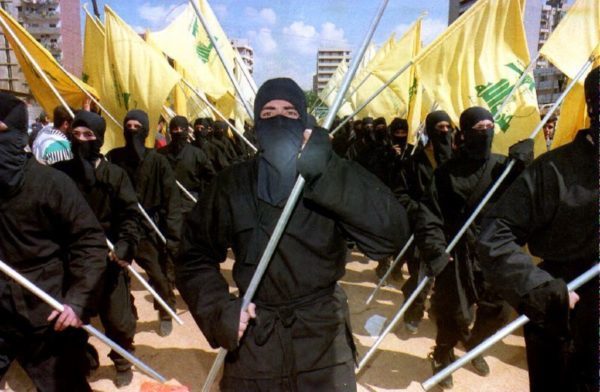
File : Masked Hezbollah fighters as they march through a suburb of Beirut in May 2008 , when the party occupied a large section of Beirut but unsuccessfully tried to occupy The Druze and Christian stronghold of Mount Lebanon. The majority of the Lebanese now consider the heavily armed and Iran backed militia as the biggest threat to Lebanon’s sovereignty
Hezbollah continues to claim that its vast arsenal exists solely to defend Lebanon from Israeli aggression and to support resistance. But nearly two decades of evidence tell a different story—one of regional entanglements, internal repression, and national devastation. Today, Hezbollah’s arms are less a shield and more a sword hanging over Lebanon’s sovereignty, its people, and its very survival.
Twice, Hezbollah’s weapons failed in their core mission of defending Lebanon. In the 2006 war with Israel, the group’s so-called “divine victory” resulted in massive destruction across the south and Beirut’s southern suburbs. Instead of repelling Israel, it brought ruin to Lebanese towns. More recently, its last confrontation with Israel ended in the loss of several strategic hills in southern Lebanon—hardly the sign of a victorious resistance.
Rather than defending the homeland, Hezbollah has repeatedly turned its guns inward. After the 2006 war, it occupied downtown Beirut—an area rebuilt over 12 years by the late Prime Minister Rafik Hariri—paralyzing Lebanon’s economic and political life. Then, in May 2008, it launched an armed assault on West Beirut and attempted, unsuccessfully, to overrun the Druze and Christian strongholds of Mount Lebanon. These were not acts of national defense, but internal intimidation and political blackmail.
The group’s violence has not stopped at the battlefield. In the wake of Syria’s withdrawal from Lebanon in 2005, a wave of political assassinations began, targeting those who opposed Syria’s and Hezbollah’s domination. Among the most prominent was the assassination of Rafik Hariri himself. Journalists, lawmakers, and security officials who dared speak out met similar fates. The message was clear: dissent would be punished by death.
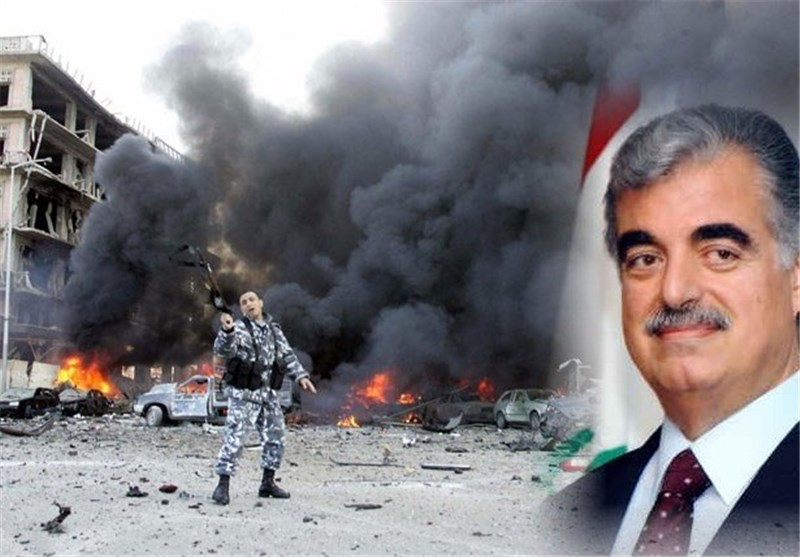
Former slain Lebanese PM Rafik Hariri, father of ex-PM Saad Hariri was assassinated in downtown Beirut on February 14, 2005. Three Hezbollah operatives Habib Merhi, Hussein Oneissi, and Salim Ayyash were sentenced to life imprisonment for the killing of Hariri by a UN-backed Special Tribunal for Lebanon (STL) but Hezbollah refused to hand them over to the court.
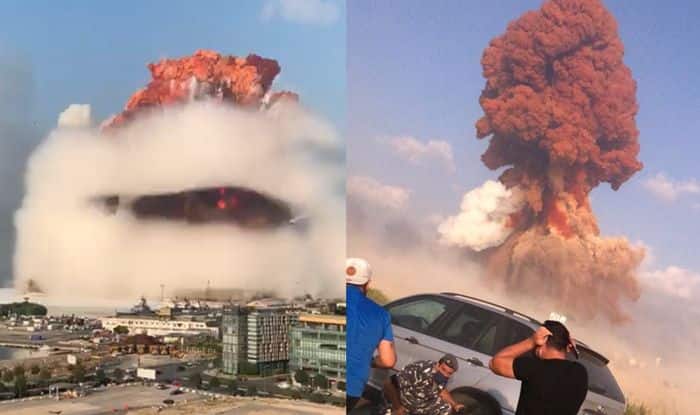
Even more devastating was Hezbollah’s role in the 2020 Beirut Port explosion. In 2013, the group facilitated the illegal storage of 2,750 tons of ammonium nitrate—reportedly to aid the Assad regime’s barrel bomb campaign after Syria surrendered its chemical weapons to the OPCW. When that stockpile ignited, it wiped out entire neighborhoods, killed over 220 people, wounded more than 6,000, and left 300,000 homeless. This was not collateral damage. This was criminal negligence rooted in Hezbollah’s obsession with weapons and war.
Hezbollah’s arms are not just a danger to the Lebanese people—they now leave Lebanon dangerously isolated. To the south, Israel openly targets Hezbollah operatives. To the east, even Syria—once an ally—is increasingly wary, as Hezbollah’s unchecked actions jeopardize Assad’s own fragile grip on power. Lebanon now finds itself surrounded by neighbors that view Hezbollah as an enemy, not a partner. And it is Lebanon that pays the price.
Meanwhile, Hezbollah’s own Shiite base has suffered the most. In every war, it is their homes that are destroyed, their families displaced, and their towns left in rubble. And yet, no country in the world is willing to help rebuild as long as Hezbollah remains armed and unaccountable. Their suffering has become the currency Hezbollah uses to justify its next confrontation.
Let us be clear: Hezbollah’s weapons have not liberated a single inch of Palestine. Instead, they have brought destruction to Lebanon. They have not defended the nation—they have dismantled it. Their continued existence violates both UN Resolution 1559, which calls for the disbandment of all militias in Lebanon, and the Taif Agreement, which mandates one army under one state.
It is time for President Joseph Aoun—and all Lebanese leaders—to show courage. The Lebanese Army must be empowered to take control of all weapons on Lebanese soil. Sovereignty cannot coexist with a private army loyal to a foreign power. Lebanon must no longer be held hostage to Hezbollah’s decisions, wars, and weapons.
This is not a sectarian demand. This is a national survival imperative. Hezbollah’s arms have become a burden not just for Lebanon—but for Hezbollah itself. The choice is no longer between war and peace. The choice is between a free, sovereign Lebanon—and no Lebanon at all.
Mr Aoun. The time to act is now.
