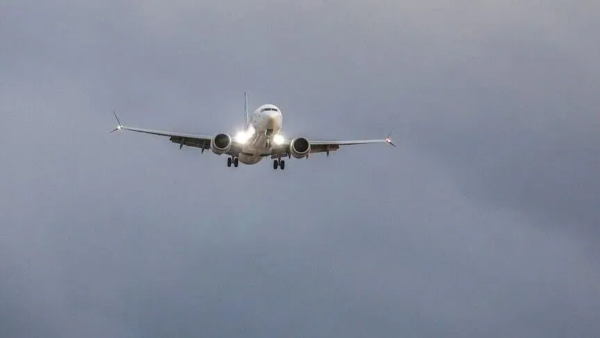
Saudi Arabia reopened its main airport in Riyadh for international flights, more than two weeks after deadly strikes by Yemen’s Iranian-backed Houthi rebels knocked the facility out of service. Earlier Sunday, the kingdom said it intercepted and destroyed a ballistic missile and a drone fired by the Houthis.
HERE IS THE LATEST
- Iran’s Foreign Minister Abbas Araghchi said Sunday that a potential resumption of war with Israel and the U.S. would not change his country’s positions, after President Trump said Washington “may do another little Epic Fury.”
- Iran warned on Saturday that U.S. ships would never be allowed in the Persian Gulf “under any circumstances,” as tensions between Tehran and Washington continue mounting. Both sides have signaled a possible return to strikes, with the U.S. ambassador to Turkey warning Iran could be struck as soon as this weekend.
- Director of National Intelligence Jay Clayton warned Friday that Iran has “substantially increased efforts to target U.S. personnel” abroad, with plots to kill Americans reaching “advanced stages” in the Middle East and other countries.
- Israeli Prime Minister Benjamin Netanyahu — fighting for political survival in Tuesday’s elections — has pleaded with President Trump in recent days to show more public support for his campaign, according to a U.S. source with knowledge and an Israeli source briefed on the matter, Axios reported
Iran says messages are still being passed to the U.S. amid war concerns
As concerns rise about a return to an all-out Iran war ahead of crucial elections in the United States and Israel, Iran said messages are still being passed to the U.S. and Tehran remains open to diplomacy.
Negotiations over the war have appeared to stall for weeks, but President Trump said there would not be a strike against the Islamic Republic “today.”
Iran’s foreign ministry spokesperson, Esmail Baghaei, said Tehran has not closed the window of diplomacy and messages are being passed to the U.S. via intermediaries.
State media said Baghaei spoke in an interview with a German broadcaster. He said the U.S. appears to persist in unilateral demands and that Mr. Trump and U.S. officials repeatedly use the phrase “complete surrender,” which Baghaei said no Iranian accepts.
Asked if he planned to launch an attack on Iran, Mr. Trump initially suggested that he would be foolish to telegraph that.
But Mr. Trump then added: “No. There will not be a strike today.” At the same time, the head of the U.S. Central Command, Adm. Brad Cooper, was flying over the Strait of Hormuz and asserting that over 3,000 commercial vessels have transited the waterway with U.S. military support over the last six months.
Houthis say they launched attacks on Riyadh airport, hours after reopening
A spokesperson for Yemen’s Iran-backed Houthis said they launched attacks on Riyadh’s international airport on Sunday, just hours after it resumed flights. Deadly strikes by the rebel group earlier this month had forced the airport to shut down operations for more than two weeks.
“The Yemeni armed forces conducted three military operations with dozens of ballistic missiles,” Houthi military spokesman Yahya Saree said on X, saying the strike on the airport “achieved its target.” He said additional strikes targeted King Khalid air base in Khamis Mushait and a naval base in Jazan.
Saree previously warned that Riyadh airport was still “unsafe” and a “military target,” as the airport prepared to resume international flights.
“The Yemeni Armed Forces warn all international, regional and local airlines — as well as staff and travellers — against using King Khalid Airport in Riyadh, as it is unsafe and serves as a military target for our forces,” he said, adding, “The Saudi regime shall bear the consequences of any operations at the airport.”
Facing economic strain, Iranians brace for possible return to all-out war
While confronting medicine shortages and soaring inflation, many Iranians say they’re bracing for the potential return of an all-out war with the U.S. and Israel, as leaders of both countries wage mounting threats in the days leading up to their respective elections.
The Associated Press spoke with Tehran residents who described growing anxiety, with some preparing to leave the capital and others scrambling to acquire goods that have been difficult to find.
Fereshteh Hajipour, 35, the mother of a toddler, said she was stockpiling over-the-counter medicines and food for fear of a “possible war and bigger bombs.”
Iranian leadership believes that President Trump likely will order new strikes regardless of the results in the midterm elections, and “they are planning for the scenarios so they can take remedial measures,” said a former government official and foreign policy professor at the University of Tehran, Sasan Karimi.
Meanwhile, a U.S. naval blockade of Iranian ports has restricted oil exports on which Iran’s government depends, increasing the economic pain as each side tries to outlast the other. Trucks have piled up at borders as Iran’s trade shifts to overland.
Even for middle-class Iranians, affording basic groceries has become difficult. Prices for staples have risen steeply since the war began. Rice is over 60% more expensive, and beef over 150%.
Mohammad Mohammadi, 36, said a trip to the supermarket can burn through half a monthly mid-range salary of 400 million rials, which roughly equates to $150.
Despite the high prices, Mohammad Abedi, 39, said the rising attacks on the Strait of Hormuz spurred him to buy extra supplies for his family, including dried dates, cooking oil and rice.
“I’m worried that the situation could get worse,” he said.
Netanyahu warns Iran may try to disrupt Tuesday’s Israeli elections
Prime Minister Benjamin Netanyahu said that Iran and its allies might try to disrupt Tuesday’s Israeli elections, warning the Islamic republic against any hostile acts.
“We have intelligence signs that our enemies, Iran and its proxies, could challenge us with attacks in order to disrupt the elections,” Netanyahu said in a video released by his office on Sunday, noting the military was ready for both defensive and offensive operations. “Don’t test us. You will suffer disproportionate blows.”
Trump says he’s weighing deal with Iran against action to “finish them off”
President Trump said Sunday morning that he’s deciding between reaching an agreement with Tehran and taking action to “finish them off,” after suggesting Friday that Washington “may do another little Epic Fury,” in reference to the U.S. and Israel’s joint military campaign against Iran.
“Now, my question is, do I make a deal with them, or do I finish them off?” said Mr. Trump in an interview with Fox News’ “Sunday Morning Futures.”
He also claimed that the U.S. now controls the Strait of Hormuz and criticized former President Barack Obama for the Joint Comprehensive Plan of Action, or JCPOA, which is better known as the Iran nuclear deal. Obama signed the agreement in 2015, but Mr. Trump pulled out of it during his first term in office.
Riyadh airport resumes flights amid ongoing Houthi threats
Saudi Arabia reopened its main airport for international flights, more than two weeks after deadly strikes by Yemen’s Iranian-backed Houthi rebels knocked the facility out of service. Earlier Sunday, the kingdom said it intercepted and destroyed a ballistic missile and a drone fired by the Houthis.
Earlier Sunday, the Saudi-led military coalition fighting the Houthis said its air defenses intercepted and destroyed a ballistic missile and a drone fired by the Houthis toward Riyadh early Sunday, as well as 10 ballistic missiles toward the southern region.
Meanwhile, alerts warning of possible attacks were activated across the kingdom’s south throughout the day, with one resident of the southern city of Khamis Mushait telling AFP that “the bombardment has been heavy since this morning.”
“Everything is shaking because of the explosions,” said the resident, who spoke with AFP on condition of anonymity.
The King Khalid International Airport said it has opened terminals 1 and 2 for domestic and international flights, starting Sunday. The announcement came as the Houthis in Yemen kept firing drones and missiles toward the Saudi capital.
In early October, Houthi strikes hit a complex housing two other terminals, killing 17 people and wounding over 330.
Last week, the Riyadh airport opened to limited domestic flights.
Iran’s parliament speaker calls on people to reduce use of natural gas
Iran’s parliament speaker Mohammad Bagher Ghalibaf on Sunday called for a campaign to cut gas consumption by at least 10%, with officials anticipating shortages as winter approaches.
While a major producer, Iran has long suffered shortages of natural gas, essential for powering heating systems, which have been exacerbated by war with the United States and Israel that began in February.
During the most intense phase of the fighting, which lasted nearly 40 days, the two countries struck key Iranian infrastructure including natural gas refineries, according to Tehran.
Winter in Iran often sees temperatures drop below freezing, especially in the country’s north.
“To get through the approaching winter, a nationwide effort is essential … to reduce gas consumption by at least 10%,” said Ghalibaf in a video carried by Iranian media.
“Anyone who saves gas, regardless of the amount, will immediately receive the corresponding proceeds in their bank account, allowing everyone to see the tangible impact of those savings on their household budget.”
Iran reportedly strikes Kurdish opposition group in Iraq
Iran’s armed forces attacked bases belonging to an Iranian Kurdish opposition group in Iraq’s Kurdistan region using drones, a media outlet in Tehran reported on Sunday.
“As part of a drone operation carried out by the Revolutionary Guards’ ground forces, the headquarters of the terrorist and separatist group Komala, located in the Balisan region, was targeted last night,” the semi-official Mehr news agency said.
The semi-autonomous region hosts camps and bases belonging to several groups of Iranian Kurdish militants, which Iran has targeted repeatedly since the start of the war in February.
The Revolutionary Guards have not immediately claimed responsibility for the strikes on these fighters, whom Iran accuses of being supported by Israel, its sworn enemy.
In the most deadly recent attack, nine Komala members were killed on July 17 near the city of Sulaymaniyah.
Saudis intercept ballistic missile launched by Houthis toward Riyadh, officials say
The Saudi-led coalition fighting Yemen’s Houthi militants said early Sunday local time it had downed a ballistic missile launched by the group toward the Saudi capital of Riyadh.
“Air defenses intercepted and destroyed a ballistic missile launched by the terrorist Houthi militia toward Riyadh,” the coalition posted on X.
Prior to the coalition’s statement, an Agence France-Presse journalist reported that three explosions had rung out in Riyadh.
The blasts came after residents received alert messages for a “hostile aerial threat” urging them to stay in a safe place.
Ayatollah meets with head of Iranian judiciary, focuses on compensation for war damage
Ayatollah Mojtaba Khamenei, who has still not been seen in public since the beginning of the war, met with Hujjat al-Islam Mohseni Ejei, the head of Iran’s judiciary, to discuss a range of issues on Saturday.
Most interestingly, in connection to the war, a readout of the meeting on X said Iran was committed to “resolutely pursuing compensation for material and moral damages arising from the crimes committed by” the U.S. and Israel.
One of Iran’s demands in the past as part of a peace agreement was the U.S. would have to pay to rebuild much of the damage in the country. The demand was dismissed by the U.S.
While not specific, the statement also said they discussed “making the fullest possible use of modern technologies.”
Khamenei was injured in a strike on the palace that killed his father, the Ayatollah Ali Khamenei. The strike on the first day of the war also killed the leader’s daughter, granddaughter, son-in-law and daughter-in-law. Mojtaba Khamenei survived though he’s been in hiding ever since the strike.
Iran president admits many struggling for food as war, sanctions take toll and fears of renewed fighting grew
Iranian President Masoud Pezeshkian said Saturday many Iranians were struggling to put food on the table, as economic pressure from the war with the United States mounts.
The U.S. has in recent weeks dialed back military operations in favor of economic pressure, while Iran’s leaders have said peace negotiations will only succeed without pressure and threats from Washington as the conflict remains locked in a stalemate.
“There are many people in this society who are struggling to put food on the table because of the war we have found ourselves in, because of the wartime conditions we are living under,” Pezeshkian said in a speech shared on his website.
Pezeshkian called for an end to what he described as a “state of neither war nor peace”, saying Tehran “must also get out of this situation,” without specifying how.
His remarks came as fears of renewed fighting grew. On Friday, U.S. Ambassador to Turkey Tom Barrack said U.S. strikes on Iran could resume as soon as this weekend.
“Could there be a strike this weekend? Absolutely,” Barrack told podcast host Mario Nawfal. Barrack, who also serves as Washington’s envoy on Syria, does not have a direct role on Iran.
CBS
