HERE IS THE LATEST
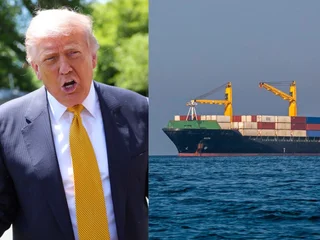
- President Trump accused Iran of making up the fact that ships in the Strait of Hormuz are hitting mines or being struck by missiles or drones, saying it was a bid to drive up oil prices before the midterms.
- The price of Brent crude oil surged about 4% on Thursday to $113 per barrel as Iran’s Revolutionary Guard said it had attacked four vessels near the Strait of Hormuz for using a route that Tehran rejects. The IRGC said three other ships using that route hit sea mines and were forced to halt.
- The U.S. military has quietly reduced its footprint at posts in the Middle East due to ongoing threats and attacks by Iran and its Houthi allies in Yemen, sources told CBS News on Wednesday. The latest attack, on King Fahd International Airport in the eastern Saudi city of Dammam, has killed at least two people and injured eight more.
Saudi Aramco says volume bypassing Strait of Hormuz via pipeline has surged
The president of Saudi’s state-owned oil company Aramco, whose sites have been targeted by Yemen’s Iran-backed Houthi militants, says the amount of oil moving through a pipeline that bypasses the Strait of Hormuz has more than tripled.
The East-West pipeline’s capacity has surged from 2 million to 7 million barrels each day, President and CEO Amin Nasser said in an interview with Saudi-owned television Al Arabiya Business.
Built in the early 1980s, the pipeline played a crucial role in Saudi Arabia’s ability to export oil following the disruption of the Strait of Hormuz during the Iran war.
Nasser said the company has used drones to assess damage caused by oilfield attacks by Yemen’s Houthi rebels and to help with firefighting.
Rubio thanks Qatari leaders for help with negotiations in Middle East
Secretary of State Marco Rubio thanked Qatar’s prime minister and foreign minister for the country’s help in the region in a call on Thursday.
Rubio “reaffirmed the United States’ commitment to Qatar’s security and freedom of navigation through the Strait of Hormuz.”
“The Secretary also expressed appreciation for Qatar’s continued mediation efforts and strong and close partnership in promoting a more secure region,” the State Department said.
In a readout from the Qatari side, they said the two sides discussed de-escalating tensions, while confirming it supported “endeavors aimed at reaching a solution that ensures freedom of maritime navigation and paves the way for a comprehensive agreement that achieves lasting peace in the region.”
Impact of Houthi attacks on Saudi economy “limited” for now, IMF says
Houthi attacks on Saudi Arabia are having only a “limited” economic impact on the kingdom so far, owing to robust domestic demand, the International Monetary Fund’s regional director told AFP, though geopolitical uncertainty remains a threat.
The Iranian-backed Yemeni group has ramped up its attacks on Saudi Arabia in recent weeks, hitting oil facilities and airports among other targets, as Yemen’s dormant civil war has roared back into life.
Saudi Arabia, the world’s largest oil exporter, has had its crude shipments squeezed by Iran’s blockade of the Strait of Hormuz and the Houthis’ declaration of a maritime blockade.
But shipments continue to move despite the conflicts, Jihad Azour, the regional director, told AFP.
The Gulf kingdom also has “strong internal demand and a robust public sector, so the impact is limited,” he said of the Houthi attacks.
Nevertheless, the economy is expected to contract by 3.3% this year, owing to the impacts of the U.S.-Israeli war with Iran that began in February. The economy of the region as a whole is expected to shrink 4.8% in 2026, the IMF said.
Trump accuses Iran of lying about strikes on ships to drive up oil prices
As oil prices crept up to their highest levels since May, President Trump accused Iran of lying about the situation in the Strait of Hormuz in order to drive up costs.
“Iran is doing everything they can to drive up the price of Oil prior to the U.S. Midterm Election,” Mr. Trump wrote on Truth Social. “They are even making up fake hits, mines, and everything else, because more Oil is coming through the Hormuz Strait now than it did even prior to the beginning of the Conflict.”
The price for Brent crude, the international standard for oil, reached $112 a barrel on Thursday morning. The cost hadn’t reached at least $112 since May 18.
Iran announced they had struck four vessels in the area of the Strait of Hormuz on Thursday, while three others hit sea mines. All of the damaged ships were along the southern route, hugging the Omani coast, used by the U.S. to escort tankers out of the Persian Gulf, according to Iran’s Revolutionary Guards.
While the U.S. is escorting large amounts of oil out of the Gulf, it is a costly process. Overall instability in the region is also continuing to keep prices high despite increased supply since the early weeks of the war.
Saudi-led coalition says 4 drones intercepted over Riyadh and Medina
The Saudi-led coalition fighting on behalf of Yemen’s government in the neighboring country’s spiraling civil war said Thursday that four more drones were intercepted over the capital and the hold city of Medina.
The force did not attribute the attacks to anyone, but the drones were likely launched by Yemen’s Iran-backed Houthi rebels, who have peppered Saudi Arabia with deadly strikes in recent weeks, with many projectiles getting through the kingdom’s defenses.
Earlier Thursday the Saudi coalition said it had intercepted and destroyed one drone over Riyadh, again without saying where it had come from.
The Houthis have repeatedly denied targeting Medina or Mecca, the two holiest cities in Islam.
Iran’s shadow fleet tankers have run out of oil, intelligence firm tells Wall Street Journal
The shadow fleet of tankers holding Iran’s offshore oil reserves, which it had been selling to China throughout the war against the U.S. and Israel, have run dry, intelligence firm Kpler told The Wall Street Journalon Wednesday.
The millions of barrels of crude, held on dozens of oil tankers in Asian water, ran out in mid-October, Kpler told the outlet, with a U.S. naval blockade preventing Iran from replacing the crude being sold to Chinese refineries.
“There’s no more oil to discharge to China anymore,” said Homayoun Falakshahi, head of crude-oil analysis at the firm.
The U.S. naval blockade has cost Iran at least $25 billion in oil revenue, according to U.S. Central Command.
Iran’s army chief says country is ready for asymmetrical warfare
The Commander-in-Chief of the Iranian Army, Maj. Gen. Amir Hatami, said Thursday that the country’s armed forces were prepared for asymmetric warfare and satisfied with their drone capacity.
“In the previous asymmetric war, we fought the enemy with equipment that surprised them, as they received very heavy blows,” he said, referring to the intense exchange of fire with the U.S. and Israel before a June ceasefire was announced. That deal, which President Trump soon declared over, failed to bring about the negotiations on Iran’s nuclear program and many other issues that it provisioned, but neither side has engaged in major strikes since the summer, with fighting in the region largely shifting to the linked conflict in Yemen.
“We have reached a good level of maturity in the field of drones and unmanned systems,” Hatami said. “We assure our dear people of Iran that we are in a good position.”
Top European, Mideast diplomats to meet in Istanbul Friday, AFP reports
Top European diplomats will hold talks in Istanbul Friday with their counterparts from Turkey, Saudi Arabia, Pakistan and Egypt during a meeting initiated by Ankara, a Turkish foreign ministry source told the AFP news agency on Thursday.
Foreign ministers from the so-called E3 group – Britain, France and Germany – will meet counterparts from the newly created R4 group to discuss the Palestinian issue, developments in Yemen and the Strait of Hormuz and ways to end the Russia-Ukraine war, the source said.
Turkish Foreign Minister Hakan Fidan will host the meeting, the first to bring together the two groups.
“The seven countries will come together for the first time in the R4+E3 format, at Turkey’s initiative,” the source said, indicating they would explore “opportunities for cooperation and coordination that could be put into practice … in the coming period.”
In chairing the meeting, Fidan was expected to focus on the international community “increasing pressure on Israel” in response to its settlement expansion and its “encouragement of settler terrorism,”the source AFP.
Fidan will also underline support for Saudi Arabia’s security in the face of attacks by Yemen’s Houthis, and stress the need for permanent freedom of navigation in the Hormuz and Bab el-Mandeb Straits.
CBS
