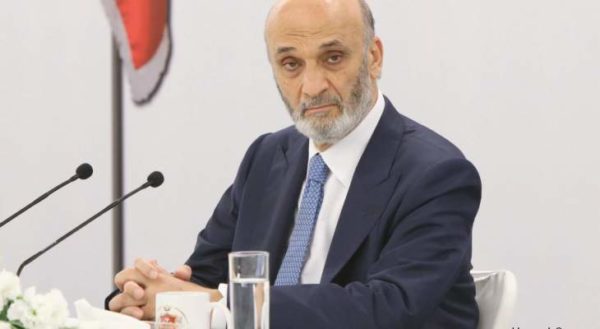
Samir Geagea, leader of the Lebanese Forces (LF) party, emphasized that the LF’s positions are not populist. He expressed regret over the remarks made by Prime Minister Nawaf Salam—though he noted they were “to be expected”—adding that the pinnacle of populism was the Taif Agreement, the cost of which is well known. This came in response to Salam’s comment following the withdrawal of LF ministers from the government: “This is a populist move; we are used to this from you.” Geagea asserted, “We act according to our convictions, and our convictions are far removed from populism.”
In an interview with MTV, Geagea continued, “We are not working to score points against the President or the Prime Minister, as we are all in the same boat for the time being. They are not the ones who forced me off the boat; if we grow weary, we will step off ourselves—and we can always get back on.” He further explained that the “deep state” consists of two components: one political, and the other comprising high-ranking state officials.
Geagea clarified that “everything stated in the Council of Ministers today regarding the referral of the Dahr al-Baidar explosives case to the Judicial Council is not true .” He pointed out that there are eight precedents from the past 15 years where cases were immediately referred to the Judicial Council. Such a referral, he noted, relates to the legal classification of the crime, not to the outcome of the investigations—contrary to what has been suggested. He argued that Hezbollah officials must be arrested in connection with the Dahr al-Baidar explosives case. The government’s decisions on August 5 and 7 are clear, as is our own position; today, the state must either prevail in this matter or face defeat.
Geagea pointed out that withdrawing from a cabinet session does not mean abandoning the confrontation from within, but the situation has reached a dangerous turning point. While there is no doubt that the President and the Prime Minister have steered the country toward a more acceptable form of statehood, there are aspects of daily practice that are simply intolerable—Hezbollah is an organization that operates outside the law; one might even call it an “organization of evildoers.”
He called on Aoun and Salam to refer the explosives case to the Judicial Council, as it threatens national security, civil peace, and the authority of the state, and constitutes a crime punishable by law. He noted that Hezbollah is fully aware of the implications of referring the “Dahr al-Baidar explosives” case to the Judicial Council—which is precisely why they oppose it—as such a referral would amount to an acknowledgment of the government’s decisions, which have deemed Hezbollah’s actions unlawful.
He further revealed that, to this day, a Lebanese security agency has been sending its security reports simultaneously to both the Lebanese government and Hezbollah.
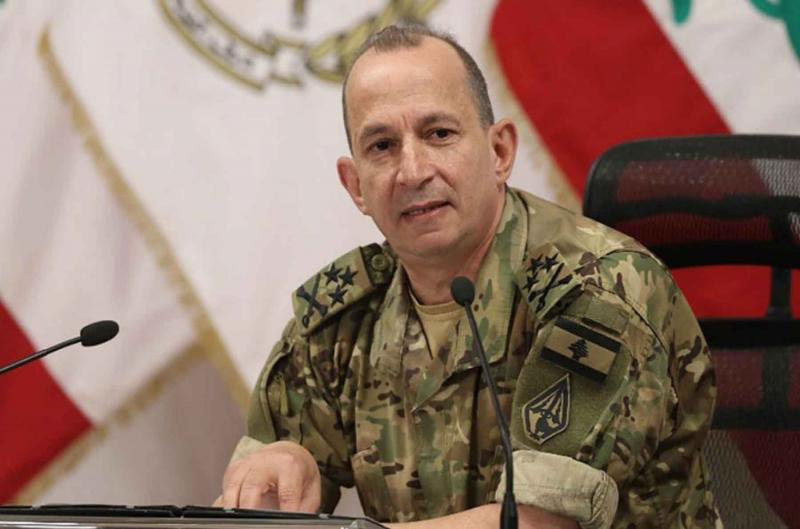
Geagea disclosed that, months ago, they had proposed discussing the future of the Army Commander, following reports that he was unwilling to implement government directives. Just as the government convened to appoint an Army Commander, it possesses the authority to dismiss him and appoint a successor; yet, at the time, no one dared to take such a step.
He also observed that it is actually in the interest of those who attack the “framework agreement” for that agreement to remain in place. After all, what would have happened had it not existed? The framework agreement is predicated on the premise that the Lebanese state will dismantle Hezbollah, in exchange for an Israeli withdrawal and the commencement of reconstruction. If a resolution is to be reached, the Lebanese side must take the first step. Furthermore, what is the problem with military delegations from Lebanon and Israel meeting, given that Lebanese political delegations already engage with Israel? Ambassadors Nada Mouawad and Simon Karam are not acting on their own initiative; rather, they are executing the directives of the President of the Republic, who dictates their course of action.
Regarding the electricity dossier, Geagea explained that 40 proposals from 40 different companies have been submitted, and negotiations are currently underway with the regulatory authority to award a contract to the relevant firm. Within 18 to 24 months, 24-hour electricity will be available at rates lower than those currently in effect. Energy Minister Joe Sader has accomplished work that should have been done 20 years ago; thankfully, it can finally be said that the energy file is on the right track.
Geagea further noted that Minister Joe Sader’s decision to suspend his active duties—while remaining in his post—is the least harmful and most beneficial course of action among the available options. As long as the situation remains within acceptable limits and the government’s general direction is deemed acceptable, we will continue to support it.
SOURCE EL NASHRA , translated from Arabic
