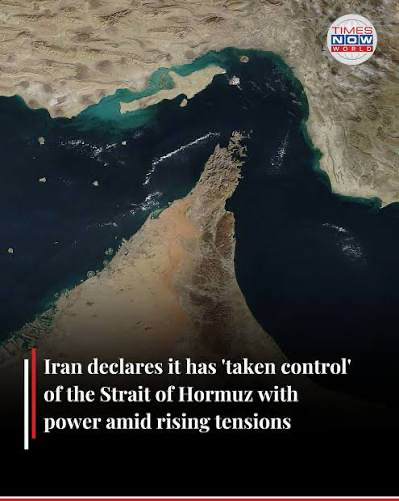
PHOTO : Attacks in Strait of Hormuz reach highest level since start of war, data shows
HERE IS THE LATEST
- Explosions were heard over Saudi Arabia’s capital Wednesday morning as fighting intensified between Saudi-backed forces in Yemen and Iran’s Houthi rebel allies. A Saudi military spokesman said a ballistic missile launched by the Houthis was intercepted over Riyadh.
- The Houthis vowed Wednesday to continue targeting Saudi Arabia’s international airport and oil infrastructure in the coming days in response to “Saudi aggression” against Yemen’s capital Sanaa.
- President Trump has said he’s considering joining attacks on the Houthis as the rebels attack Saudi Arabia and threaten global energy supplies. The Houthis have threatened to target U.S. personnel and interests across the Middle East if Mr. Trump does order strikes, which could drag the U.S. deeper into the wider warsparked by the joint U.S.-Israeli strikes on Iran seven and a half months ago.
Trump on reports U.S. considering Iran strikes before midterms: “Leakers should be shot”
Speaking about news reports that the U.S. is considering potential strikes against Iran before the midterms in November, President Trump said Wednesday it was his opinion that “leakers should be shot.”
“In the old days, we used to shoot leakers,” Mr. Trump said during a campaign rally speech in Bullhead City, Arizona. “When they leak what time you’re going to attack a country, and the reason you’re attacking is really for defense, because you don’t want them to have a weapon that can blow up millions of people in one shot.”
“Now, leakers should be dealt with very, very strongly,” he added. “To me, they’re the scum of the earth.”
The Atlantic first reported on Oct. 7 that the Pentagon was developing strike options against Iranian targets, but no final decisions had been made. The next day, the president said on Truth Social that the U.S. would not attack Iran before the midterm elections, which take place on Nov. 3.
Yemen has asked the U.S. for training and intelligence support
for the Yemeni armed forces and coast guard, as well as continued political, economic and humanitarian support,
but their foreign minister made no mention of military support in a briefing to reporters Wednesday.
Afrah Alzouba, Yemen’s first female foreign minister, spoke in a briefing on several topics related to the ongoing Yemen-Houthi war, but did not explicitly mention requests for military support. In addition to intelligence and training, Alzouba requested the U.S. expand sanctions against the Houthis. She also asked for the EU and Washington to coordinate more closely on sanctions.
She struck an aggressive tone when asked about possible negotiations with the Houthi militia, saying, “We are not calling for starting any negotiations.” The Yemeni government eventually wants a peaceful settlement but is prioritizing military operations to end Houthi control, she said.
She also emphasized Yemeni ownership of ongoing operations with air support from coalition partners: “The decision is Yemeni. The command is Yemeni. The soldiers are Yemenis.”
The Saudis are the strongest backers of the official Yemeni government forces, which has earned the ire of the Houthis. They have repeatedly targeted civilian infrastructure in Saudi Arabia in recent weeks, including a strike that killed 13 people at Riyadh’s King Khalid International Airport. A four-year ceasefire between the two sides fell apart this summer.
Alzouba said the contacts cited last month by President Trump between the U.S. and Houthis, which surprised some in the U.S., involved “warnings” against further attacks. She did not elaborate on timing or channels.
A look at the Iran- and Russia-linked hybrid attacks the U.K. spy chief says are flourishing
The head of Britain’s top domestic spy agency MI5, Sir Ken McCallum, painted a dark picture Tuesday of the changing national security threats facing the U.K. and the world.
“We have entered a new era of national security, requiring a new response,” he said in his annual threat update at MI5 headquarters in London. “Those who mean the U.K. harm aren’t attacking things government owns or controls. … They’re aiming at people, businesses, communities.”
Iran has used and continues “using criminal proxies to try to intimidate oppositionists, Iranian media organizations, and Israeli sites,” McCallum said.
But analysts have also seen “Iran, like Russia, attempting to expand their hybrid campaign,” he said, leading to more than 50 arrests in the U.K. over the last year alone.
“Sadly, much of this aggression has been aimed at British Jewish communities,” McCallum said, speaking of incidents this year that included “a wave of arson and sabotage incidents targeting Jewish communities in the U.K. and other European nations,” but also acts targeting “harder targets, like military sites.
Attacks in Strait of Hormuz reach highest level since start of war, data shows
At least 10 vessels have been attacked in or near the Strait of Hormuz since Sunday, a high since war broke out between the United States, Israel and Iran, security data showed Wednesday.
Four vessels were struck on Tuesday and six on Sunday — the highest number of attacks in a single day since the start of the conflict — according to data from security firm Vanguard, the International Maritime Organization and the British maritime agency UKMTO.
Two seafarers have been reported missing and a container ship reportedly sank as a result of recent attacks, according to the maritime sources.
Merchant vessels transiting the vital passage were first targeted by Iran in March in retaliation for U.S.-Israeli strikes on its territory, and Tehran has continued to strike vessels passing through the strait via routes it has not approved.
The attacks have disrupted shipping through the strait, which is normally one of the busiest routes for exporting oil and other commodities from Gulf countries.
Twenty-three attacks have been recorded since the start of October, almost double the average monthly number of incidents since the start of the war.
“Gulf oil flows have been recovering, with traffic through Hormuz recently returning to around 80 percent of pre-war levels despite the conflict,” Vanguard analyst Barun Gupta told AFP on Wednesday.
“Increasing the tempo of attacks therefore gives Tehran a way of demonstrating that it can still disrupt that recovery and impose costs on commercial shipping and global energy markets,” Gupta continued.
CBS
