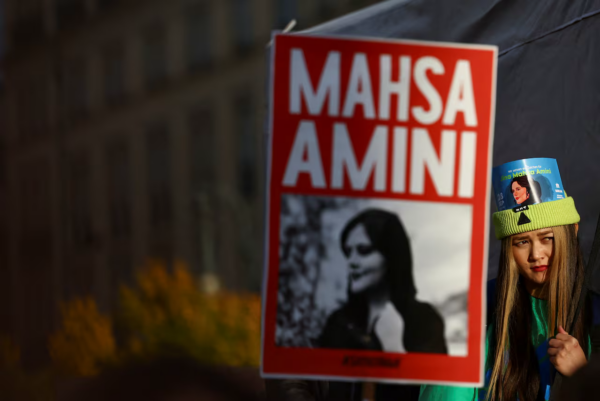
Mahsa Amini’s image, pictured in Berlin, went around the world in 2022 after her death sparked global protests. (Lisi Niesner/Reuters)
Four years after the death of a young woman whose name became synonymous with the fight for women’s rights and freedom in Iran, Amnesty International says the resulting government crackdown was a systemic campaign whose perpetrators continue to evade accountability.
Mahsa Amini was 22 when she died on Sept. 16, 2022, after being arrested by Iran’s morality police for “unsuitable attire.”
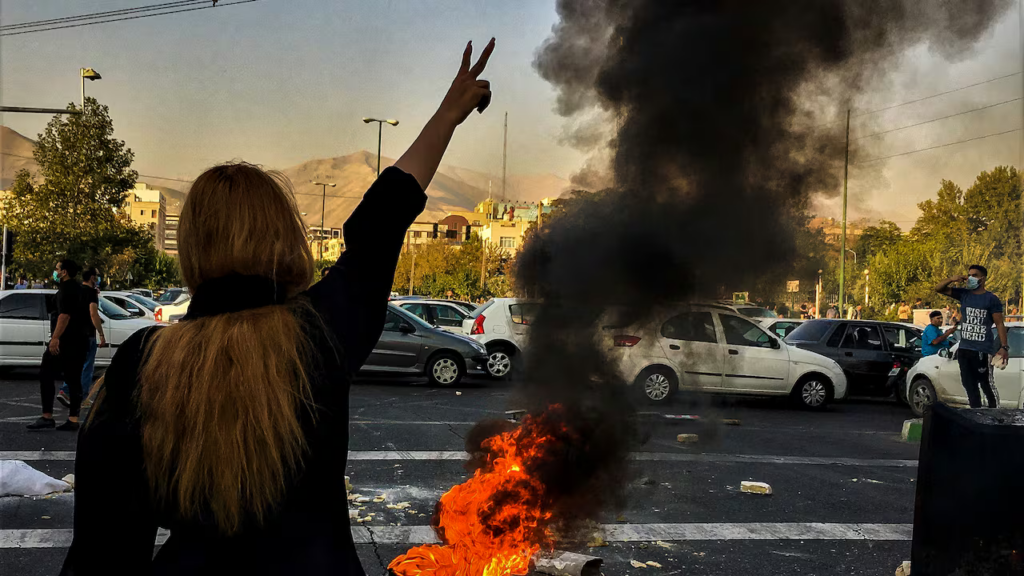
International said authorities committed crimes against humanity in the regime’s deadly crackdown on nationwide protests. (The Associated Press)
Wednesday’s Amnesty report — a mammoth undertaking drawing on 270 interviews, more than 2,000 videos and extensive documentary evidence — says those same officials continue to lead violent crackdowns now. It identifies dozens of officials allegedly responsible for committing what it describes as crimes against humanity.
Its authors are demanding international action to avoid repeating the same pattern of deadly crackdowns they say has been allowed to continue for years.
“Continued global inaction on international justice sends a very dangerous message to the Iranian authorities. It effectively signals that they can continue to commit crimes against humanity with absolute impunity,” Raha Bahreini, Amnesty International’s Iran researcher in London, told CBC News.
“This normalization of mass protest killings in Iran must end.”
Thousands killed in protests earlier this year
The U.K.-based non-governmental organization lays out the evidence it says constitutes crimes against humanity, including murder, torture, enforced disappearance, imprisonment, rape and persecution on political, gender, ethnic and religious grounds in order to crush the uprising.
While the protests earlier this year were initially triggered by economic grievances over soaring inflation and worsening living conditions rather than the death and rights abuses of women, Amnesty said the pushback reflected the same broader demands for political change and were met by the same security apparatus accused of brutally suppressing the 2022 uprising.
In the January case, U.S.-based Human Rights Activists News Agency said it had verified 7,007 deaths linked to the protest crackdown.
“The cycles of protest crackdowns in Iran follow a very painful, familiar pattern. They dominate the news headlines for a while, governments issue statements of condemnation, and then attention fades away,” Bahreini said.
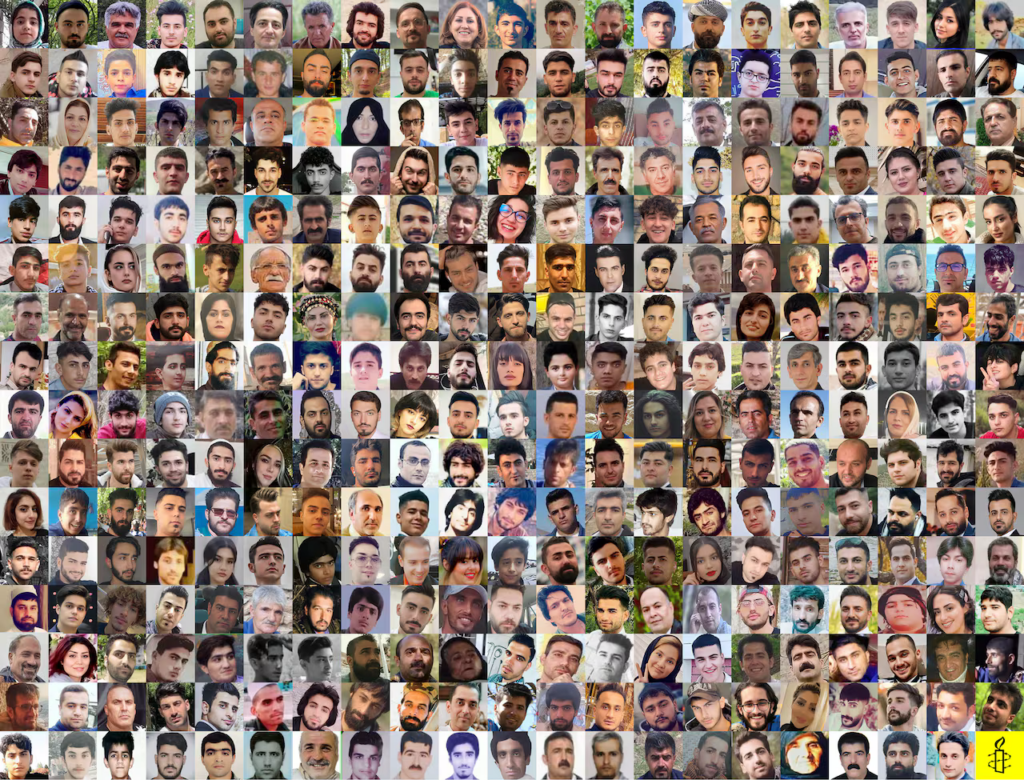
Photos of the victims of the deadly 2022 crackdown on nationwide protests in Iran after Amini’s death ignited the Woman, Life, Freedom movement. (Amnesty International)
Minority groups disproportionately targeted, report says
Amini, a Kurdish-Iranian woman, died three days after she fell into a coma in police custody.
Her Kurdish name Jina (or Zhina), which means “life” in Kurdish, is still used by Kurdish activists and rights groups — represented in the Woman, Life, Freedom movement slogan.
It was the protests sparked by Amini’s death that launched the pattern of unlawful killings that began in Kurdistan province, the Amnesty report says.
It found that Iranian authorities disproportionately targeted Kurdish and Baluchi communities, who largely practice Sunni Islam in a predominantly Shia nation, with “lethal repression.”
Both groups reportedly suffered a “devastating share” of deaths in 2022, making up roughly 62 per cent of the total number of known victims despite representing at most 15 per cent of the country’s population.
The findings also come amid armed hostilities, since the U.S. and Israel declared war on Iran at the end of February, with talks currently stalling to end the months-long regional conflict.
While U.S. and Israeli officials have largely justified military action against Iran on security grounds — including its nuclear and missile programs — Amnesty cautioned against using the Iranian government’s human rights abuses to legitimize unlawful military attacks.
In July, Trump condemned Iran’s leadership after the execution of two protesters, calling officials “savages.”
“Amnesty International unequivocally opposes violations of international law by all parties and rejects any attempt to instrumentalize the suffering of victims of human rights violations in Iran to justify unlawful attacks that inflict further civilian harm,” said Secretary General Agnès Callamard.
CBC. Canada
