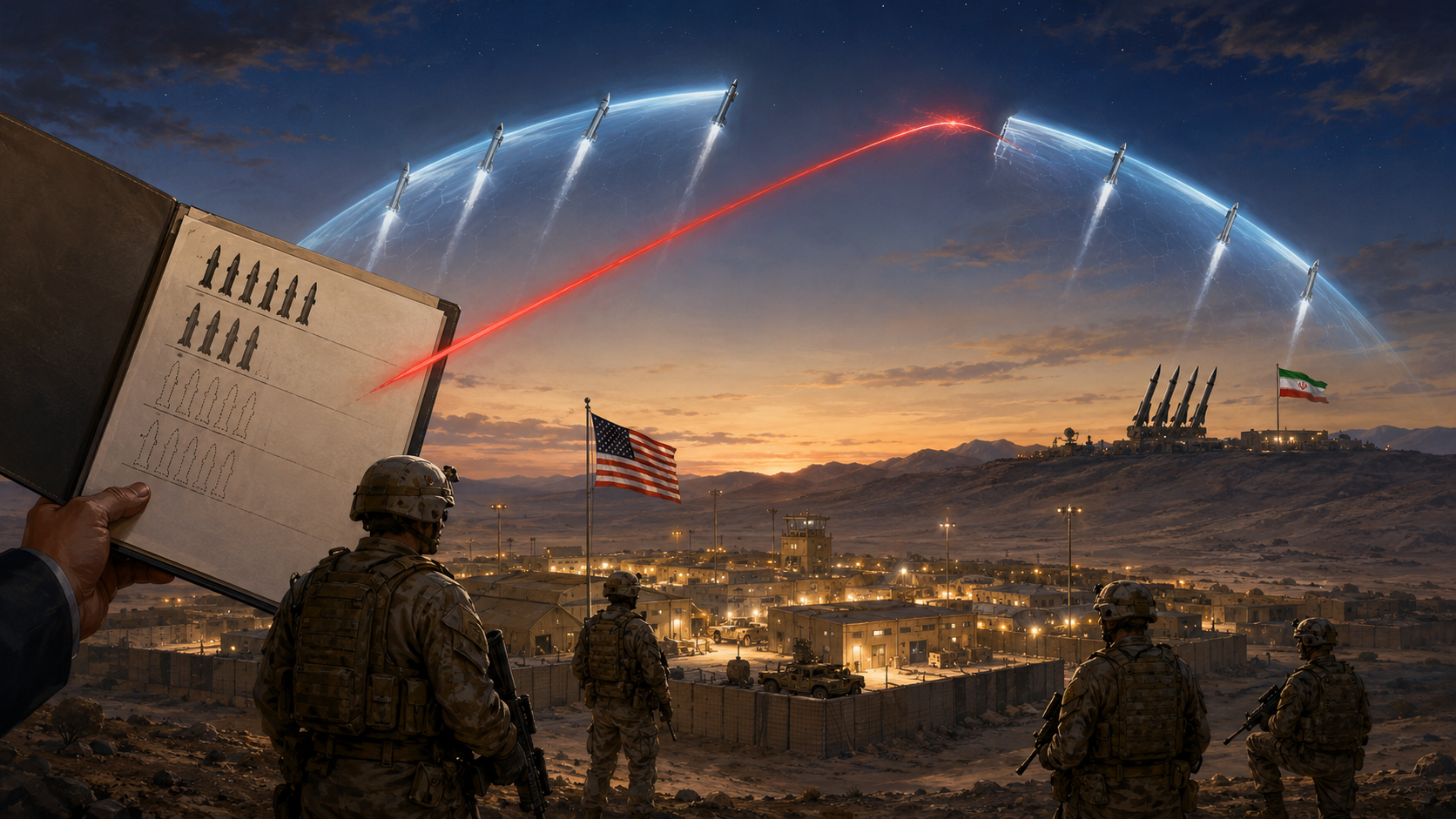
Illustration- When America advertises the gaps in its defenses, its enemy receives the intelligence—and American troops face the consequences. The servicemen and women stationed in harm’s way deserve protection, preparation and responsible leadership—not public disclosures that make their missions more dangerous
Broadcasting depleted missile stockpiles may encourage Iran to prolong the war—and place American servicemen and women across the Middle East in greater danger.
By : Ya Libnan Editorial Board, Opinion
Wars are not won by telling the enemy which weapons are running out.
Yet multiple U.S. media organizations have reported, based on anonymous sources, that the United States has used “virtually all” of its global stockpile of Army Tactical Missile Systems, known as ATACMS, and the newer Precision Strike Missiles during the war with Iran.
If accurate, this represents a serious failure of military planning and America’s defense-industrial system. Congress must investigate why the United States entered a prolonged war without the ability to replace critical weapons as quickly as they were being consumed.
But broadcasting that weakness during the war only compounds the failure.
Iran is listening.
Its commanders may conclude that time is now on their side. They may decide to prolong the conflict, intensify attacks against American bases, disperse strategic targets and force Washington either to accept greater risks or reduce its operations.
Even if Iranian intelligence had already estimated American missile usage, repeated public confirmation gives Tehran greater confidence in its calculations.
That confidence could cost American lives.
American Troops Will Pay the Price
This is not an abstract debate over Washington politics or media ethics. American servicemen and women are stationed at bases across the Middle East, within range of Iranian missiles and drones.
They depend on America’s ability to defend them and retaliate decisively against anyone who attacks them. Publicly declaring that essential weapons are nearly exhausted weakens that deterrence and may encourage Iran to test American defenses again.
The men and women serving their country did not volunteer to become pawns in Washington’s political and bureaucratic disputes. They trusted their government to provide the weapons, protection and operational security necessary to bring them home safely.
America owes them preparation—not public confessions of vulnerability.
Freedom Does Not Eliminate Responsibility
The United States must remain a democracy with a free press. Americans have every right to know whether their government mismanaged the war or failed to maintain sufficient ammunition.
But democratic accountability does not require giving Iran a wartime inventory report.
Congress can conduct classified hearings. Inspectors general can investigate procurement failures. Military leaders can brief elected officials behind closed doors. The administration can request emergency funding and accelerate production.
The public can also be informed that ammunition supplies are under severe pressure without being told that “virtually all” of two named long-range missile stockpiles have reportedly been used.
There is a difference between exposing a strategic failure and identifying precisely where America may now be vulnerable.
Freedom of speech is a constitutional right. It is not an excuse to abandon loyalty, judgment and responsibility while Americans are under attack.
Who Disclosed This Information?
The media did not count the missiles in American warehouses. Individuals with access to sensitive military assessments reportedly supplied this information anonymously.
They revealed America’s possible limitations while protecting their own identities.
If the information was classified, the Pentagon and Justice Department should determine who disclosed it and whether national-security laws were violated. The country also deserves to know whether the leak was intended to influence policy, embarrass the administration or settle an internal dispute.
Whatever the motivation, military secrets should not become weapons in Washington’s political battles.
The media also had a choice. News organizations regularly withhold sensitive information when publication could compromise an operation or endanger lives. They could have exposed the broader readiness crisis without repeatedly broadcasting the alleged depletion of specific weapons.
The First Amendment protects the press from government censorship. It does not protect the media from criticism when its editorial decisions may help an enemy and endanger American troops.
Investigate the Shortage—and the Disclosure
There are two failures here.
The first is the reported depletion of critical missiles. How did the world’s most powerful military consume vital weapons faster than it could replace them? Were warnings ignored? Why was production not expanded earlier?
The second is the decision to advertise that weakness while the war continues.
Legally, treason has a very narrow constitutional definition. But this is about more than legal terminology. In its practical effect, publicly confirming America’s military vulnerabilities during wartime is betrayal par excellence. It strengthens the enemy’s resolve, alarms allies and increases the danger facing Americans in uniform.
Investigate the shortage. Accelerate production. Strengthen the defenses surrounding every American base. Brief Congress and hold the responsible officials accountable.
But stop telling Iran which weapons America may be running out of.
Every adversary studies the United States for signs of weakness. The U.S. media should not do their intelligence work for them.
