HIGHLIGHTS
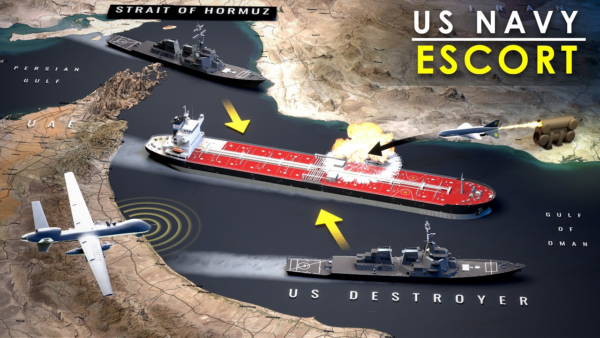
- Energy Secretary Chris Wright said Iran won’t be able to close the Strait of Hormuz again due to U.S. military escorts.
- Wright said 17 million barrels of oil passed through Hormuz when Iran declared the strait closed over the weekend.
- The Trump administration will ensure the world is well supplied with energy, he said.
WASHINGTON- U.S. military escorts of commercial ships have ended Iran’s ability to close the Strait of Hormuz in the future, Energy Secretary Chris Wright said Wednesday.
“Iran will not have the ability to close the Strait of Hormuz going forward,” Wright said at a conference in New York City. “That’s their key leverage and we’re taking that leverage away from them.”
Some 72 ships loaded with 19 million barrels of oil have passed through Hormuz in the past 24 hours, he said. Trade intelligence firm Kpler has confirmed around 4.8 million barrels per day exiting the strait since the U.S. and Iran agreed to open the sea lane last week.
The U.S. could reimpose its naval blockade again if Iran does not meet Washington’s demands, Wright said. The Trump administration will ensure the world is well supplied with energy, he added.
The energy secretary said 17 million barrels of oil passed through Hormuz when Iran declared the strait closed again over the weekend. U.S. naval escorts through Oman’s territorial waters in the southern part of the strait prevent Iran from interdicting commercial ships, Wright said.
“If we can get no deal with Iran, we will assure that the flow of energy is there, the world is well supplied and the Iranian administration will be in a world of hurt,” Wright said.
Wright noted that the U.S. waiving sanctions on Iranian oil sales for 60 days is not a major win for the Islamic Republic. The Trump administration hasn’t released any money to Tehran yet, he said.
Iran began attacking commercial ships in Hormuz after the U.S. and Israel launched a massive wave of airstrikes against the country on Feb. 28.
Ship traffic through the strait plunged as a consequence, triggering the biggest oil supply disruption in history. About 20% of the world’s supply passed through Hormuz before the war.
Iran has agreed to allow ships to pass through Hormuz without paying a toll or 60 days under the agreement signed with the U.S. last week. Washington has lifted its naval blockade of Iran.
It is unclear how Hormuz will be governed after the 60-day period. Iran is supposed to discuss administration of the strait with Oman and its Gulf neighbors under the terms of the deal.
“We haven’t unfrozen any funds, they haven’t got anything meaningful yet,” Wright said at the event, which was hosted by Reuters. “They could get meaningful things from us, but they have to deliver meaningful wins for us and security for the world.”
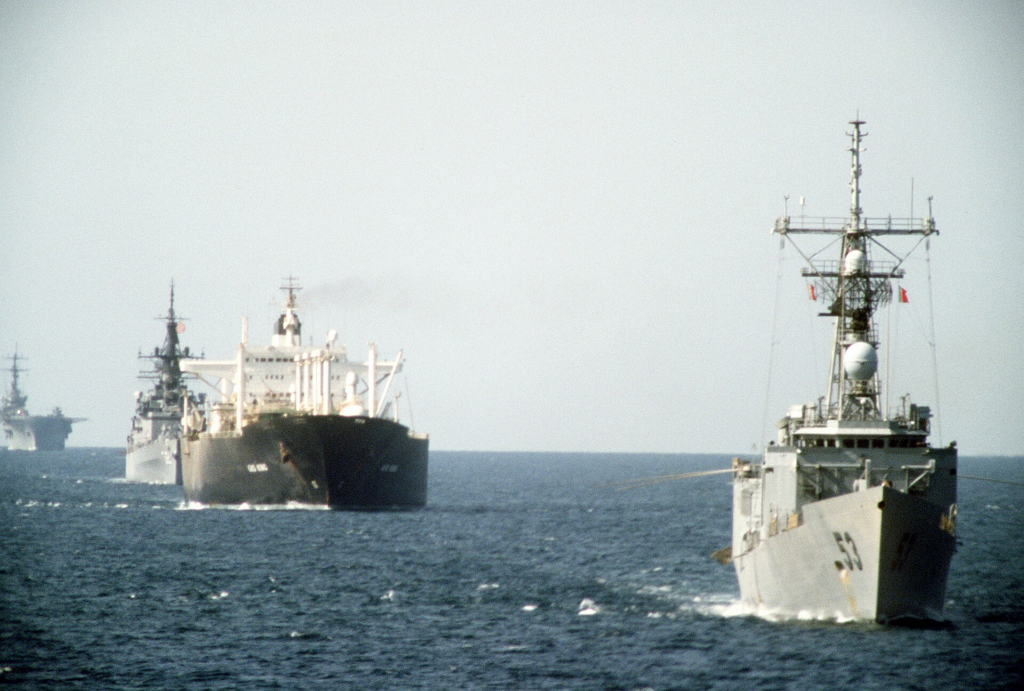
File- A view of ships and tanker convoy No. 12 underway in the Arabian Gulf on 21 October 1987. Included in the convoy were the U.S. Navy guided missile frigate USS Hawes (FFG-53), the reflagged tanker Gas King, the guided missile cruiser USS William H. Standley (CG-32) and the amphibious assault ship USS Guadalcanal (LPH-7).
President Ronald Reagan authorized the escort of commercial ships through the Strait of Hormuz in 1987. Known as Operation Earnest Will, the U.S. Navy protected re-flagged Kuwaiti oil tankers from Iranian attacks during the Iran-Iraq War.
Many urged president Trump to do the same and this development may be the result of Iran’s behavior following the signing of the MOU
CNBC
