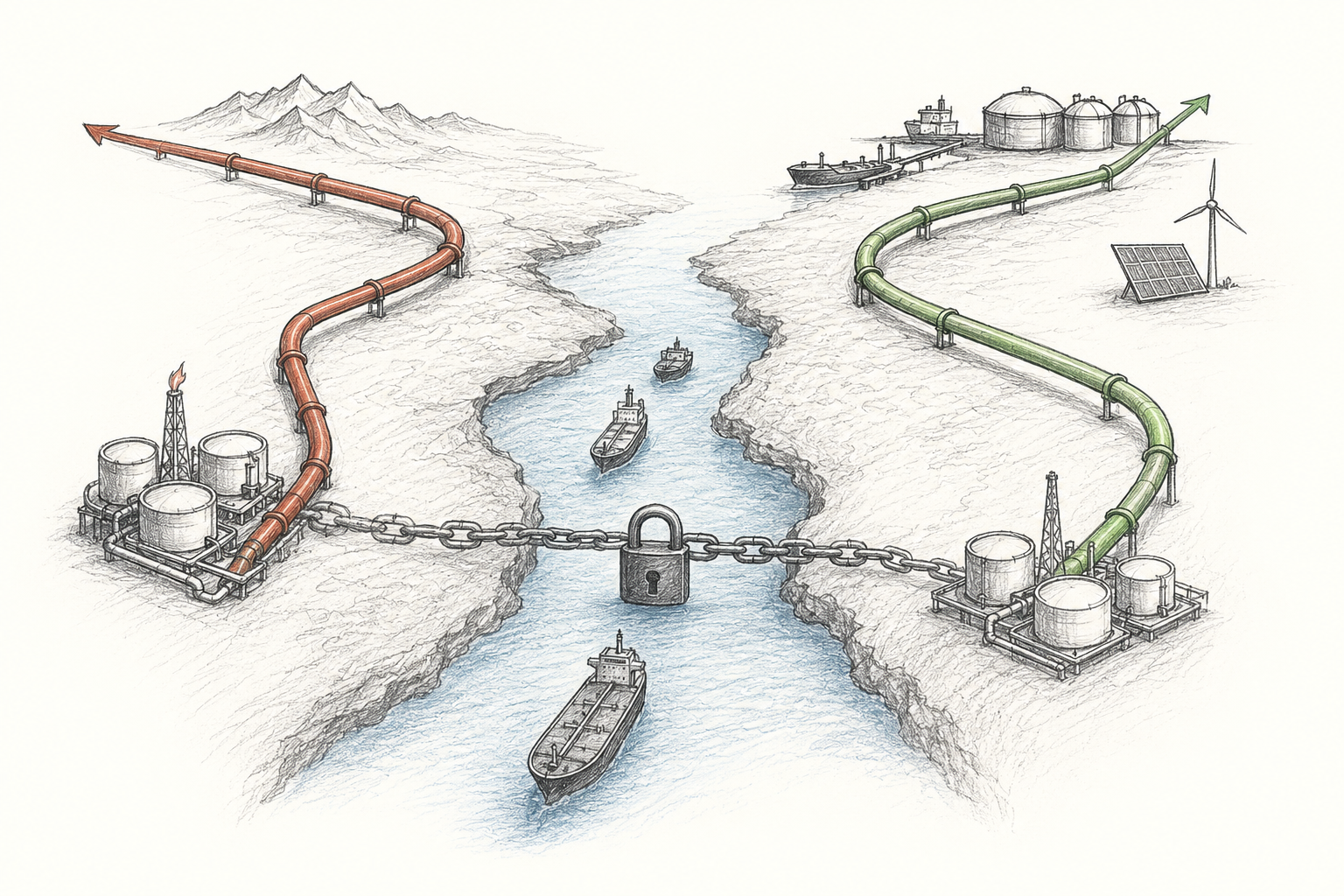
Illustration: The most effective way to defeat the Hormuz chokepoint is to build a way around it. Iranian officials have repeatedly identified control over the strait as a core strategic objective and a key component of Iran’s long-term deterrence posture
The best way to defeat a chokepoint is not to fight over it—it is to make it less important.
By : The Editorial Board
Every few months, the world is reminded of a dangerous reality: too much of the global economy depends on a narrow stretch of water that can be threatened by the decisions of a single government.
The latest dispute over the Strait of Hormuz is only the most recent example. Iran’s military announced that it had again closed the waterway, while U.S. officials said commercial shipping continued to transit through it. The justification this time was linked to events in Lebanon and accusations that the United States failed to prevent Israeli actions.
Whether those claims are justified is almost beside the point.
The real problem is that the reason for threatening Hormuz changes from one crisis to another, but the threat itself never disappears.
One year it is sanctions. Another year it is a military confrontation. The next year it is a regional dispute involving countries that are not even parties to the original conflict. As long as the world remains dependent on Hormuz, every crisis in the Middle East carries the potential to disrupt global trade, energy markets, and economic stability.
No country should possess that level of leverage over the international community.
The Strait of Hormuz is one of the world’s most important maritime chokepoints. A significant share of global oil and liquefied natural gas exports pass through it every day. When shipping companies, insurers, and energy markets hear threats of closure, prices rise, uncertainty spreads, and businesses thousands of miles away pay the cost.
The world has spent decades reacting to Hormuz crises. It is time to start solving the problem.
The long-term answer is not another temporary agreement. It is reducing dependence on the Strait itself.
Countries in the Gulf should accelerate investment in pipelines that bypass Hormuz altogether. Energy-importing nations should continue diversifying their suppliers and strategic reserves. Governments should expand investment in alternative energy sources, nuclear power, LNG infrastructure, and new transportation corridors that reduce vulnerability to a single maritime bottleneck.
The goal is not to isolate Iran. The goal is to ensure that no nation can repeatedly use a critical international waterway as a political pressure point.
History offers a simple lesson: leverage loses its power when alternatives exist.
For decades, the world has treated each Hormuz crisis as an emergency requiring immediate attention. Yet every crisis delivers the same message. Dependence creates vulnerability. The more dependent the world remains on a single chokepoint, the greater the temptation for political actors to use that chokepoint as a bargaining chip.
The international community cannot prevent every regional conflict. It cannot eliminate every political dispute. But it can reduce the ability of any one country to hold global commerce hostage.
Every threat to close Hormuz should strengthen the determination to build alternative routes, alternative energy sources, and alternative supply chains.
The most effective response to repeated threats against the Strait of Hormuz is not another round of negotiations.
It is building a world that no longer depends on Hormuz to function.
