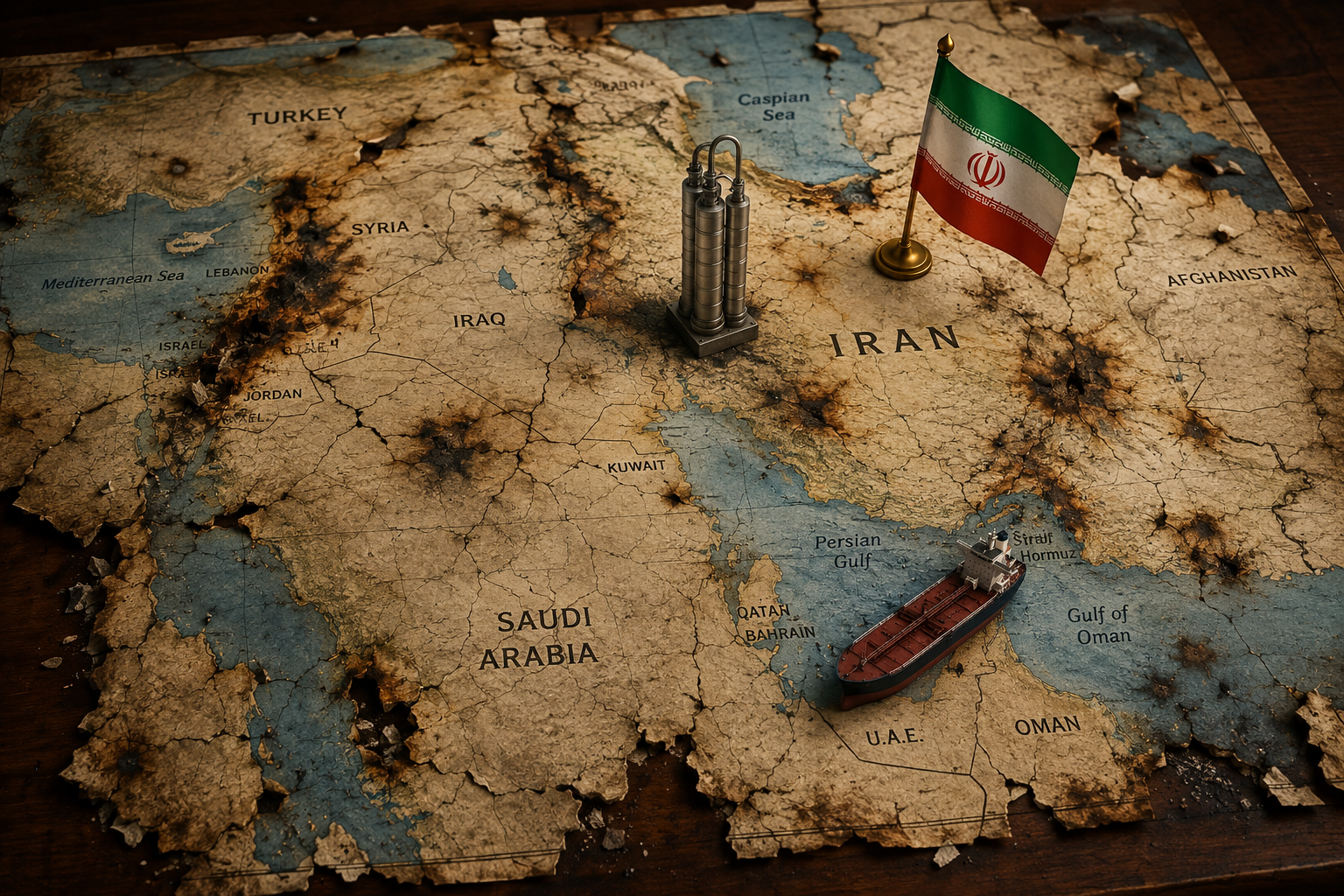
Illustration- The region paid the price. The objectives remain on the table
If the nuclear issue remains unresolved, Hormuz has become a crisis, and the regime emerged stronger, what was the war’s lasting accomplishment?
By: The Editorial Board, Opinion
When the United States and Israel launched military action against Iran, the objectives appeared clear.
Iran’s nuclear ambitions would be stopped. Regional security would be strengthened. The Iranian regime would be weakened. Some even suggested that military pressure could open the door to greater freedom for the Iranian people.
More than three months later, as reports emerge of a possible agreement to end the conflict, it is time to ask a simple question:
What exactly did the war achieve?
The most obvious objective was Iran’s nuclear program. After all, that was the primary justification given for the war. Yet according to reports, the proposed agreement would begin with reopening the Strait of Hormuz, easing sanctions, releasing frozen Iranian assets, and implementing a ceasefire framework, while negotiations over Iran’s nuclear program would take place afterward.
Iranian officials have publicly stated that no nuclear negotiations will occur until the agreement is first implemented.
If that is the case, then the central issue that supposedly justified the war remains unresolved.
The second objective appears no more successful.
One of the war’s unintended consequences was the transformation of the Strait of Hormuz from a manageable strategic concern into a global crisis.
Before the war, Hormuz was not closed. Oil flowed. Commercial shipping continued. Energy markets functioned. Iran occasionally issued threats, but the world did not wake up every morning wondering whether one of the world’s most important waterways would remain open.
The war changed that.
Hormuz became a bargaining chip. Global energy markets became vulnerable. Shipping costs rose. International commerce was thrown into uncertainty. Ironically, a problem that was not at the center of the crisis before the war became one of the central issues afterward.
In short, Hormuz was not the reason for the war. Hormuz became a major problem because of the war.
The third objective may represent the greatest disappointment of all.
From the first days of the conflict, many observers believed military pressure would weaken the Islamic Republic and perhaps even trigger political change inside Iran. President Trump repeatedly addressed the Iranian people directly. Supporters of the war spoke openly about the possibility of a different future for Iran.
Yet that future never arrived.
The regime survived.
The Revolutionary Guards remain powerful.
The opposition received little meaningful assistance.
No major nationwide uprising materialized.
No alternative leadership emerged.
And the very people whom Washington claimed it wanted to help were ultimately left on their own.
History offers an old lesson that leaders repeatedly ignore: foreign military attacks often strengthen the governments they are intended to weaken. Faced with external threats, populations frequently rally around their national flag even when they oppose their rulers.
That appears to be exactly what happened in Iran.
Today, Iranian leaders openly claim victory. They present themselves not as a regime on the verge of collapse, but as a government that survived a war against the combined military power of the United States and Israel and lived to negotiate the terms of peace.
Whether that claim is true is less important than the fact that they feel confident enough to make it.
The costs of the conflict have been substantial. Thousands have died. Regional economies have suffered. Energy markets have been disrupted. America’s allies in the Middle East have borne enormous economic and security burdens.
Yet when one examines the original objectives, the results are difficult to ignore.
If the war was intended to eliminate Iran’s nuclear threat, that goal remains unresolved.
If the war was intended to secure the Strait of Hormuz, the conflict transformed Hormuz into a global crisis.
If the war was intended to weaken the Islamic Republic, the regime remains firmly in power and may be politically stronger than before.
And if the war was intended to help the Iranian people achieve freedom, they were ultimately left without the support they were promised.
History judges wars by outcomes, not intentions.
Measured against the goals that were repeatedly presented to the public, the war leaves behind a question that Washington, Jerusalem, and Tehran will continue to debate for years:
What exactly did the U.S.-Israeli war on Iran achieve?
