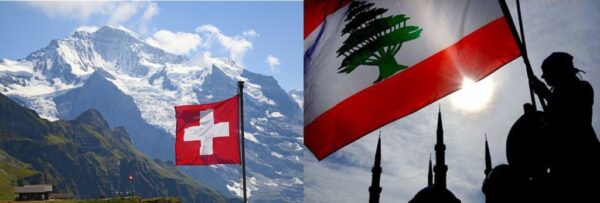
During its better days and until the early 1970s Lebanon was dubbed “The Switzerland of the East”, but unfortunately it lost that title after the 1975-1990 civil war and never regained it and, as long as the current corrupt and divisive political Sectarian remains in place it will never regain it .
Sectarianism divided Lebanon, lets reunify it by adopting federalism
By: The Editorial Board , Opinion
MP Walid al-Baarini, who represents the region of Akkar in parliament, defended his recent call for “federalism,” in Lebanon stressing that his proposal “means unification rather than partitioning as some are claiming “
“We demand broad decentralization and call for a serious discussion that would bring down all barriers among the Lebanese, he told Nidaa al-Watan newspaper.
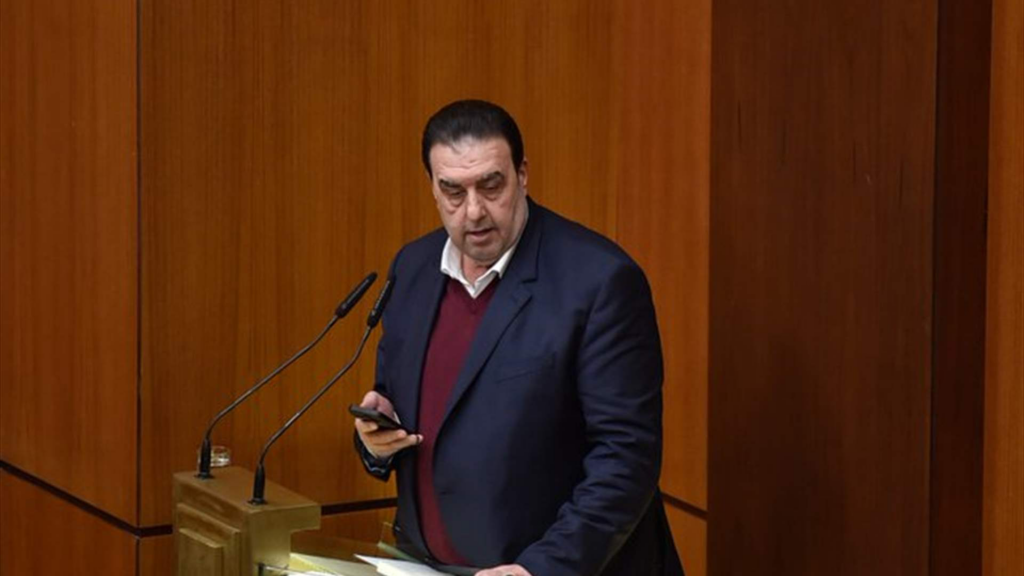
“Some say that federalism is appropriate in Switzerland but not in our country, and this is not true. That’s why we invite you to dialogue and let’s adopt ‘Lebanonized federalism’ and choose what fits our country,” the lawmaker went on to say.”
He added: “We’re all seeing the direction in which the region is headed, so why should we close our eyes and ears? If we want federalism, we want it to be a solution, not a partitioning We want it to achieve balanced developments and bring down the barricades.
He is not the first official in Lebanon to call for federalism .
Switzerland of the East
Ever since we can remember while we were growing up in Lebanon, we were always told that Lebanon Is the Switzerland of the East, but as events have shown, Lebanon today does not resemble Switzerland in anything. But it is very important is to explore the possibility of adopting the Swiss model of government in Lebanon to save the country from collapse, according to political analyst Sami Haddad
The idea first surfaced about four years ago after hearing Patriarch Becahar Boutros Al Rai’s calls for neutrality in Lebanon and for holding an international conference to help save Lebanon.
“We think this is a great opportunity to change the Lebanese political system that has failed the country badly with a system that has been very very successful “, Haddad added
Last April MP Camille Dory Chamoun announced the launch of preparations for the federalism project: “The central sectarian system is an obstacle to Lebanon’s progress, he said during a press conference.”
In his speech, Chamoun evaluated the “centralized sectarian system,” which he saw as “standing as an obstacle to Lebanon’s progress since before independence,” considering that this system “was and continues to be a source of crises, wars, occupations, instability, and immigration so that it has proven to be a disruptive system based on quotas.” “It feeds on corruption.”
He pointed out, “In light of this reality, we see that the federalism system is the most appropriate and suitable for application in a state characterized by cultural pluralism, such as Lebanon, especially since numerous international experiences have proven the success of the federal state’s experience in a pluralistic structure, as it is a formula that regulates coexistence and diversity within one nation, and ensures respect for human rights.”
The head of the Free Patriotic Party Gebran Bassil commented by saying “Federalism is the opposite of division”, calling on the Lebanese to be frank and constructive in discussing a formula that preserves respect, freedom, and rights for all components of this country.
Switzerland is a shining example of federalism
Switzerland’s political structure consists of the Confederation of 26 cantons . Political and legislative powers are distributed across these three levels in a way that grants each of them the greatest possible autonomy and brings a diverse range of political stakeholders together under one roof. Cantons act as constituent states and have their own constitutions, parliaments, governments and courts.
Lebanon on the other hand has 25 districts ( Qadaa) which allows it to adopt the same canton System of Switzerland
In a country with different religious and linguistic groups, the federalism model makes it possible to accommodate both national unity and cultural diversity. Together with direct democracy, federalism is one of the cornerstones of the Swiss political system. Federalism strives to integrate citizens into the political process as much as possible.
To ensure that the 26 cantons are equally represented at the federal level despite their differences in size, culture and religion, each canton sends two representatives to the Council of States, one of the two chambers of the Federal Assembly. All 26 cantons have the right to launch a popular referendum on a piece of federal legislation provided that at least eight cantons express support for it.
The rise of Switzerland as a federal state began on 12 September 1848, with the creation of a federal constitution in response to a 27-day civil war.
Swiss federalism is widely recognized as one of the most successful and functional models in the world. This federal system, based on the division of powers between the Confederation and the 26 cantons, has ensured political, economic, and social stability in the country.
Federalism in Brief
Federalism has several advantages that can contribute to the stability and prosperity of a country:
Democratic Participation: Federalism allows for more direct and meaningful participation of citizens in local and regional governance. With power decentralized, decisions can be made closer to the affected population, enabling stronger representation and involvement of citizens in political life.
Adaptability: Federalism enables greater flexibility and adaptability to the varied needs and preferences of different regions or states within the country. This means that policies can be tailored to the specific local, cultural, and economic realities of each region.
Preservation of Diversity: In countries with significant cultural, linguistic, ethnic, or religious diversity, federalism can help preserve and promote this diversity. By allowing different regions to govern their internal affairs, federalism promotes respect for and protection of the cultural and linguistic identities of diverse communities within the country.
Political Stability: Federalism can contribute to political stability by creating a governance system that balances power between the central and local levels. This balance can reduce tensions between the central government and the regions, providing a mechanism for the peaceful resolution of disputes and differences of interest.
Administrative Efficiency: Federalism can lead to greater efficiency in public administration. With decisions made closer to the people affected, local and regional governments can better respond to the needs of citizens and provide effective and timely public services.
Balance of Power: Federalism contributes to a balance of power between the central government and local governments, preventing excessive concentration of power in a single institution or authority. This can help prevent abuse of power and ensure better protection of the rights and freedoms of citizens.
In conclusion, federalism provides an institutional framework that promotes democratic participation, cultural diversity, political stability, and administrative efficiency, contributing to the prosperity and cohesion of a country.
During its better days and until the early 1970s Lebanon was dubbed “The Switzerland of the East”, but unfortunately it lost that title after the 1975-1990 civil war and never regained it and, as long as the current corrupt and divisive political Sectarian remains in place it will never regain it .
The time to try and regain it is now
