BY LAURA KELLY AND FILIP TIMOTIJA
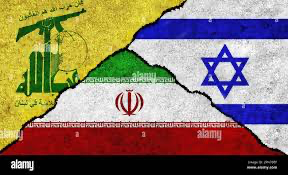
Iran is using Lebanon as leverage in peace talks with the U.S., exploiting tensions between President Trump and Israeli Prime Minister Benjamin Netanyahu’s government in the process.
Trump held two expletive-laden calls with Netanyahu earlier this week, demanding he retreat on a major military offensive in Beirut against Iranian-backed Hezbollah.
“I wouldn’t say angry, I was a little bit perturbed at his constantly fighting with Lebanon, at some point I said, Bibi we gotta stop this, you gotta stop it,” Trump said.
The U.S. has tried to end fighting in Lebanon by bringing together Israel and the Lebanese government and trying to empower the Lebanese armed forces to disarm Hezbollah.
But the Israeli retreat from Beirut served as a win for Tehran, which had conditioned its ceasefire with the U.S. on a halt in fighting between Israel and Hezbollah.
Despite the truce being pushed by Trump, Lebanon remains a tinderbox.
On Wednesday, Israeli Ambassador to the U.S. Yechiel Leiter posted video of what he said was a Hezbollah rocket attack against the northern Israeli city of Kiryat Shmona.
“It should be remembered that Israel agreed to refrain from striking Hezbollah command centers in Beirut on the condition that Hezbollah would stop attacking Israeli towns and villages,” he wrote on the social media site X.
“This morning’s attack is yet another blatant violation of that understanding.”
The U.S. has backed Israel’s right to defend itself against threats from Hezbollah and tried to separate the Lebanon file from negotiations with Iran, which are focused on re-opening the Strait of Hormuz and blocking Iran’s pathway to a nuclear weapon.
“We are trying to view the Lebanon-Israeli talks as separate and distinct from Iran, and what Iran wants to do is mix it all together,” Secretary of State Marco Rubio told lawmakers on Tuesday during a Senate committee hearing.
Trump appears willing to punt on tough negotiations over the future of Iran’s nuclear program as he looks to strike a deal with Tehran to reopen the Strait of Hormuz. A fifth of the world’s oil and gas flows through the key maritime trade route, and its closure has sent gas prices soaring in the U.S., thrown developing countries into contingency energy planning and worsened food shortages for the world’s worst humanitarian crises.
But even that more limited deal appears out of reach unless Trump can hold back Netanyahu in Lebanon.
Sarit Zehavi, president of the Alma Research and Education Center in northern Israel, warned the U.S. demand for Israel to retreat against Hezbollah empowered the U.S.-designated terrorist group and weakened the Lebanese government, setting back U.S. goals of strengthening Beirut.
“If the U.S. truly wants to help the Lebanese government, it should give Israel freedom of operation in Lebanon against Hezbollah,” Zehavi told The Hill on Tuesday.
“At the same time, it can assist the security system in Lebanon to act against Hezbollah and to support it to make sure that the Lebanese government is the only one who is giving humanitarian aid to the displaced people.”
Netanyahu is facing intense domestic political pressure to hit Hezbollah hard, in particular as the prime minister faces an election in the fall where he has framed himself as Israel’s strongest defender.
Iran has invested heavily in making Hezbollah, the Lebanese-Shi’ite political and military organization, one of its strongest proxy fighting forces and a major threat to Israel, sitting on its northern border.
But Israel succeeded in dealing critical blows to Hezbollah in the aftermath of the Oct. 7, 2023 terrorist attacks by Hamas, another Iranian-backed proxy.
Israel scored a major psychological and strategic victory over Hezbollah in September 2024 by putting exploding pagers in the hands of approximately 1,500 of the group’s rank and file. Israel then assassinated Hezbollah’s charismatic and highly effective three-decade leader, Hassan Nasrallah.
Hezbollah’s current leader, Naim Qassem, is viewed as someone who “is both unable to inspire and unable to successfully intimidate,” said Fadi Nicholas Nassar, a Senior Fellow at the Middle East Institute.
“All signs point to Tehran and the IRGC [Islamic Revolutionary Guard Corps] taking increasing decision-making control in regrouping, reorganizing and shaping the behavior of Hezbollah,” he added. The IRGC is the paramilitary organization reporting directly to Iran’s supreme leader and responsible for military operations abroad.
The U.S. has put enormous diplomatic energy into strengthening the central Lebanese government and isolating Hezbollah from Iran. The U.S. has brokered unprecedented face-to-face talks between Beirut and Jerusalem and wants to empower the Lebanese armed forces to disarm Hezbollah.
“It’s one of the most ironic situations in the world, the Lebanese government and the Israeli government could do a peace deal tomorrow,” Rubio told lawmakers on Tuesday, as Israeli and Lebanese officials were meeting at the State Department.
“The impediment in Lebanon is the fact that Hezbollah has embedded itself into that country and is the reason for all the suffering that’s happening there right now, and all the suffering that’s historically happened, entirely funded, entirely controlled by Iran.”
But the Lebanese armed forces — which gets significant assistance and backing from the U.S. — has yet to realize the full disarmament of Hezbollah. The militant group launched attacks against Israel in early March, following the U.S. and Israeli attacks against Iran on Feb 28.
The recent outbreak of fighting, with Hezbollah launching drones and missile attacks against northern Israel over the past weekend, and Israel’s military pushing forward toward Beirut, marked the first major break from a ceasefire between Israel and Hezbollah that was reached on April 16.
Katulis of the Middle East Institute said lasting peace will depend on the U.S. continuing to incentivize and empower Lebanon’s government to rein in Hezbollah.
“The first is security for Lebanon, second would be economic support,” he said, saying that could take the form of U.S.-Lebanese investment projects. A third-pillar would be for the U.S. to push rich Gulf-Arab states to help Lebanon balance its budget.
Nassar, also of the MEI, said Iran just wants to buy time to strengthen Hezbollah.
“Iran wants to offer a temporary truce… and bet that they can regroup and rearm Hezbollah faster than Israel can degrade them. What America offers is something else, an ability to negotiate an end of the Israel-Lebanon conflict for good.”
THE HILL
