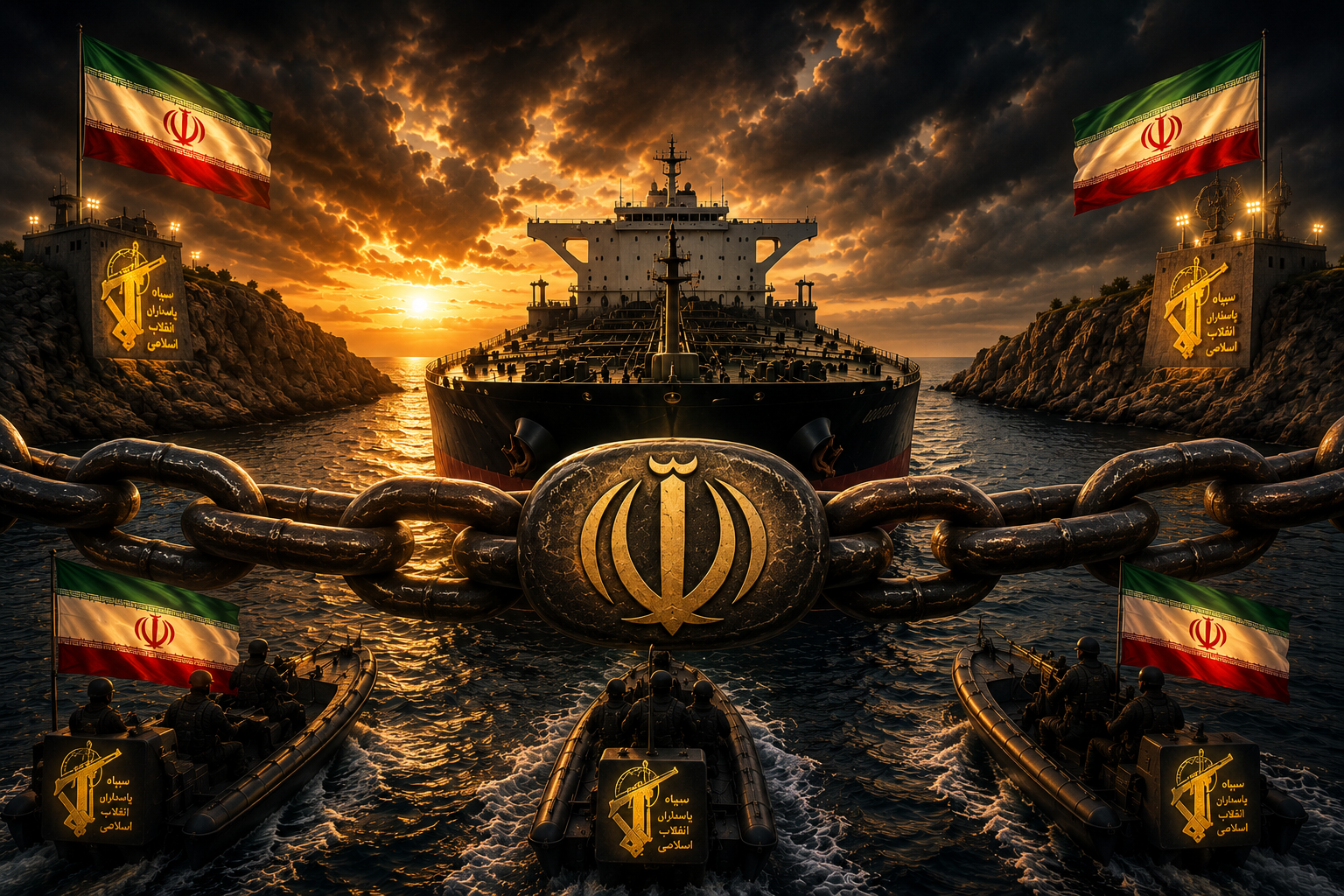
The image symbolizes how a narrow chokepoint—and a much smaller force—can hold the world’s energy lifeline hostage, testing American power, global trade, and freedom of navigation.
If Iran no longer fears U.S. consequences in Hormuz, America risks losing far more than a negotiation—it risks losing global credibility itself.
The clock may be ticking, as President Donald Trump warned in his recent comments to Axios, but so far Tehran appears unconvinced. Iran’s leadership has heard threats before. It has watched red lines fade, deadlines move, and warnings diluted by hesitation. Today, the Islamic Republic openly questions Washington’s resolve, while its foreign minister says Iran does not trust the United States to honor any deal.
That is the real crisis facing Washington—not only Iran’s nuclear ambitions or regional aggression, but the erosion of American credibility itself.
The Strait of Hormuz is not just another geopolitical flashpoint. It is the world’s most strategic energy artery. Roughly a fifth of global oil and major LNG shipments pass through it. If freedom of navigation in Hormuz is permanently compromised, the consequences will reach far beyond the Middle East. Energy markets will remain hostage to instability. Insurance and shipping costs will soar. Allies will begin doubting whether the United States can still guarantee the security of global trade routes.
And once credibility is lost in Hormuz, it will not stay confined there. Beijing will notice. Moscow will notice. Every militia, proxy, and adversary watching America’s response will notice.
Trump is correct that Iran still wants a deal. Tehran understands the economic and military imbalance. But Iran also believes time is on its side. The regime has become skilled at stretching negotiations while advancing its strategic position, testing limits, and calculating how far it can push without triggering decisive consequences.
That calculation must change.
The issue is no longer simply about uranium enrichment levels or diplomatic proposals. It is about restoring deterrence. Iran must believe that obstructing navigation in Hormuz or continuing nuclear escalation carries unbearable costs. Diplomacy without credible enforcement becomes theater—and Tehran knows it.
The worrying signal is that even countries supposedly acting as intermediaries no longer appear convinced by Washington’s warnings. Pakistan, which has attempted to play a mediating role, has reportedly also facilitated avenues helping Iran bypass elements of U.S. pressure. That alone reflects how weakened American leverage has become in the eyes of regional players.
History matters here. In 1987, during the Iran-Iraq war, the United States launched Operation Earnest Will to protect tanker traffic in the Gulf. President Ronald Reagan understood that freedom of navigation was not negotiable. When Iranian mines struck U.S.-flagged vessels, Washington responded forcefully with Operation Praying Mantis, crippling major parts of Iran’s naval capabilities. The message was unmistakable: the world’s energy lifeline would remain open.
That clarity is missing today.
Iran does not need to defeat the United States militarily to win strategically. It only needs to convince the world that America no longer has the will to enforce its own warnings. If that perception hardens, the damage to U.S. influence could last for decades.
President Trump now faces a defining moment. Either Iran concludes that Washington’s threats are real—or Hormuz risks becoming a symbol of declining American deterrence.
“If freedom of navigation in Hormuz is lost, America’s credibility goes down the tube.”
The world is watching. So is Tehran.
