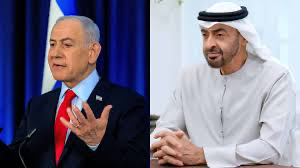
Israeli Prime Minister Benjamin Netanyahu made a secret visit to the United Arab Emirates recently, where he met with Mohammed bin Zayed, the country’s president, sources told CBS News.The war has distanced the Gulf countries from Iran, which they reportedly now view as their real enemy
Here is the latest:
- President Trump said, before arriving Wednesday in China, that he expected a “long talk” with President Xi Jinping about the Iran war. He said the U.S. doesn’t “need any help” from Beijing in resolving the 75-day conflict that has slammed the global economy.
- With diplomatic efforts for a peace deal seemingly stalled, an Iranian commander says military drills in Tehran have demonstrated the Islamic Republic’s readiness to confront a potential new U.S. attack “at any place and at any time.”
- The Iran war has cost U.S. taxpayers $29 billion so far, acting Pentagon comptroller Jules Hurst told lawmakers on Tuesday. Defense Secretary Pete Hegseth had put a $25 billion price tag on it last month, but U.S. officials familiar with internal assessments suggested at the time the war could already have cost close to $50 billion.
U.S. military says it has allowed 15 ships “supporting humanitarian aid” to pass through since blockade on Iran
Since a blockade of Iranian ports began, the U.S. military has allowed 15 merchant vessels “supporting humanitarian aid” to pass through, U.S. Central Command said in a social media post Wednesday.
They include both merchant ships allowed to dock in Iranian ports, as well as ships that were allowed to sail out of Iranian ports and into open waters, said Capt. Tim Hawkins, a spokesperson for the command.
The social media post noted that since the blockade began on April 13, U.S. forces have redirected 67 commercial vessels and disabled four more “to ensure compliance” with the restrictions.
Iran hangs 2 men, including one accused of spying for Israel
Iranian authorities on Wednesday hanged a man convicted of spying for Israel and another man in a case linked to January protests, the latest in a spate of executions against the backdrop of the U.S.-Israeli war against the Islamic republic.
The Iranian judiciary’s Mizan Online website described Ehsan Afreshteh, 32, as “a spy trained by Mossad in Nepal who sold sensitive information to Israel,” and said he had been executed.
It later announced in a separate statement that Mohammad Abbasi, who had been sentenced to death over the killing of a police officer during the January protests, had also been hanged.
The Norway-based Hengaw and Iran Human Rights NGOs said in separate statements that Afreshteh had denied he shared top secret documents with Israeli intelligence, and said he had been subjected to televised “forced confessions” obtained through torture.
Afreshteh is the sixth man to be hanged by Iran on charges of spying for Israel since the war began, according to IHR.
Netanyahu made secret visit to UAE to meet with country’s president
Israeli Prime Minister Benjamin Netanyahu made a secret visit to the United Arab Emirates recently, where he met with Mohammed bin Zayed, the country’s president, sources told CBS News.
Netanyahu’s office later acknowledged the trip, saying in a statement that it “resulted in a historic breakthrough in relations between Israel and the United Arab Emirates.”
Iran accuses Kuwait of attacking Iranian boat, detaining crew
An Iranian boat was attacked by Kuwait and four Iranians on board were detained, “in [a] clear attempt to sow discord,” according to Iran’s foreign minister, Abbas Araghchi.
Araghchi provided few details in his post on X, but said Kuwait “unlawfully” attacked the boat “near [an] island used by the U.S. to attack Iran.”
“We demand immediate release of our nationals and reserve [the] right to respond,” he wrote. It’s unclear how big the vessel was that was taken by Kuwait and why.
Kuwait is a longtime ally of the United States, which announced $2.5 billion in weapons sales to the country earlier this month.
Araghchi has been one of the most prominent Iranians involved in the negotiations to bring a lasting end to the U.S. and Israel’s war with Iran. He has spoken regularly with Pakistani intermediaries and also visited China on May 6 to speak with that country’s foreign minister, Wang Yi. President Trump is currently in China to meet with the country’s leaders, though he intimated on Tuesday that he did not need China to get involved in talks.
EU energy commissioner warns of potential longer-term jet fuel shortage
The European Union’s energy commissioner said Wednesday that while there is no immediate threat to jet fuel supplies, the possibility of a longer-term shortage cannot be ruled out.
Commissioner Dan Jørgensen told reporters that any shortage will depend on how the Iran war and the situation in the Strait of Hormuz will unfold, as well as how airlines will react after some companies — including the German owners of the airline Lufthansa — canceled a significant number of flights.
While Jørgensen said “we’re not there yet” in terms of a jet fuel shortage, he said the bloc’s executive arm will start talks with member states “on how best to address the situation,” without offering any specifics.
The Iran war has caused the price of jet fuel to more than double in some markets since late February and airlines are particularly vulnerable because fuel costs account for a huge chunk of their operating expenses.
Israeli drone strikes on vehicles in Lebanon kill 12 people, including 2 children, health ministry says
Israeli airstrikes Wednesday struck seven vehicles in Lebanon, three of them on the main highway just south of Beirut, killing 12 people including a woman and her two children, the Lebanese Health Ministry said.
The Israeli military said it struck Hezbollah infrastructure in several areas in southern Lebanon, hours after telling residents of six southern villages to evacuate.
Lebanon and Israel are scheduled to hold another round of direct talks in Washington on Thursday as the Trump administration pushes for a breakthrough between the two neighbors that have been in a state of war since Israel was created in 1948.
The Health Ministry confirmed the seven airstrikes on vehicles, but didn’t provide full details of the number of people in each vehicle.
Two of Wednesday’s drone attacks hit a highway linking Beirut with the southern port city of Sidon, while a third struck the town of Saadiyat near the busy freeway, the state-run National news agency said. The Health Ministry said those strikes killed eight people in total, including the mother and children.
A fourth strike took place in the early afternoon near the northern entrance of Sidon, leaving one person dead and another wounded, the ministry said. It added that three other drone strikes on cars deeper in southern Lebanon killed three people.
In southern Lebanon, Israeli airstrikes were reported in various towns and villages while Hezbollah claimed that it launched additional attacks on Israel as both sides keep exchanging fire despite a U.S.-brokered ceasefire on April 17.
Hezbollah also has been using drones in its attacks on Israeli forces.
