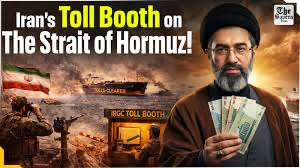
When 20% of the world’s energy is held at gunpoint, unity is not optional—it is decisive power
By: The Editorial Board, Opinion
The crisis in the Strait of Hormuz has exposed more than Iranian aggression.It has exposed a vacuum—not just of leadership, but of unity.
Iran is acting predictably: probing, pressuring, and exploiting hesitation.
What is unpredictable—and dangerous—is the fragmented response of those who depend on Hormuz the most.
Because no single nation owns this problem.
But every major economy suffers from it.
Leadership Is Not Acting Alone—It Is Uniting Others
In 1987, the United States led under Ronald Reagan, launching Operation Earnest Will and later Operation Praying Mantis.
But the deeper lesson is often overlooked:
Leadership worked because others aligned behind it.
Today, the stakes are even higher—and so must be the coalition.
- Europe depends on stable energy pricing
- Asia depends on uninterrupted supply
- Gulf states depend on export continuity
- Global markets depend on predictability
This is not America’s burden alone.
It is a shared strategic necessity.
What a United Coalition Must Do
A U.S.-led coalition must move beyond symbolism and into coordinated action:
- Joint naval escorts under a unified command
- Shared intelligence and surveillance across allied fleets
- Clear, collective rules of engagement—no ambiguity
- Political unity that removes any doubt about resolve
Unity is not just strength.
It is credibility.
NATO: From Observer to Enabler
A coalition without structure risks hesitation. That structure already exists.
NATO should not stand on the sidelines while a global trade artery is threatened. This is not a regional crisis—it is a systemic one affecting all allied economies.
NATO’s role is not to dominate the mission, but to enable it:
- Coordinate naval deployments across allied fleets
- Provide integrated command, control, and logistics
- Ensure unified rules of engagement and rapid decision-making
- Signal that any disruption of Hormuz is a challenge to the entire alliance
This is not about expanding NATO’s geography.
It is about defending the economic lifelines that sustain its members.
Fragmentation Is Iran’s Greatest Asset
Every divided response gives Iran room to maneuver.
- If Europe hesitates, pressure increases
- If Asia stays silent, leverage grows
- If the Gulf stands alone, vulnerability deepens
Iran does not need to defeat a coalition.
It only needs to divide it.
The Strategic Imperative
This is the moment to restore a simple principle:
Global chokepoints are protected by collective will—not individual hesitation.
Without unity:
- Disruptions become routine
- Markets become unstable
- Power shifts to those willing to threaten
With unity:
- Navigation is secured
- Deterrence is restored
- Stability returns
The Final Test
In 1987, leadership protected Hormuz.
In 2026, leadership must unite the world to protect it together.
If NATO can defend borders in Europe, it can help defend the arteries that power its economies.
The question is no longer whether action is needed.
It is whether the world’s leading powers can act as one.
Because in a crisis like this,
division is defeat—and unity is the only answer.
