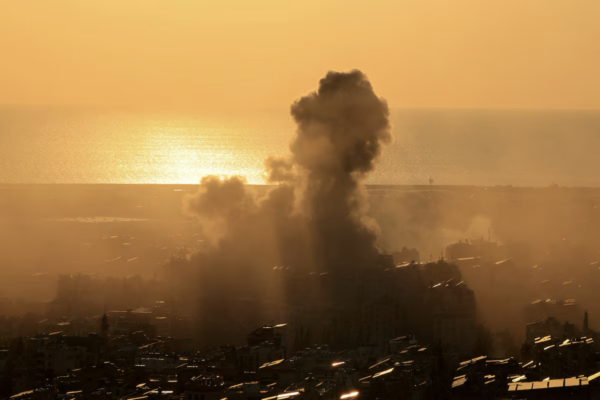
Smoke rises after an Israeli strike on Beirut’s southern suburbs, following an escalation between Hezbollah and Israel amid the U.S.-Israeli conflict with Iran, Lebanon, March 10, 2026. REUTERS/Raghed Waked/File Photo Summary
A 10-day ceasefire between Israel and Lebanon has come into effect, pausing fighting in a devastating conflict between Israel and Hezbollah that has killed more than 2,100 Lebanese people and displaced over 1.2 million.
The agreement was announced earlier by Donald Trump, who said he had spoken with Israeli prime minister Benjamin Netanyahu and Lebanese president Joseph Aoun, and invited both leaders “for meaningful talks” at the White House. Both leaders welcomed the agreement.
But how long the ceasefire will hold is the key question, as both Israel and Hezbollah have maintained their right to defend themselves if the truce is broken. Here is an update on Lebanon Israeli developments
Netanyahu called it a “historic” opportunity for peace, though he refused to withdraw his troops from southern Lebanon during the pause in fighting. “We are remaining in Lebanon in an expanded security zone,” Netanyahu said, due to the “danger of an invasion” and to prevent fire into Israel. “That is where we are, and we are not leaving,” he said. The Israeli PM maintained that his key demand was dismantling Hezbollah. He has previously declared his intention to occupy southern Lebanon up to the Litani River – about 18 miles from the border – while Lebanon demands the complete withdrawal of Israeli forces and for displaced residents to be able to return to their homes.
Iran’s foreign ministry spokesman Esmail Baghaei welcomed the ceasefire and stressed that it was already part of the original Iran-US agreement brokered by Pakistan. Baghaei said Iran emphasised “from the outset” the need for a “simultaneous ceasefire throughout the region, including Lebanon”, and expressed his “solidarity” with the people and government of Lebanon. He called for the return of displaced residents to their homes and emphasised the necessity of the “complete withdrawal” of Israeli forces from the south of the country – which, as I’ve said, Israel has refused to do.
Hezbollah urges displaced civilians to postpone return before ceasefire takes effect. It issued a statement calling on displaced Lebanese residents to delay returning to their homes in southern Lebanon, the Bekaa Valley and Beirut’s southern suburbs before the ceasefire comes into effect, urging caution amid Israel’s history of “breaking covenants and agreements”.
The Lebanese army also urged residents to “exercise restraint” in returning to their villages and towns in southern Lebanon ahead of the ceasefire coming into effect. The army added that even then residents should avoid areas that remain occupied by Israeli forces.
In the hours before the ceasefire took effect, Israel and Hezbollah continued to exchange fire. Just as the ceasefire came into force, the IDF said it had hit more than 380 Hezbollah targets in southern Lebanon in the last 24 hours, including rocket launchers, headquarters and Hezbollah members themselves. Meanwhile, Israeli strikes on Lebanese towns and villages killed dozens of people, including an attack on the town of Ghazieh which killed at least seven people and wounded 33, the health ministry said on Thursday.
In exclusive comments shared with Newsweek, a Hezbollah spokesperson backed Trump’s call for ceasefire and stated that “the enemy must adhere to the ceasefire, unlike what occurred previously, when Hezbollah observed the truce while the enemy targeted Lebanese civilians on public roads, in front of their homes and before the eyes of their children.”
President Donald Trump’s surprise announcement of a 10-day ceasefire between Israel and Hezbollah on Thursday marks the latest sign of diplomatic progress since the U.S. leader called for a truce in the ongoing war with Iran last week.
The Guardian, Al Jazeera
