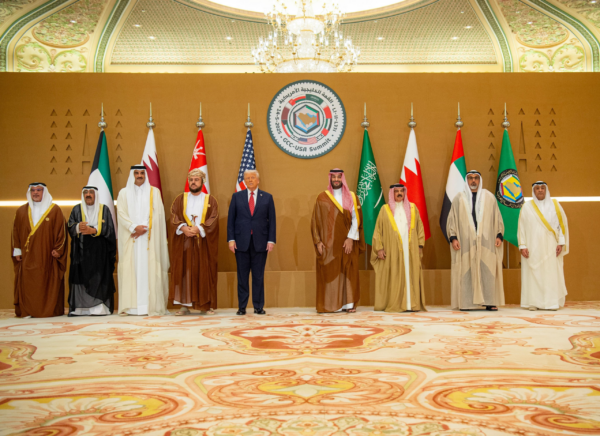
The Iran war and the fight between the Houthis and Saudi Arabia in Yemen have forced Gulf Arab states to reckon with spiraling conflicts and to reassess U.S. security guarantees.
While a diplomatic resolution remains a top priority for Gulf leaders, they are likely to ask Mr. Trump for hardened security guarantees even as the Iran war has depleted U.S. weapons stockpiles, analysts say.
“The Gulf states have broadly signaled their preference for de-escalation and diplomacy with Iran, but — for Bahrain, Saudi Arabia and the U.A.E. at least — not at any cost,” said Hasan Alhasan, a senior fellow for Middle East policy at the International Institute for Strategic Studies based in Bahrain.
Several Gulf Arab leaders have fostered personal and business connections with Mr. Trump’s family. In May, Mr. Trump said he had called off a major strike on Iran after Saudi Arabia, the Emirates and Qatar appealed to him directly, believing a deal with Tehran was within reach.
Mr. Trump has repeatedly made claims of such a deal, but no agreement has materialized.
The meeting in New York between Mr. Trump and the Gulf officials came as a second front has opened in Yemen. Houthi forces have repeatedly clashed with Saudi Arabia and its Yemeni allies in recent weeks, including by striking Riyadh, the Saudi capital, with missiles and drones on Saturday. The Houthis have also captured territory near the Bab al-Mandab Strait, a waterway in the Red Sea that Saudi Arabia has used to export oil after the Strait of Hormuz was blocked.
Saudi Arabia has sought to convince the United States to intervene militarily against the Houthis, but Mr. Trump has refused to do so.
Secretary of State Marco Rubio on Tuesday sought to assuage Saudi worries over the strength of Washington’s commitment, as the kingdom faces escalating attacks on its energy infrastructure from Iranian-backed armed groups.
“But ultimately, if it comes down to it, the United States will always stand with Saudi Arabia and support them because we have an agreement with them to do so,” Mr. Rubio said on Fox News, referring to a strategic defense agreement the countries signed in 2025.
Last week, the Trump administration said it would move forward with the $24 billion sale of 48 advanced F-35 fighter jets to Saudi Arabia.
The Gulf Cooperation Council, an organization of Gulf Arab monarchies, has separately accused Iran of attacking Saudi, Qatari and Emirati tankers in the Strait of Hormuz, and has demanded unconditional freedom of navigation through the waterway.
Since the war with Iran exposed their dependency on the United States, Gulf Arab states have begun exploring alternatives, including outreach to Tehran and a defense arrangement involving Saudi Arabia, Pakistan and Turkey.
The Emirates has signaled interest in “turning the page” with Iran, a senior Emirati official said at a conference in Dubai last week. But he cautioned that rebuilding trust could take decades.
Gregory Gause, a Gulf expert and associate fellow at the Middle East Institute, a research group, said the priority for regional officials would be pressing Mr. Trump on his plans for the Iran war.
“They are undoubtedly worried about the longer term commitment of the U.S. to their security but the immediate issue of securing their energy exports will be top of mind,” Mr. Gause said.
THE NEW YORK TIMES
