HERE IS THE LATEST-
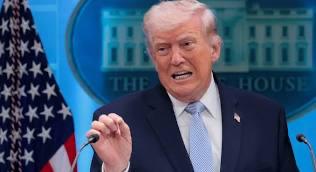
- President Trump told Al Jazeera on Wednesday that the U.S. is “achieving a very big victory” as the Iran war nears the six-month mark, but that it “will continue for as long as necessary” and there’s no timetable to resume peace talks.
- Israeli Prime Minister Benjamin Netanyahu has said he told President Trump recently that a diplomatic deal with Iran is “not possible,” calling the Islamic Republic leadership “savages.”
- Iran and Oman said Tuesday that they were discussing a proposal to reopen the Strait of Hormuz via a temporary shipping route, as well as a plan to clear sea mines. Tehran has insisted, however, that the U.S. must lift its naval blockade and the war must end before ships are allowed to resume transiting the vital waterway.
Iran’s Parliament speaker thanks China for rejecting U.S. sanctions
China, Iran’s largest trade partner, is receiving thanks from Iran’s Parliament speaker after saying it won’t comply with the newest U.S. sanctions.
“We welcome China’s principled statement rejecting illegal sanctions against Iran,” Mohammad Bagher Ghalibaf wrote on X. “The Iran-China comprehensive strategic partnership is rooted in mutual respect, win-win cooperation, and a shared vision for a multipolar world. This relationship needs no one’s permission.”
President Trump last week said he expected all countries to get on board with the sanctions announced on Monday. Treasury Secretary Scott Bessent said in an interview last Thursday with CNBC that China should “get with the program.”
But China rejected those notions almost immediately.
“China has already stated many times that it firmly opposes illegal unilateral sanctions. … China will take all necessary measures to firmly safeguard its own rights and interests,” foreign ministry spokesman Lin Jian said at a news briefing.
Iranian foreign minister pleads with U.N. secretary-general to condemn U.S. actions
Abbas Araghchi, Iran’s foreign minister, addressed a letter to U.N. Secretary General Antonio Guterres on Wednesday asking for the global body to “condemn and reject” the U.S. actions in Iran, especially the new round of sanctions issued this week.
“Now is a crucial moment for the Security Council and all members of the United Nations; either we must defend the principles of sovereign equality, non-interference, and respect for the sovereign rights of States, as enshrined in the Charter of the United Nations; or we surrender to the unilateralism and bullying of a rogue state,” Araghchi wrote in the letter, posted on his official Telegram channel.
Iranian officials have repeatedly called the U.S. actions in Iran a violation of the country’s sovereignty in recent days. Araghchi asked for all members of the U.N. to do three things, including “condemn and reject the use of unilateral coercive measures and secondary sanctions by the United States” to change economic interests; “refrain from recognizing, approving, or implementing” the sanctions; “call on the United States to immediately cease its threats and coercive actions designed to force” countries to alter legitimate economic relations.
He also asked for the U.N. to monitor the humanitarian implications of the sanctions on the Iranian population, and said Iran could retaliate in the interim.
“In the meantime, the Islamic Republic of Iran reserves its right to pursue all available avenues to achieve accountability, reparation and redress, and to hold the perpetrators accountable for the consequences of these inhumane and illegal actions,” Araghchi wrote.
Guterres hasn’t shown an inclination to side with Iran in the conflict, saying on Monday that Iran must end attacks in the Strait of Hormuz and restore “respect of navigational rights and freedoms” in the waterway.
Iran’s IRGC says deal with Oman to reopen Strait of Hormuz had been reached, but U.S. must accept conditions
The spokesman for Iran’s powerful Islamic Revolutionary Guard Corps said Wednesday that Iranian and Omani officials reached an agreement weeks ago on terms under which the two nations could control shipping traffic through the Strait of Hormuz — and share the proceeds from fees incurred — but he indicated the U.S. had failed to accept the arrangements.
“The Strait of Hormuz belongs to Iran and the Sultanate of Oman, which is opposite us. About a month ago, we entered into negotiations with Oman and reached results that were acceptable to both sides,” Brig. Gen. Hossein Mohebbi said, according to Iran’s state broadcaster IRIB. “In these negotiations, agreements had been reached regarding the share of each of the two countries from the waters of the strait and the share of Iran and Oman from its revenues.”
“If the United States stops obstructing and returns to the memorandum of understanding, we can open the Strait of Hormuz within the framework of the agreement reached,” he said, stressing, “our conditions must be accepted by the United States.”
Until they are, he said “the Strait of Hormuz will remain closed.”
President Trump has repeatedly insisted the strait is open, but few commercial ships have dared to transit the vital waterway given Iran’s attacks and lingering threats against them doing so without permission.
“The Strait of Hormuz is under our control, and no enemy military vessel is present inside the Persian Gulf,” Mohebbi insisted Wednesday, claiming all U.S. warships had moved at least 250 miles from the strait.
Iran and Oman said Tuesday the two nations continue discussing a new proposal to reopen the strait by way of a temporary shipping route, as well as a plan to clear sea mines, but they said no new agreement has been reached.
CBS
