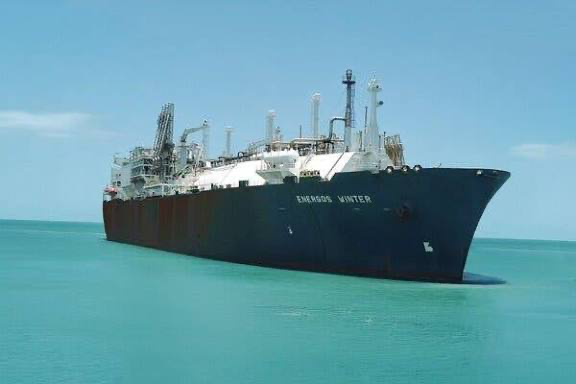
A drone strike at a port on Egypt’s Mediterranean coast set fire to two ships, including a U.S. gas storage tanker, according to maritime tracking firms.
A drone strike that damaged two gas tankers in Egyptian waters has renewed energy security concerns about the nearby Suez Canal and a related pipeline, a vital export route for Saudi Arabian oil since the beginning of the Iran war.
Even as Iran and its Houthi allies have fired on tankers transiting the Strait of Hormuz and Bab el-Mandeb, Egypt’s Suez Canal and Sumed pipeline continued to offer safe, northbound export routes for Saudi Red Sea energy cargoes.
While no party has claimed responsibility for Wednesday’s attack on the tankers at Egypt’s port of Damietta, which is located on a branch of the Nile Delta close to the Mediterraean, or publicly threatened the Suez Canal, the potential risk to the chokepoint has added to market concerns.
“The passage through the Red Sea, even via the longer Mediterranean route, could be put at risk, which threatens up to five million barrels per day of oil supply that can currently bypass the Strait of Hormuz,” said Saul Kavonic, head of energy research at advisory company MST Marquee.
Hardly any tankers are passing through the Gulf’s chokepoint at Hormuz, previously the route for about a fifth of global oil and liquefied natural gas supply.
Saudi Arabia rerouted most of its oil to the Red Sea and its Yanbu terminal after the war began, but Houthi threats and attacks since last week have now stopped many tankers using that route.
A growing volume of Saudi oil, along with other shipping, has instead been heading north up the Red Sea towards Suez and the Sumed pipeline, according to data from Kpler, a market intelligence company.
For Asian customers that means a longer voyage around Africa instead of south via the Gulf of Aden.
Crude loadings from the pipeline, which crosses Egypt from the Red Sea to the Mediterraean port of Sidi Kerir, have risen to 28.79 million barrels in July from 19.52 million in April, before the Houthis’ July 20 threat to prevent Saudi oil exiting via Bab el-Mandeb.
Around 30 ships have clustered around the Port Said anchorage at the canal’s Mediterranean end compared to around 20 earlier this week, ship-tracking data on the MarineTraffic platform showed on Thursday.
“We’ve seen a clear increase in crude/condensate tankers heading north after loading in the Red Sea,” said George Morris of energy analytics firm Vortexa, attributing this to the Houthi threats.
Crude is still flowing south through Bab el-Mandeb, though at around half the volume at the start of the month, the Kpler data showed, with around 43% of Yanbu loadings heading south compared to 81% in June.
Although many tankers are avoiding Bab el-Mandeb altogether, some, including Chinese vessels, have permission from the Houthis to pass. An increasing number of tankers are also travelling with their trackers turned off, Morris said.
And the Damietta attack does not necessarily imply any immediate threat to the canal, said Aly Blakeway, head of Atlantic LNG at S&P Global Energy. “The market isn’t pricing in disruption to the canal at this stage,” Blakeway said. Despite the attack, oil prices fell on Thursday with traders reacting to Iranian-Omani talks on Hormuz.
The Suez Canal Authority did not immediately respond to requests for comment.
Reuters
