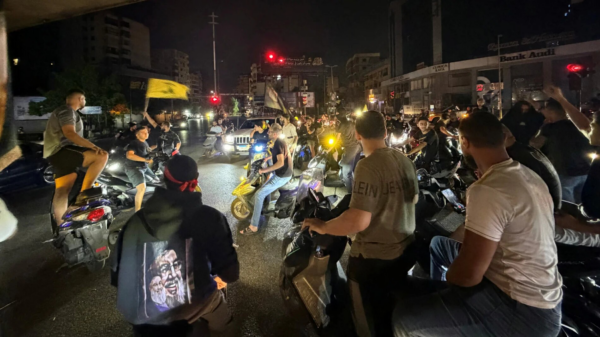
Hezbollah supporters take to the streets in the southern suburbs of Beirut to protest against the trilateral agreement that was signed between the US, Israel and Lebanon on 27 June 2026 (Ibrahim Amro/AFP)
Hezbollah supporters took to the streets of Beirut to protest the trilateral framework agreement signed by the U.S., Israel, and Lebanon. Demonstrators rode motorcycles, blocked roads with burning tires, and gathered near the parliament, calling the agreement a “surrender deal” and a “humiliation”
Hezbollah is reportedly protesting the US-brokered Israel-Lebanon deal because it explicitly links an Israeli troop withdrawal to the disarmament and dismantling of the group’s military infrastructure. The Iran backed militia views this framework as an existential threat and a surrender of its role as a state within the state of Lebanon
Berri warns against Civil strife
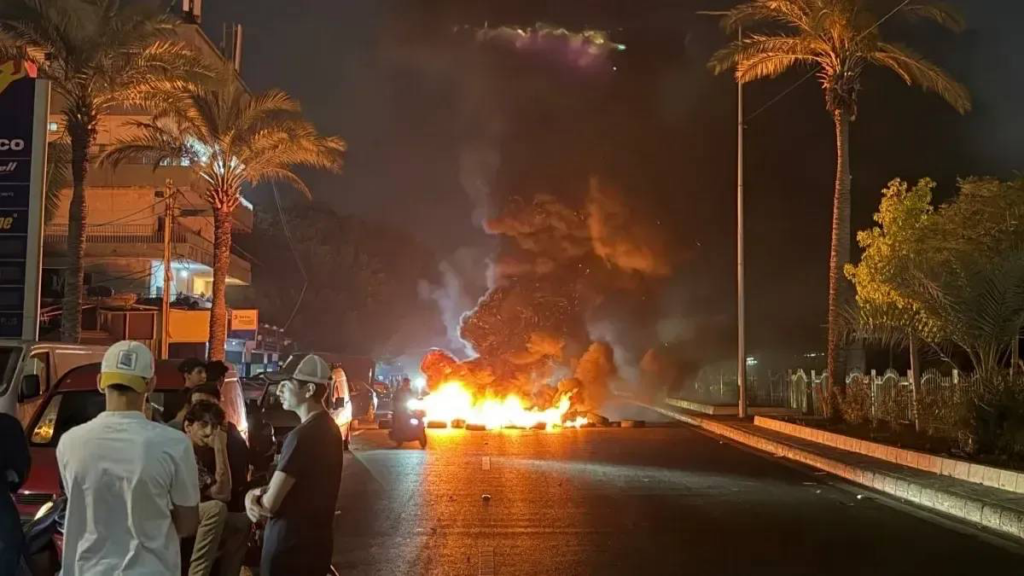
Hezbollah block Lebanon roads in protest against the Lebanon Israel peace deal . The Public Prosecutor at the Court of Cassation, Judge Ahmad Rami Al-Hajj, issued a judicial directive to security and military agencies, ordering them to take the necessary measures to prevent any acts that disturb public order, encroach upon public or private property, block roads, or obstruct the movement of citizens.
Parliament Speaker Nabih Berri a close ally of Hezbollah issued a brief statement following the announcement of the framework by saying: “My people in Lebanon—all of Lebanon—this is fitna [civil strife/discord].” He added: “Amidst fitna, be like the young male camel: possessing neither a back to be ridden nor an udder to be milked.”
In a statement to Asharq Al-Awsat newspaper, Berri said, “I examined the content of the framework agreement, read it, and saw strife within it.” He didn’t explain how he saw the strife
Berri’s stance follows hours of escalating political and public debate regarding the framework agreement—accompanied by on-the-ground protests and road blockades in various areas, particularly in and around Beirut—amid fears that the political rift could spill over into the streets.
Berri’s remarks carry a clear warning against engaging in internal confrontation or aligning with calls that could ignite a volatile situation; he urged—through his statement—that people distance themselves from civil strife and avoid becoming tools in the hands of any faction.
This appeal comes at a highly sensitive political juncture, as opinions remain divided: some view the agreement as a pathway for the state to reclaim its sovereignty and pave the way for an Israeli withdrawal, while others regard it as a concession or a gateway to dangerous internal arrangements, particularly concerning the issue of arms and the situation in the South.
Fears are mounting that the debate over the agreement could escalate into street-level security tensions, following conflicting reactions from various political forces—ranging from support and caution to outright rejection—while official, judicial, and security authorities have called for preventing road blockades and curbing any breaches of public order.
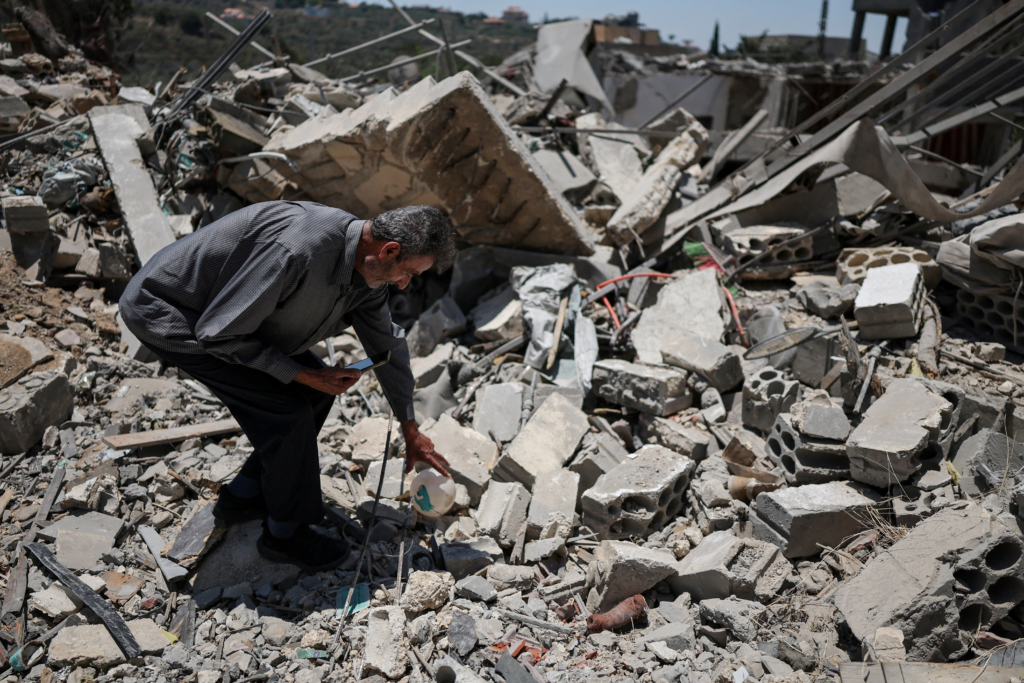
Hezbollah supporters block Beirut road to protest Israel-Lebanon agreement, ME Eye
With this appeal, Berri appears to be sounding an early warning to the Lebanese people, cautioning that the gravest danger lies not merely in the disagreement over the agreement itself, but in the risk of that dispute spiraling into internal strife for which the entire country would pay the price.
Al-Jadeed TV reported that US President Donald Trump is expected to call President Joseph Aoun today to congratulate him on the deal
Prime Minister Nawaf Salam thanked the Secretary-General of the Arab League for his support of the framework agreement, emphasizing the importance of Arab backing for the agreement’s implementation, the Israeli withdrawal, and reconstruction of hundreds of thousands homes in Beirut and South Lebanon.
The long-term goal of the trilateral talks, which began this spring, is a peace agreement with Israel in which Lebanon’s government fully disarms Hezbollah and takes control of areas in southern Lebanon from which the group attacks Israel.
In return, Israel would end its attacks against Hezbollah targets in Lebanon, which have included heavy airstrikes on the capital of Beirut and high civilian casualties, and ultimately withdraw entirely from the country.
Iran insists that Israel’s military campaign against its proxy Hezbollah — which Israel calls self-defense against the group’s cross-border missile and rocket attacks — must end immediately and completely, and that Israel must withdraw from Lebanese territory.
Many Israeli and Lebanese officials were unnerved by language in a memorandum of understanding signed by Iran and the Trump administration earlier this month stating that a final peace deal between the United States and Iran would ensure “the permanent termination of the war on all fronts, including in Lebanon.”
Israeli and Lebanese leaders rejects any linkage between Lebanon and Mr. Trump’s deal with Iran that has caused friction between Trump and Netanyahu .
Lebanese officials opposed to Hezbollah fear that Trump might make concessions to Iran that would allow its continued influence in Lebanon.
Lebanon’s government announced plans last fall to disarm Hezbollah but it has made little progress toward that goal.
