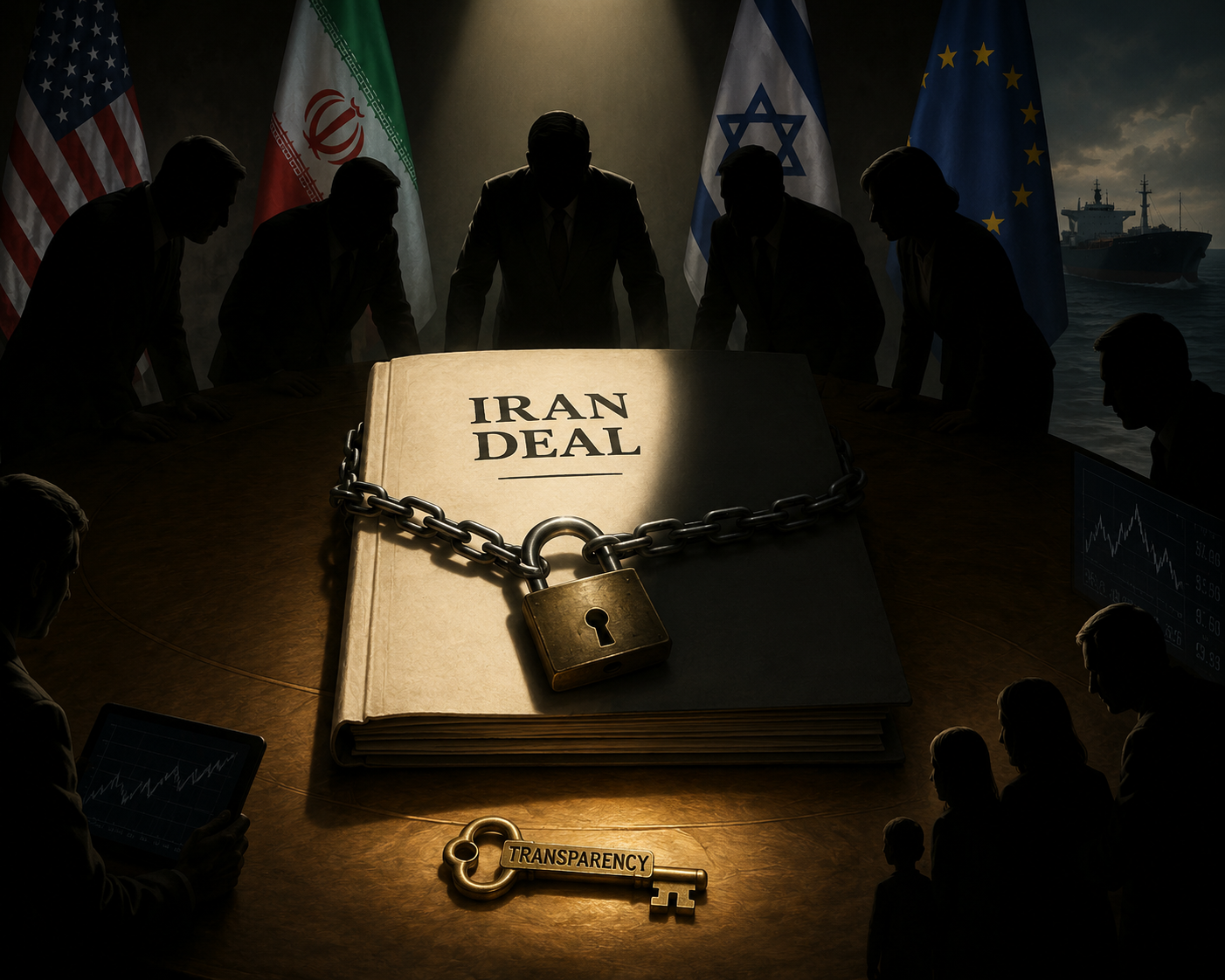
Illustration- The world is speculating about and debating the deal. Few have actually seen it
If the agreement is strong, publish it. If it is weak, the public deserves to know before the world is asked to trust it.
By : The Editorial Board, Opinion
For days, governments, financial markets, shipping companies, America’s allies, Israel, Iran, and ordinary citizens have been reacting to an agreement that almost nobody has actually read.
President Donald Trump acknowledged this week that the document signed on Sunday is only a memorandum of understanding, not a final agreement. He also made clear that military action remains an option if the arrangement fails.
“It’s a memorandum of understanding,” Trump said. “And if I don’t like it, we’ll go back to shooting at them, dropping bombs on their head.”
Those remarks alone raise an obvious question: If this agreement is important enough to pause a war, why is its text still hidden from public view?
The ceasefire may be in effect, but confusion continues to dominate the discussion.
Is the agreement fully operational?
Will the Strait of Hormuz truly be open to international shipping without restrictions?
Will Iran continue charging so-called navigation fees that many regard as little more than tolls under a different name?
Will Iran receive access to frozen assets immediately, or only after meeting specific obligations?
Are there side agreements that have not been disclosed?
Do Washington and Tehran even agree on what the memorandum actually requires?
Will Israel fully comply with its provisions?
And if the sixty-day nuclear negotiation period fails, does the region simply return to war?
These are not minor details. They are the very issues that determine whether the agreement succeeds or collapses.
Yet Washington and Tehran continue to present conflicting versions of what has been agreed.
The United States insists the Strait of Hormuz will be open without tolls or restrictions. Iranian officials continue speaking about fees.
American officials deny that Iran is receiving billions of dollars immediately. Iranian media suggest otherwise.
The White House says sanctions relief will be tied to performance. Critics fear undisclosed concessions may already exist.
When two sides emerge from negotiations offering different interpretations of the same document, uncertainty becomes unavoidable.
Markets dislike uncertainty.
Shipping companies dislike uncertainty.
America’s allies dislike uncertainty.
Most importantly, citizens whose sons and daughters may one day be asked to fight another war dislike uncertainty.
The solution is simple.
Publish the full text.
Let Congress examine it.
Let America’s allies examine it.
Let the American people examine it.
If the agreement protects freedom of navigation, blocks Iran’s path to nuclear weapons, reduces the risk of future conflict, and advances American interests, transparency will strengthen support for it.
If it contains weaknesses, hidden concessions, or unresolved ambiguities, those issues should be debated now rather than discovered later.
History is filled with agreements that failed because each side believed it had signed a different deal. Transparency cannot guarantee success, but secrecy almost guarantees suspicion.
The world has spent months watching a war, weeks watching negotiations, and days listening to conflicting claims.
It is now time for something much simpler.
Release the text.
Let the facts speak for themselves.
