Here is the latest
- Iran’s powerful Revolutionary Guard said Monday that under the U.S.-Iran deal set to be signed this week, the country will receive half of its roughly $24 billion in long-frozen funds before final negotiations begin during a 60-day ceasefire extension.
- A U.S. official said Iran would get none of the money until it demonstrates compliance with the deal’s terms.
- Israeli officials said the country is not bound by the U.S.-Iran agreement to end its fight with Hezbollah or to pull its forces out of Lebanon.
- President Trump, Pakistani mediators and Iran said the deal includes a cessation of hostilities on all fronts, including in Lebanon.
- President Trump said the Strait of Hormuz will reopen Friday after the deal is signed, and the U.S. naval blockade on Iran will be lifted.
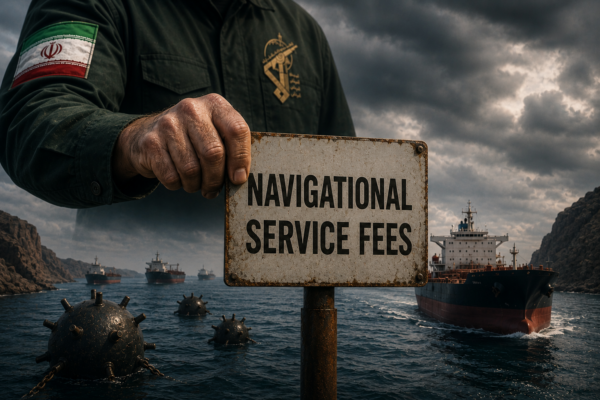
- Tehran wants to charge fees for commercial vessels passing the crucial chokepoint for global oil and gas markets. Last week Iran’s FM was quoted as saying : “Our sword will always hang over the Strait of Hormuz
- The price of Brent crude oil fell more than $4 a barrel after the agreement was announced.
American prisoners held in Iran not discussed during negotiations, Iranian official says
An Iranian Foreign Ministry spokesperson told CBS News on Monday that the negotiations between the U.S. and Tehran that have led to the agreement set to be signed on Friday did not include any discussion of the fate of Iranian-American prisoners in the country.
There are believed to be four U.S. nationals held in Iran, two of whom have been named publicly as journalist Abdolreza “Reza” Valizadeh, 49, whom the U.S. State Department formally designated as “wrongfully detained” by Iran in May 2025, and Kamran Hekmati, 61, who was arrested in July 2025 while visiting family in Iran.
Nonprofit groups say they are tracking at least two other U.S. nationals believed to have been detained in Iran, whose identities CBS News cannot confirm.
France, U.K. ready to deploy forces to help re-open Strait of Hormuz if U.S.-Iran deal holds, Macron says
French President Emmanuel Macron said France and the U.K. are ready to lead a multinational mission to help reopen and ensure safety in the Strait of Hormuz under the agreement reached between the U.S. and Iran.
In an interview with French broadcaster TF1 ahead of a G7 meeting, Macron said France would be ready to “send planes, send a frigate, send deminers and … our aircraft carrier, Charles de Gaulle.”
He added that the forces would be ready for deployment in the next two or three days so the reopening of the vital shipping lane “can be done in a peaceful way and that it lasts.”
Vance doesn’t rule out use of U.S. forces to ensure Iran’s compliance on nuclear material
Vice President JD Vance didn’t rule out the possibility of U.S. military forces being used to help ensure Iran’s compliance with an agreement on its nuclear materials, though he said he didn’t “think the U.S. military forces are going to be necessary.”
“We certainly talked with the Iranians about how we’re going to destroy that enriched stockpile. The technical details are one of the things that we’re going to work on when we start those technical talks on Friday,” Vance said on “CBS Mornings.”
According to the United Nations atomic watchdog agency, the International Atomic Energy Agency, Iran has about 900 pounds of highly-enriched uranium believed to be buried under the rubble of a nuclear facility hit by U.S. and Israeli strikes a year ago.
“We’re talking about working with the IAEA and working with the Iranians to go in and destroy that enriched stockpile of material,” Vance told CBS News. “Whether we play an observer role or whether we play a more active role, these are the sorts of things that we’ll figure out in technical talks.”
“But what the President has made very clear is the United States will be there to confirm that that enriched stockpile of material is destroyed,” he said.
CBS
