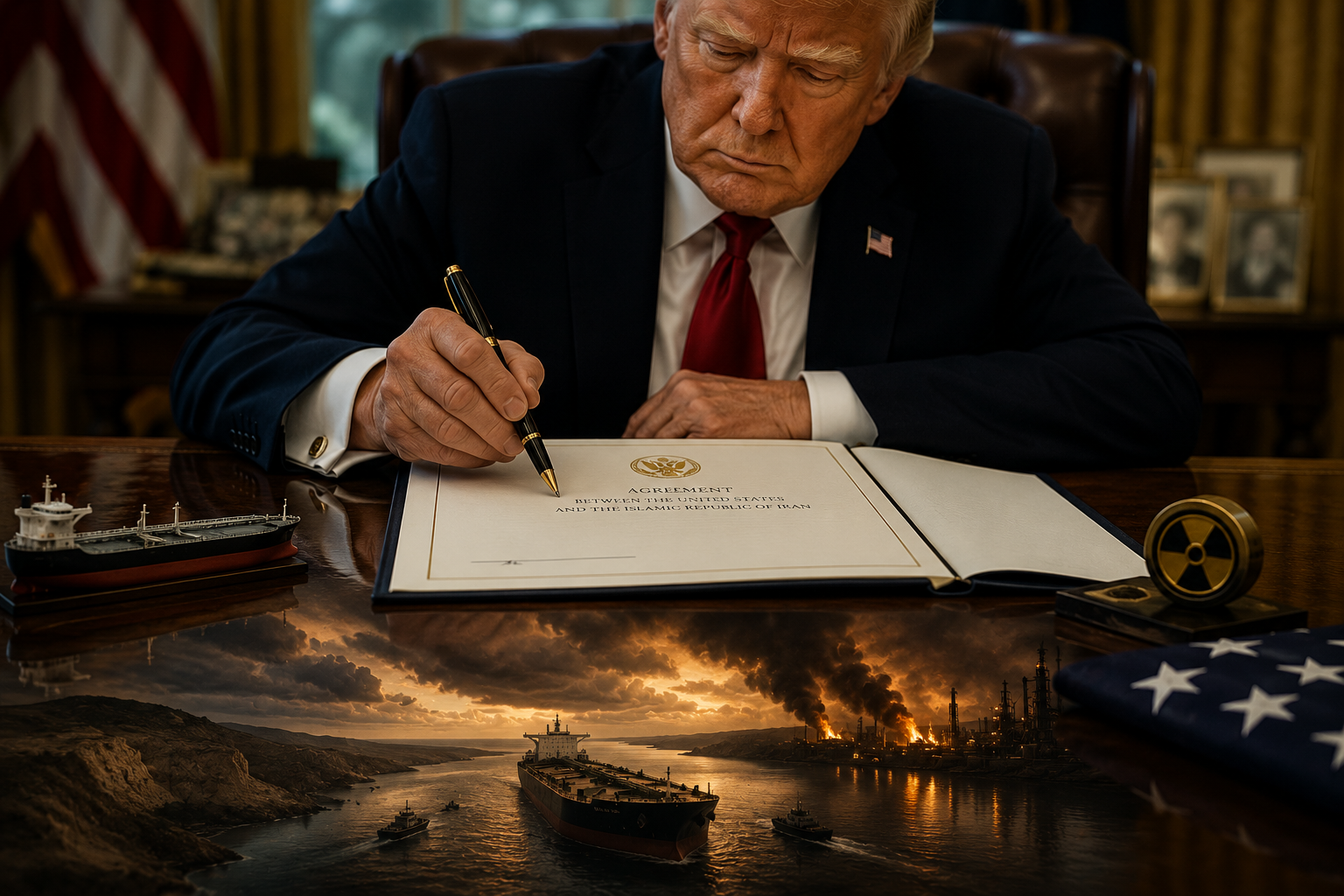
Illustration: This is not the Trump America knows. When a president known for decisive action hesitates, the world should pay attention.
After promising peace, President Trump is still demanding changes. His hesitation may reveal deeper concerns about whether the agreement achieves the goals for which the war was fought.
By : The Editorial Board, Opinion
President Trump says he wants to sign a peace agreement with Iran. Yet despite months of negotiations and repeated promises that a deal is near, he continues to ask for changes and amendments.
That hesitation may reveal more than any official statement.
This is not the Donald Trump Americans have come to know. Throughout his political career, Trump has built his reputation on decisiveness. He prides himself on making tough choices, moving quickly, and projecting confidence. When Trump believes he has a good deal, he usually signs it and sells it aggressively to the American people.
This time is different.
After a costly war that was justified as necessary to eliminate the Iranian threat, Trump now faces a difficult question: Does the proposed agreement actually achieve the objectives for which the war was fought?
Key Republican allies are openly expressing doubts. Senator Roger Wicker warns that a ceasefire based on the assumption that Iran will negotiate in good faith could be a disaster. Senator Lindsey Graham argues that any agreement leaving Iran capable of threatening the Strait of Hormuz or Gulf energy infrastructure risks convincing the world that Iran emerged from the conflict stronger rather than weaker.
Those concerns cannot be dismissed lightly.
The central issue is not whether a deal can be signed. Almost any conflict can be paused through diplomacy. The real question is whether the agreement addresses the fundamental sources of instability: Iran’s nuclear ambitions, its ability to threaten international shipping, , and its capacity to intimidate its neighbors.
If those issues remain unresolved, future confrontations may simply be postponed rather than prevented.
Trump understands that history will not judge him by whether he signed an agreement. History will judge him by whether the agreement produced lasting security.
Perhaps that is why he is hesitating.
Perhaps he realizes that a weak agreement would invite comparisons to past deals that promised peace but delivered only temporary calm. Perhaps he understands that America, Israel, and the Gulf states will be living with the consequences long after the headlines fade.
Whatever the reason, Trump’s hesitation is telling.
For the first time in this crisis, the focus is no longer on what Iran is willing to accept. The focus is on whether the President of the United States believes the deal is strong enough to justify the war that preceded it.
That is a question worth asking.
And until it is answered, Trump’s hesitation may be the most important signal of all.
