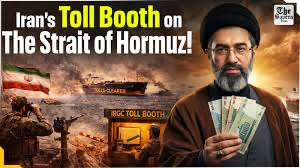
Photo- Iran’s deputy parliament speaker on Sunday said Tehran “will not back down from our position on the Strait of Hormuz. Ali Nikzad reiterated Iran’s position that any ship not associated with the U.S. or Israel can pass after paying a toll. Tehran effectively closed the strait by attacking and threatening ships.
- President Trump told reporters Saturday he is reviewing a new 14-point peace proposal that was submitted by Iran.
- Iran’s latest proposal to the United States calls for issues between the countries to be resolved within 30 days and aims to end the war rather than extend the ceasefire, according to Iran’s state-linked media.
- Mr. Trump told congressional leaders that “hostilities” with Iran have “terminated,” addressing a critical 60-day deadline under a decades-old law meant to limit the use of military force without authorization from Congress.
U.S. is not at war with Iran, acting AG says adding that Trump administration has kept Congress updated
Acting Attorney General Todd Blanche said Sunday on “Meet the Press” that the U.S. is not at war with Iran. He added that “what President Trump said this weekend is absolutely true” about the situation being a “military operation,” with the president saying “that way you don’t have a war, you don’t have legal problems.”
“My job as the acting Attorney General is to make sure that the president that we all are doing the right thing legally, and we absolutely are,” Blanche said. “As we said to Congress last week, there has been nothing going on, no hostilities, no exchange of fire in almost a month.”
Democrats in Congress have repeatedly tried to invoke the War Powers Resolution of 1973, which would limit the Trump administration’s ability to act without Congress’ approval. But under the War Powers Resolution, the president is required to give formal notification to Congress within 48 hours of introducing American forces into hostilities, which officially begins a 60-day clock for the president to terminate the use of force unless Congress has declared war or authorized the use of military force. With the Iranian strikes beginning on Feb. 28, and Mr. Trump formally notified Congress on March 2 — meaning the deadline was Saturday for the president to terminate the use of force without Congress’ authorization.
Blanche on Sunday said the administration has “kept Congress updated at every step of the way, consistent with what other presidents have done.”
“That President Trump or this administration or the Department of War is violating the law is just completely wrong,” Blanche said. “It’s not appropriate to say that we are not complying with the law. I can tell you that as the acting Attorney General, we are doing exactly what we’re supposed to do legally, and President Trump will continue to do that.”
Iran “will not back down” on Strait of Hormuz, official says
Iran’s deputy parliament speaker on Sunday said Tehran “will not back down from our position on the Strait of Hormuz, and it will not return to its prewar conditions.” Ali Nikzad, who has no decision-making power in parliament, spoke while visiting port facilities on strategic Larak Island.
Nikzad reiterated Iran’s position that any ship not associated with the U.S. or Israel can pass after paying a toll. Tehran effectively closed the strait by attacking and threatening ships.
The U.S. has warned shipping companies they could face sanctions for paying Iran in any form, including digital assets, to pass safely.
Israeli pilots “can reach anywhere in Iranian airspace,” Netanyahu says
Israel’s pilots “can reach anywhere in Iranian airspace, and are prepared to do so if required,” Prime Minister Benjamin Netanyahu said in an address discussing the country’s military power.
“Israel is stronger than ever, and it must always remain far stronger than our enemies,” Netanyahu said.
He said that Israel is building up forces, including acquiring a squadron of F-35 planes and another of F-15IAs. He said the planes will “reinforce Israel’s overwhelming air superiority.”
Catholic convent in southern Lebanon demolished by Israeli military, Lebanese church alleges
Israeli airstrikes on southern Lebanon killed at least seven people and wounded others on Saturday while the Israeli military demolished parts of a Catholic convent in a border village, officials said.
Israel’s military on Saturday issued a new warning for residents of nine southern villages to evacuate. Israel and the Lebanon-based militant group Hezbollah, an Iranian proxy, have kept up their attacks despite a ceasefire in place since April 17.
In the border village of Yaroun, Israel’s military used bulldozers to destroy parts of a Catholic convent that had been empty as a result of the latest fighting.
“What we heard is that it was destroyed with bulldozers,” said Gladys Sabbagh, the superior general of the Basilian Salvatorian Sisters. Sabbagh told The Associated Press that the convent included a school that had been closed since the 2006 Israel-Hezbollah war, as well as a clinic that was recently moved to the nearby village of Rmeich.
She described the convent as a small compound housing just two nuns, who left because of the war. Sabbagh did not have further details as Yaroun’s residents have been displaced.
The Israeli military issued a statement saying that as the army was destroying Hezbollah infrastructure in Yaroun, a house that had no religious signs was damaged. It added that as soon as the military knew it was linked to a church, soldiers “prevented any further damage from being done.”
The military added that Hezbollah used the compound in the past to fire rockets toward Israel on several occasions. It added that the military does not strike religious institutions intentionally.
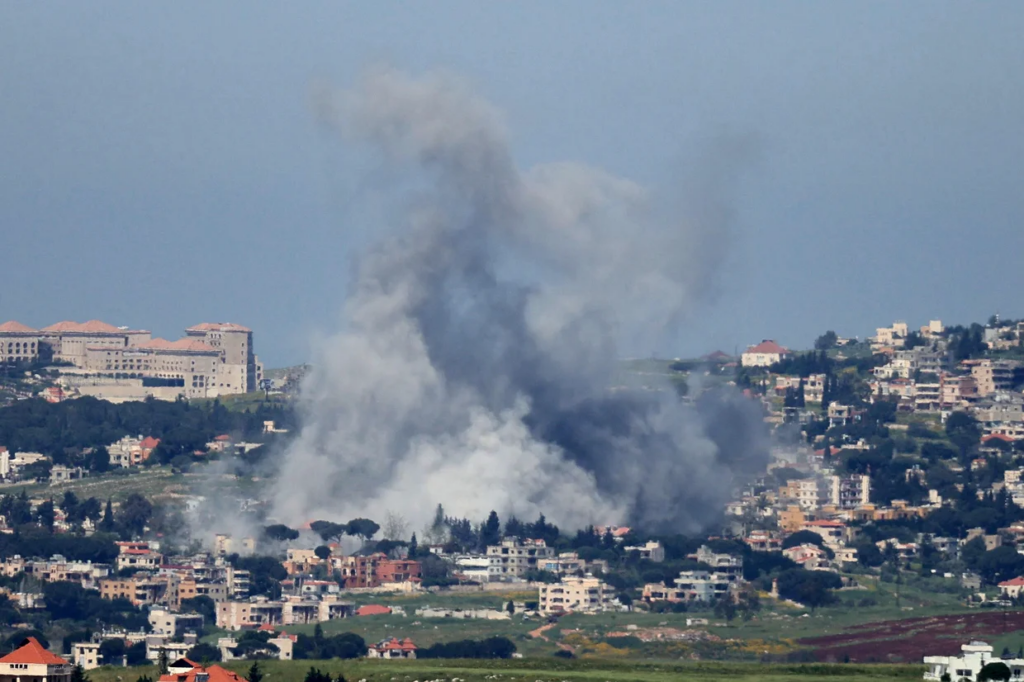
Smoke rises from the site of an Israeli airstrike that targeted the southern Lebanese village of Mayfadoun in the Nabatieh district on May 2, 2026.
White House confirms addition of former lobbyist to Iran negotiations team
The White House has confirmed Nick Stewart was added as an adviser to the team negotiating a deal to end the war with Iran.
“Nick Stewart is a sharp, seasoned policy expert who is a valuable asset to Special Envoy Steve Witkoff’s talented team,” White House spokeswoman Olivia Wales said in a statement. “He brings a wealth of leadership and Iran policy experience to the role — from serving at the Department of State in the first Trump Administration and on Capitol Hill — and is a trusted voice as Special Envoy Witkoff works in lockstep with President Trump and his entire national security team to make a deal that is good for the United States and the world.”
CBS
