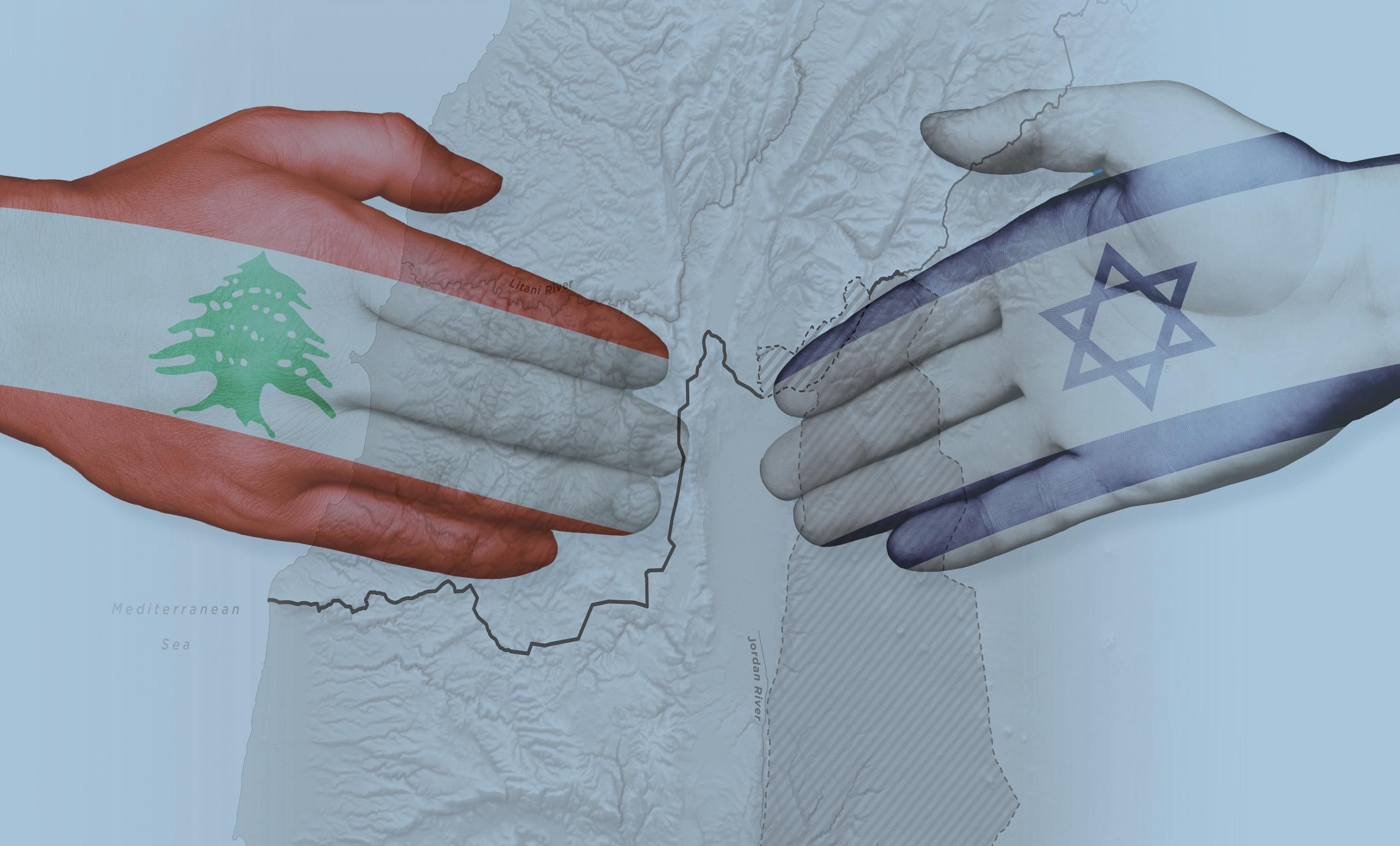
A sovereign Lebanon means one army, one authority—and zero tolerance for militias with a veto over peace
By : The Editorial Board, Opinion
Lebanon and Israel stand at a rare strategic crossroads. For decades, their interactions have been defined by war, occupation, and proxy conflict. Today, for the first time in a generation, there is a real opportunity to shift course—from managing conflict to ending it.
But that opportunity will be lost if the talks are anchored in the past.
The negotiations must focus on what actually builds peace between states: recognition of borders, full withdrawal from occupied Lebanese territory, exchange of prisoners, and the establishment of normal relations. These are the foundations of stability. These are the issues that belong on the table.
Everything else is a distraction.
At the center of any lasting agreement lies one non-negotiable principle: Lebanon must be sovereign. And sovereignty means one thing above all—the Lebanese Armed Forces must be the only armed force in the country. No militia, no faction, no parallel army can exist outside the authority of the state.
This is why making Hezbollah’s disarmament the starting point of negotiations is a strategic mistake.
It puts the process on the wrong track from the outset.
It shifts the focus away from building peace between two nations and hands it instead to a non-state actor whose relevance depends on the absence of peace. It risks turning a historic opportunity into another stalled process dominated by old arguments
The reality is simpler and more powerful: peace itself is what makes militias obsolete.
When borders are recognized, when occupation ends, and when disputes are resolved through diplomacy rather than force, the very logic of “resistance” collapses. The justification disappears. The mission ends.
You do not defeat that reality through pressure alone.
You create it by changing the environment.
This is where Israel faces a critical choice.
Prime Minister Benjamin Netanyahu has spoken of a peace with Lebanon that could last for generations. That vision is welcome. It is exactly what Lebanon seeks: stability, sovereignty, and a future free from war.
But at the same time, Israel continues to insist on Hezbollah’s disarmament as a precondition and on maintaining a buffer zone inside Lebanese territory.
Those two approaches cannot coexist.
A buffer zone sends a clear message: the Lebanese state is not trusted to control its own territory. But a lasting peace requires the opposite—recognition and empowerment of the Lebanese state as the sole authority.
You cannot build a sovereign partner in Beirut while creating a buffer zone on its soil.
And you cannot claim to seek generational peace while prioritizing short-term control.
Israel must choose: a buffer zone or a peace treaty. It cannot build both—and history has already shown which one endures.
If Israel truly wants lasting peace, it must invest in the only institution capable of delivering it: the Lebanese state, led by its national army. Bypassing that state weakens it. Strengthening it makes peace possible.
There is also a political reality Israel cannot ignore. The majority of Lebanese—including many Shiites—oppose Hezbollah’s independent arsenal. But they still see Hezbollah’s community as part of Lebanon, not outside it. That means the path forward is not coercion from the outside, but transformation from within.
Build a peace that forces a choice:
a choice between a functioning state and permanent militia rule,
a choice between prosperity and endless war.
In that environment, the outcome becomes inevitable.
Lebanon has seen this before. Militias born in conflict eventually outlive their purpose. Their weapons do not strengthen the state—they weaken it. Hezbollah’s arms will follow the same path once peace becomes real. Like all militias before it, it will face a simple truth: when the war ends, the gun no longer has a mission.
Focusing on disarmament first reverses that logic. It risks collapsing the talks before they begin.
Build peace—and disarmament will follow.
Once Lebanon becomes a truly sovereign nation, it will rely on its national army to defend its borders and on international partnerships to reinforce its security if needed. That is how modern states survive and thrive—not through fragmented authority, but through unity of command.
This is the moment of decision.
The talks can remain trapped in the past—defined by fear, mistrust, and endless cycles of escalation.
Or they can move forward—toward a Lebanon that governs itself, defends itself, and speaks with one voice.
Because in the end, peace does more than end wars.
It makes the very idea of militias obsolete.
