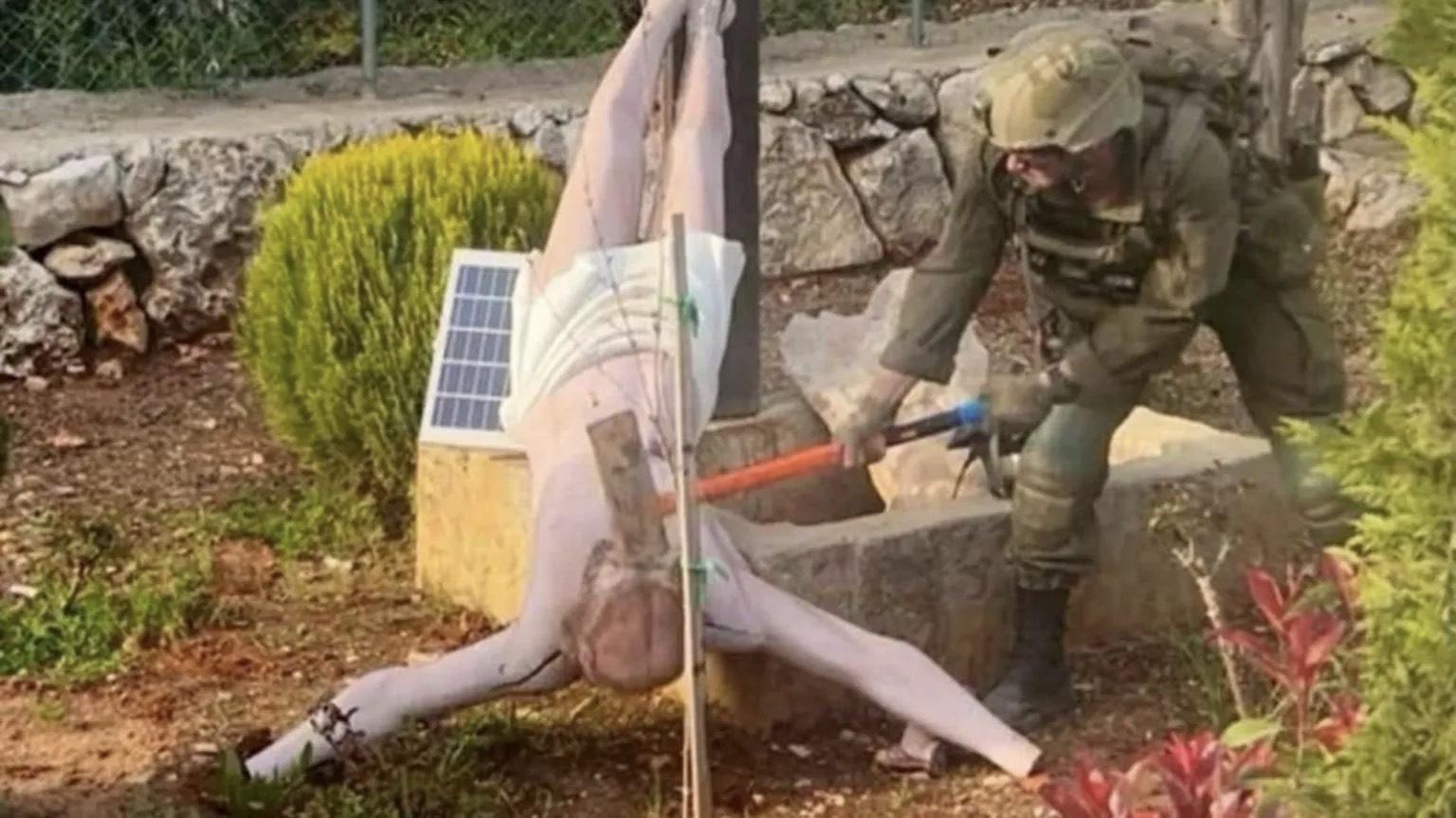
The Israeli military said it viewed the soldier’s actions with “great severity”
There has been widespread condemnation after an image of an Israeli soldier apparently hitting a statue of Jesus with a sledgehammer in southern Lebanon went viral.
Israel’s prime minister said he was “stunned and saddened”. Its foreign minister said: “We apologise for this incident and to every Christian whose feelings were hurt.”
Locals say the statue was on a crucifix outside a family home on the edge of Debel, one of the few villages where esidents have remained during Israel’s war with Hezbollah.
The Israel Defense Forces (IDF) said it viewed the incident “with great severity and emphasises that the soldier’s conduct is wholly inconsistent with the values expected of its troops”.
The head of Debel’s congregation, Father Fadi Flaifel, told the BBC: “We totally reject the desecration of the cross, our sacred symbol, and all religious symbols. It goes against the declaration of human rights, and it doesn’t reflect civility.” He claimed similar acts had happened before.
The IDF said “appropriate measures will be taken against those involved” and that it was working with the Christian community to “restore the statue to its place”.
The US ambassador to Israel, Mike Huckabee, a Baptist minister, responded on X that “swift, severe, & public consequences are needed.”
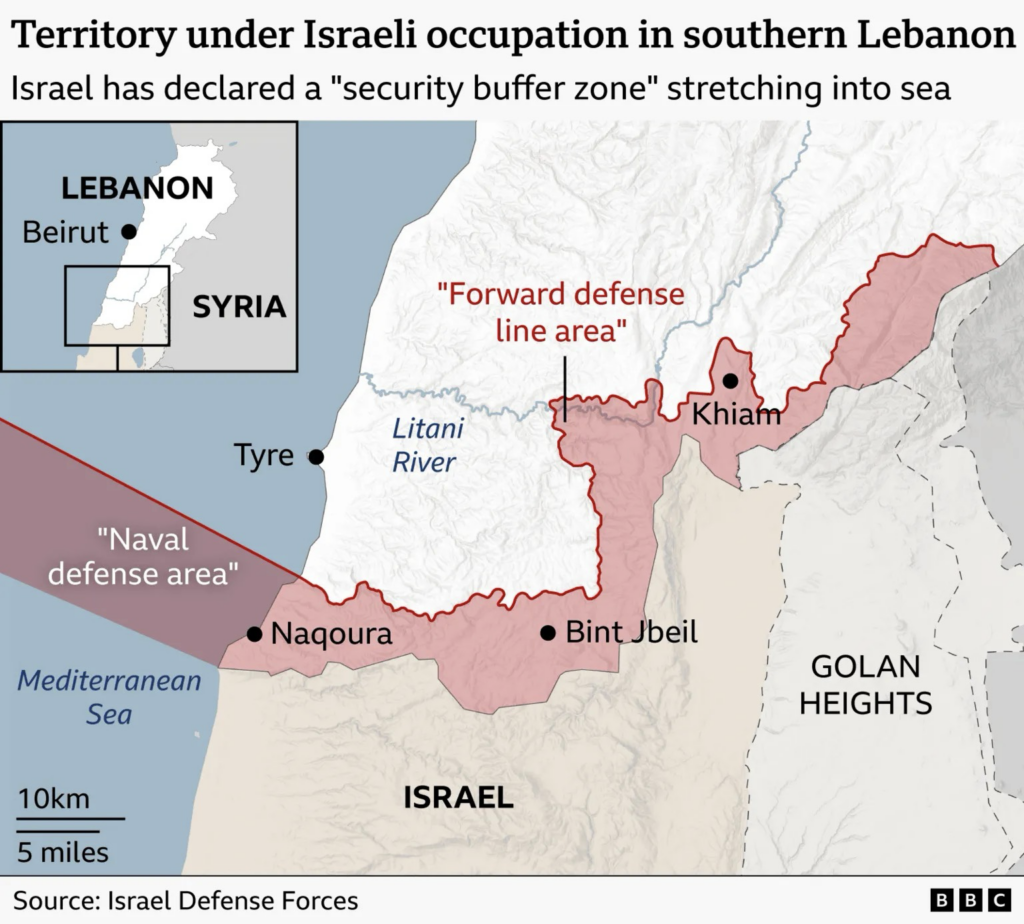
Thousands of Israeli troops continue to occupy a wide area of southern Lebanon after a US-brokered ceasefire came into force between Israel and Lebanon on Friday. It has paused six weeks of fighting between the IDF and the Shia Muslim armed group Hezbollah, although both sides have accused each other of violations.
The IDF has published a map showing what it calls a “forward defence area” where it is seeking to maintain control. It says it aims to stop Hezbollah firing anti-tank missiles at northern Israel and stop its operatives from attempting any cross-border raids.
Hezbollah began firing rockets at Israel in support of Iran on March 2, two days after Israel and the US launched a war on Tehran.
Israel began a military campaign on 2 March in which more than a million Lebanese have been displaced and more than 2,290 people have been killed, including 177 children and 100 healthcare workers, Lebanese authorities say. Thirteen Israeli soldiers and two civilians have been killed by Hezbollah attacks in the same period, Israeli officials say.
Right-wing US commentators were quick to denounce the picture of the Israeli soldier and the statue of Jesus. “Horrific,” wrote Matt Gaetz, a former adviser to President Donald Trump and former congressman, as he reposted the photo.
Former US congresswoman Marjorie Taylor Greene also shared the picture and wrote: “‘Our greatest ally’ that takes billions of our tax dollars and weapons every year.”
Polls indicate there has been a substantial drop in support for Israel in the US, its most important ally. A recent survey by the Pew Research Center, a US-based think tank, suggested 60% of US adults had an unfavourable view of Israel, up from 53% last year.
Last month, there was an international outcry after Israeli police prevented the top Roman Catholic leader in Jerusalem from entering the Church of the Holy Sepulchre for a private mass on Palm Sunday. Israeli police said this was out of safety concerns during the Iran war.
Jerusalem Patriarch condemns the act
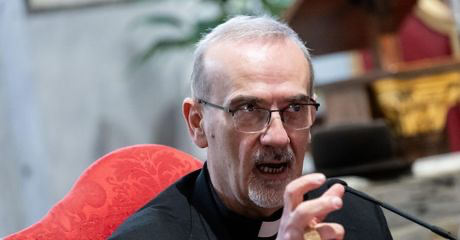
Cardinal Pierbattista Pizzaballa, the Latin Patriarch of Jerusalem, on Monday expressed “profound indignation and unreserved condemnation” of the defacing of a statue of Jesus Christ by an Israeli soldier in Lebanon, saying the act “constitutes a grave affront to the Christian faith.”
The Israeli military confirmed on Sunday that images showing an Israeli soldier smashing the head of a toppled Christ statue with a sledgehammer were genuine ”
In a statement from Jerusalem, The Assembly of Catholic Ordinaries of the Holy Land, headed by Pizzaballa, called for “immediate and decisive disciplinary action, a credible process of accountability, and clear assurances that such conduct will neither be tolerated nor repeated.”
BBC/YA
