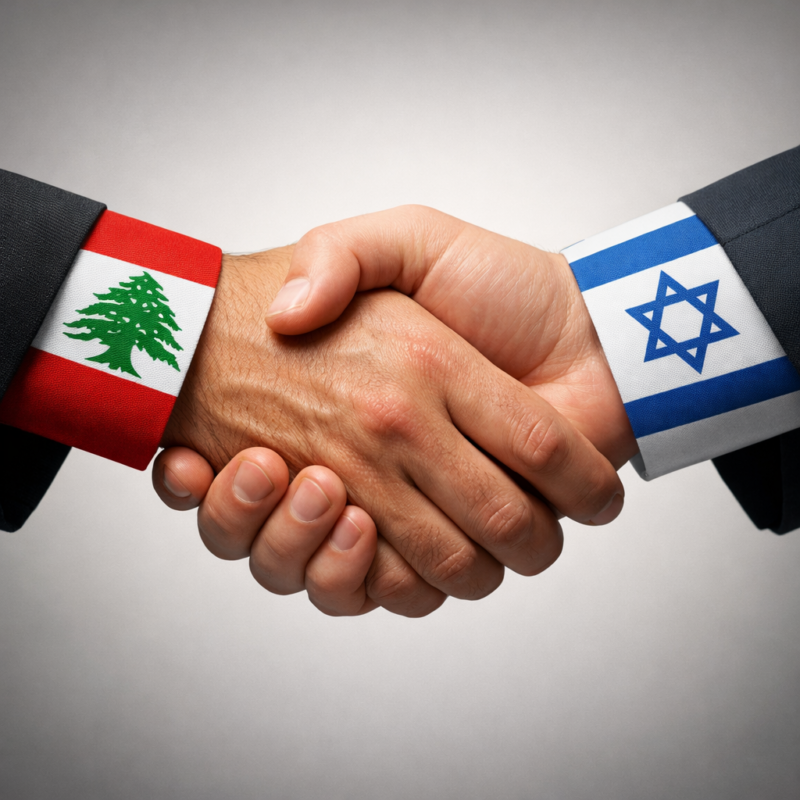
A generational peace is within reach—but only if Israel abandons dominance and embraces full equality with a sovereign Lebanon
By: Ya Libnan Editorial Board , Opinion
Israeli Prime Minister Benjamin Netanyahu speaks of a “lasting peace” with Lebanon—one that endures for generations. That vision is not only welcome in Beirut—it is precisely what Lebanon seeks: stability, sovereignty, and shared prosperity.
But history delivers a clear and unforgiving lesson: peace collapses the moment equality is compromised.
The failed 1983 Lebanon–Israel Agreement remains the most telling example. It was signed, celebrated, and then quietly buried—not because peace was undesirable, but because its terms violated Lebanon’s sovereignty.
Lebanon has seen this before. Agreements that ignore sovereignty do not endure—they collapse under their own imbalance.
Israel’s insistence at the time on maintaining security control, including patrols in southern Lebanon, transformed what could have been a historic breakthrough into an unacceptable imbalance.
No sovereign nation accepts peace at the expense of its independence.
Today, Lebanon is taking a different path. Under President Joseph Aoun, the country is stepping away from the era where non-state actors dictated war and peace, and toward a state-led strategy grounded in diplomacy. The upcoming talks in Washington, D.C., facilitated by the U.S. State Department, are more than a ceasefire discussion—they are an attempt to reset the rules of engagement in Lebanon’s favor: sovereignty first, diplomacy always.
For this effort to succeed, one principle must be non-negotiable: mutual respect between equals.
That means:
- Full Israeli withdrawal from Lebanese territory
- No security arrangements that infringe on Lebanese sovereignty
- Recognition that Lebanon alone governs its land, borders, and national decisions
Anything less is not peace—it is a temporary arrangement waiting to collapse.
If built on equality, however, the rewards are transformative. A Lebanon–Israel peace treaty could reshape the region:
- Opening trade corridors between the Levant, the Gulf, and Europe
- Unlocking joint energy opportunities in the Eastern Mediterranean
- Reviving tourism across two globally connected societies
- Attracting long-term investment driven by stability and predictability
This would not be a cold peace. It would be a strategic shift—from a history of confrontation to a future of cooperation between two modern, democratic states.
But the margin for error is thin. If Israel repeats the miscalculations of the past—overreaching, imposing, or treating Lebanon as a subordinate—the result will be the same: failure, instability, and renewed conflict. If, instead, it embraces true parity, the outcome could be historic.
The Moment of Truth
This is Israel’s moment of truth.
It can pursue the illusions of the past—security through dominance, control disguised as peace—and guarantee another failed agreement, another lost generation, another cycle of war.
Or it can choose something far more difficult, and far more powerful: peace built on equality.
That choice begins with one unmistakable step—a complete withdrawal from Lebanese territory and full respect for Lebanon’s sovereignty. Not as a concession, but as the foundation of any agreement that claims to endure.
Because Lebanon is not seeking a pause between wars.
It is seeking a future beyond them.
And that future will not be negotiated under pressure, nor shaped by imbalance. It will be built—if at all—on mutual recognition between two sovereign states that choose cooperation over control.
If Israel rises to that moment, the reward is historic: a stable northern border, economic partnership, and a peace that outlives politics.
If it does not, the outcome is already known.
The question is no longer whether peace is possible.
The question is whether Israel is ready to earn it.
