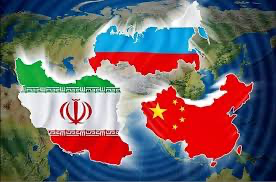
Tehran has had “good cooperation with these countries: politically, economically, even militarily,” Iranian Foreign Minister Abbas Araghchi told MS NOW.
Russia and China are aiding Iran in a number of ways, including by providing “military cooperation,” Iranian Foreign Minister Abbas Araghchi said.
Araghchi called Russia and China strategic partners for Tehran during its war with the U.S. and Israel, in an interview with broadcaster MS NOW on Saturday.
“We have had close cooperation in the past, which still continues, and that includes military cooperation as well,” said the foreign minister. Iran has had “good cooperation with these countries: politically, economically, even militarily,” he added.
On Friday, U.S. President Donald Trump speculated that Russian President Vladimir Putin might be helping Iran “a bit.”
“I guess, and he probably thinks we’re helping Ukraine, right?” said Trump, in reference to aid to Kyiv to defend against Moscow’s all-out invasion.
Iran and Russia have strengthened ties over the past decade in response to U.S. opposition. Iran has been supplying Russia with its domestically designed Shahed drones, which Moscow uses to wage its war in Ukraine, going so far as to set up factories in Russia. The two countries also threw their support behind the now-defunct regime of Bashar al-Assad in Syria.
In 2021, Iran signed a 25-year economic cooperation agreement with Beijing, centering on the sale Iran’s rich oil reserves to supply China.
Araghchi in Saturday’s interview also addressed the turmoil in the key waterway of the Strait of Hormuz, which passes by the coasts of Iran and Oman, and which is a passage for one-fifth of the world’s oil and gas. Tensions in the Strait have propelled the cost of oil to above $100 a barrel and are threatening economic dislocation worldwide.
Araghchi said that the Strait was closed to tankers and ships belonging to “our enemies, to those who are attacking us and their allies.” Iran has been lobbing missiles at Persian Gulf countries, which are major suppliers on global hydrocarbon markets.
POLITICO
