Once again, Hezbollah has dragged Lebanon into a war with Israel.
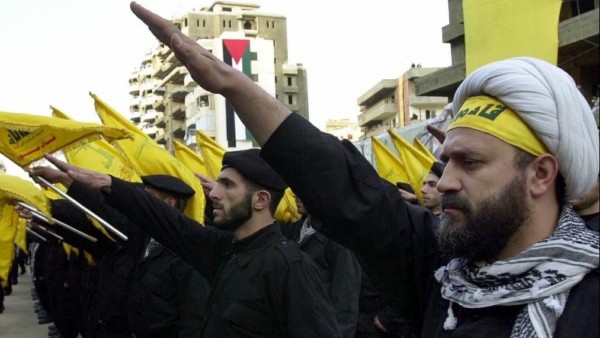
File photo: A parade by the Iranian backed Lebanese Shiite Hezbollah militia (which is the only militia that refused to hand over its arms following the end of the civil war ) . It is now the most powerful group in Lebanon and acts as ” the state within. none -state “. Calls on it to disarm intensified after its leader Hassan Nasrallah was killed.
By David Daoud , Senior Fellow
and Ahmad Sharawi, Senior Research Analyst. Opinion
Despite promising signals, Beirut remains unserious about reasserting the state’s authority. On March 2, the Lebanese Cabinet proscribed Hezbollah’s military activities, ordering the group to stand down and surrender its arsenal. However, the group disregarded Beirut’s instructions, escalating its attacks against Israel. Rejecting disarmament, Hezbollah Secretary-General Naim Qassem made clear that the group “will never surrender, and will fight to the end.”
Even this open defiance of its authority did not prompt the government in Beirut to proactively move against Hezbollah. Justice Minister Adel Nassar instead called on Hezbollah to “take the initiative and surrender its arms” while the Lebanese Armed Forces (LAF) have seemed content with arresting random, armed individuals who happen to cross their checkpoints.
This characteristically passive response from the Lebanese state is wasting a rare and time-limited opportunity for Lebanon to disarm Hezbollah without risking a civil war in the process.
Lebanon’s Calculus: Regional War Is Better Than Civil War
In 2006, the Security Council adopted Resolution 1701, stressing Lebanon’s sovereign obligation to control its territory and, as a direct extension, to disarm Hezbollah, a duty reaffirmed by the November 2024 ceasefire agreement with Israel. In the intervening period of more than two decades, Lebanon has refrained from acting on its commitment to disarm the group.
Hezbollah absorbed significant blows during its 2023-24 conflict with Israel. Yet as the opening of a Lebanese front during the current combined U.S. and Israeli military action against Iran’s clerical regime has demonstrated, Hezbollah has retained enough of its military power to remain menacing — especially compared to the Lebanese state.
Just as significantly, if not more so, the overwhelming majority of Lebanese Shiites, likely the country’s largest demographic group, have continued to support Hezbollah.
Hezbollah has played on the Lebanese state’s fear of civil war to deter Beirut from forcibly disarming it — at once inflaming Shiite sentiments by describing disarmament as an existential threat to their community and telling Lebanon as a whole that the government is playing with the fire of domestic conflict
As a result, Lebanon has repeatedly sought to convince Hezbollah to surrender its arsenal through dialogue. But Hezbollah exploited this passivity to regenerate enough strength to start another war with Israel, on track to be far more intense than the last, while Lebanon remains constrained by its old fears.
Lebanon’s Limited Window of Opportunity
Lebanon’s anxieties are, for the time being, without foundation. What remains of Hezbollah’s military strength is now tied up in an intense war with Israel, which seeks to degrade the group even more.
Hezbollah has rarely been as politically and socially exposed as it is now. Qassem effectively admitted this on March 4, when he beseeched “the resistance’s opponents” not to “stab Hezbollah in the back.” Following the November 2024 ceasefire, most Lebanese — up to 70 percent per some polls — opposed Hezbollah and wanted it disarmed. Anecdotal evidence suggests these sentiments may even be manifesting among the group’s Lebanese Shiite base, with some calling on Hezbollah to “die on your own — Dahiyeh [the Beirut district that is home to Hezbollah’s headquarters] and south Lebanon’s people don’t want to die.”
Even if this phenomenon remains limited to a minority of Shiites, the immense strain of massive evacuations from south Lebanon, Dahiyeh, and the Beqaa Valley means the community cannot, for the time being, shield Hezbollah from disarmament or act as its foot soldiers in a civil war.
Washington Should Press Beirut To Disarm Hezbollah
This rare and fleeting alignment of factors provides Lebanon with an opportunity to disarm Hezbollah and prove its worth as a U.S. partner. Washington should seize the moment as well and use its leverage to press Beirut to act now, since this window will rapidly close once the dust of this conflict begins to settle.
FDD
