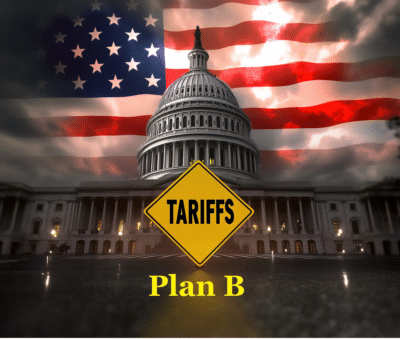
Why limiting presidential power didn’t end unilateral trade wars — it just repackaged them
By Ya Libnan Editorial Board , Opinion
Many Americans celebrated the Supreme Court’s recent decision curbing the president’s ability to impose sweeping tariffs under emergency powers. It felt like a long-overdue check on executive overreach and a victory for the rule of law.
But the celebration may be premature.
In practice, the ruling did not end unilateral tariff power. It merely redirected it.
By pivoting to older trade statutes — particularly Section 122 of the Trade Act of 1974 — the administration has found a legally safer workaround. That law allows the president to impose temporary tariffs of up to 15 percent for 150 days in the name of balance-of-payments protection. The new tariff ceiling is not economic restraint; it is legal compliance.
In other words, the Supreme Court narrowed the highway — but it did not block the road.
A Legal Win, Not a Structural Fix
The Court deserves credit for what it did: it closed the most dangerous loophole, where “national emergency” declarations could justify open-ended, unlimited tariffs with little oversight. That matters.
Yet the ruling did not return tariff authority to Congress, where the Constitution originally placed it. Instead, it left intact a web of long-delegated statutes that still allow presidents to act first and force the economy — and lawmakers — to react later.
The result is a system where tariffs are no longer a blunt weapon, but a recurring threat, capped and time-limited yet endlessly renewable in political practice.
The Economic Cost of “Temporary” Tariffs
A 15 percent tariff may sound modest compared to past proposals, but its impact is anything but trivial.
Tariffs are taxes paid by American importers and consumers, not foreign governments. They raise prices, squeeze household budgets, and inject uncertainty into supply chains. Businesses delay investment. Hiring slows. Inflation becomes stickier, complicating the Federal Reserve’s job.
Even when tariffs are temporary, uncertainty is permanent. Companies plan years ahead, not 150 days.
This is how economic damage accumulates quietly — not through a dramatic crash, but through slower growth, weaker productivity, and diminished competitiveness.
The Hidden Foreign Policy Damage
The longer-lasting harm may be geopolitical.
Allies increasingly view U.S. trade policy as unpredictable and transactional, subject to abrupt reversals with every election cycle. That perception pushes them to hedge — by signing trade deals that exclude the United States, restructuring supply chains, and deepening ties with other economic blocs.
Tariffs do not just tax goods; they tax trust. And once trust is lost, it does not automatically return when tariffs expire.
Back to Square One — With Better Packaging
So are we back to square one?
Not entirely — but uncomfortably close.
The Supreme Court replaced a bazooka with a time-limited shotgun. The damage is contained, but the threat remains. And unless Congress acts, this pattern will repeat with every administration, regardless of party.
The Real Solution Lies in Congress
Courts can draw lines. Presidents will find ways around them. Only Congress can fix the underlying problem by reclaiming its constitutional authority over trade and setting clear, durable limits on unilateral tariff powers.
Until that happens, Americans will keep cycling through the same illusion: that a court ruling ended tariff chaos — when in reality, it merely changed the statute number on the paperwork.
Bottom Line
The Supreme Court did its job. Now Congress must do its own.
Because a country that treats trade policy as a political weapon today should not be surprised when allies stop treating it as a reliable partner tomorrow.
