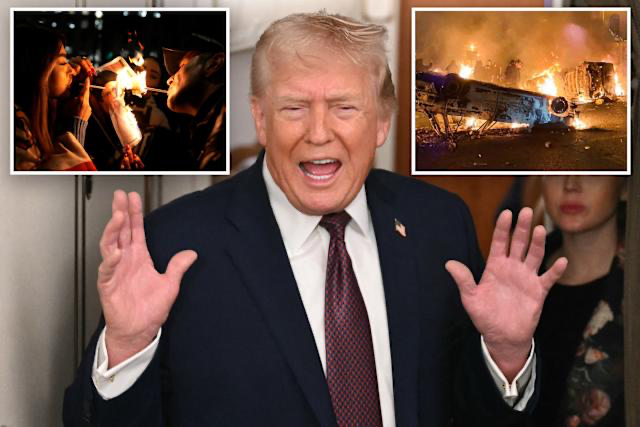
Iran continued killing its people — and still forced negotiations on its own terms.
Photo- President Trump tells Iranians ‘keep protesting,’ says ‘help is on its way’ and regime will ‘pay a big price’ as thousands of protesters were killed
By Ya Libnan, Opinion
In January, Donald Trump issued one of the most dramatic public statements of his presidency. Amid reports that Iran’s security forces had killed thousands of peaceful demonstrators, Trump took to social media and the world stage to tell the Iranian people: “Keep protesting … help is on the way.” He urged Iranians to “take over your institutions,” promised that those responsible for killing protesters would “pay a big price,” and warned Tehran that U.S. action was imminent.
But that help never came.
As Iran’s brutal crackdown deepened — with estimates ranging from thousands to tens of thousands killed in the largest massacre in modern Iranian history — U.S. action was limited to words and vague warnings. Tehran absorbed the rhetoric, intensified its repression, and then shifted the dynamic entirely: Iran proposed and then dictated the terms of renewed engagement with Washington.
Instead of Washington setting the agenda, selecting the venue, and defining the scope of negotiations, Iran did. Talks have been limited to nuclear restraints — excluding human rights abuses, missile development, and Iran’s support for militant proxies. In effect, Tehran forced the U.S. to discuss only what Tehran wants to discuss.
That is not diplomacy from strength. It is diplomacy on Iran’s terms.
Allies See the Blinking Light
American credibility depends not on slogans but on follow-through. When allies — from the Gulf Cooperation Councilstates to Europe — weigh their security strategies, they ask a simple question: Will Washington enforce what it promises?When red lines evaporate and threats go unfulfilled, alliances become brittle. The very deterrence that keeps adversaries in check relies on the belief that the U.S. will act when it says it will. Trump’s unfulfilled promise to Iranian protesters doesn’t look like resolve — it looks like retreat.
Iran’s Proxies Are Watching
Tehran’s regional proxies — Hezbollah in Lebanon, Iran’s Shiite militias in Iraq, and the Houthi movement in Yemen — all take notes. When Washington threatens, then pivots to negotiation on terms set by Tehran, they interpret that as opportunity. Pressure without consequence encourages escalation rather than deterrence. These armed groups do not see emptiness in U.S. threats — they see strategic advantage.
The People Who Paid the Price
Across Iran, protesters — students, workers, families — took heart from Trump’s words. Many believed that vocal U.S. support would manifest in meaningful action. But as Iran’s regime escalated its killing, the promise of “help on the way” faded into silence. Tens of thousands of Iranians paid with their lives for a message that ultimately went unfulfilled.
When a global superpower’s words fail to materialize into protection or pressure, the message travels far beyond borders. Iran’s people saw abandonment. U.S. allies saw unpredictability. Iran’s proxies saw opportunity.
And Tehran saw leverage — enough to force negotiations on its terms.
That is the real consequence of this moment: not just a shift in U.S.–Iran relations, but a dangerous erosion of American deterrence and credibility across the region.
