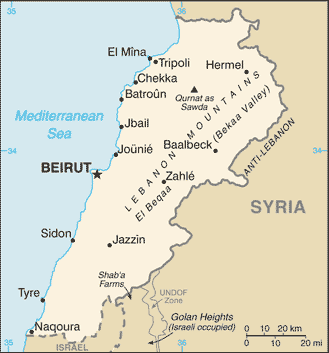
As if Lebanon didn’t have enough problems on its southern border, due to Israeli aggression and ambitions, it is now threatened by equally serious dangers from its vast border with Syria. Ironically, the Lebanese parties that, in the recent past, rejected any classification of the border with Syria as a potential threat to Lebanon, insisting that the only danger to the country came from the “Israeli enemy,” are now the most fearful of the repercussions of the complete collapse and disintegration of the Assad regime! So, what are these looming dangers?
First: Smuggling gangs are deeply entrenched on both the Syrian and Lebanese sides of the border. These are outlaw groups whose primary focus is on making quick money by smuggling various types of contraband across the border, even facilitating the passage of individuals and wanted criminals away from the eyes of the official border authorities. Despite the tremendous efforts exerted by the Lebanese army and the various security forces involved to stop all types of smuggling operations, this problem has not been completely eradicated.
It leaves Lebanon vulnerable to many ills that harm its economy and treasury, and threaten its demographics and even its security stability.
Secondly: The threat posed by extremist Islamic groups, such as ISIS elements and similar terrorist groups, given the complete instability of the security situation in Syria to date, especially after the Syrian Democratic Forces lost control of large areas of the autonomous regions. This has resulted in the escape of many dangerous extremists to unknown areas, with the possibility of some of them reaching Lebanon, fearing that the Syrian authorities might hand them over to external parties as a result of the deals currently being made from all sides. This type of fugitive represents a significant threat, as they have nothing to lose and have been brainwashed, making them ready to carry out terrorist attacks when the opportunity arises. They are classified as “lone wolves” who operate within small, limited cells, rather than within large, organized groups, which makes detecting them more difficult.
Thirdly: The threat from the legitimate Syrian leadership itself. Current Lebanese-Syrian relations are characterized by extreme caution, despite occasional direct contacts between the two sides. While the Syrian demands on the Lebanese authorities—regarding the return of Syrian prisoners in Lebanon, the extradition of security and military officials from the collapsed Syrian regime who have fled to Lebanon, and the return of Syrian funds held in Lebanese banks—could cause political unrest, they are unlikely to lead to a military confrontation. However, the most dangerous file is that of Hezbollah, given the Syrian leadership’s simmering resentment towards the group due to its role in supporting the previous regime and fighting fiercely against the armed groups, some of which are now the dominant power in Damascus. If the American side is willing to trade the “Syrian Democratic Forces” card, and behind it the “Kurdish” file, in exchange for certain concessions from the current Syrian leadership—starting with future economic gains, extending to strengthening its geopolitical presence, and culminating in opening the door wide to a peace agreement between Syria and Israel—then all possibilities remain open, including the possibility that the Syrian armed forces might one day be given the “green light” to participate in striking Hezbollah’s military presence in the border areas, all the way to the entire Bekaa Valley!
Fourth: The danger stemming from Israeli threats. It is not unlikely that if Israel decides to attack Lebanon by land in the future, it will exploit its presence in southern Syria to advance towards Hezbollah’s positions from outside the traditional southern Lebanese border, specifically from the Hasbaya and Rashaya regions towards the Bekaa Valley. It is worth noting that, in addition to the occupied Syrian Golan Heights, the Shebaa Farms, and Mount Hermon, Israeli forces are currently present in a buffer zone that separates the Golan Heights from the Quneitra countryside and the Syrian interior. Some of these Israeli military positions are located at a depth of between two and ten kilometers inside Syrian territory. Several Western reports indicate that the Israeli army has established additional military bases and positions in southern Syria, particularly in the Quneitra and Daraa governorates, some as close as 40 kilometers from the capital, Damascus. These could potentially serve as launching points for attacks on the Lebanese Beqaa Valley if needed in the future.
In conclusion, it is essential that Lebanon’s entire international border be secured and protected, as the threat to Lebanon from its border with Syria is no less complex or sensitive than the threat it faces from Israel.
SOURCE : EL NASHRA , translated from Arabic
