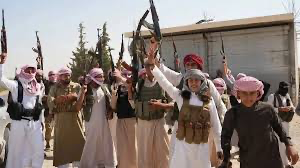
PHOTO- Arab tribes in North Eastern Syria betrayed their allies the Kurdish SDF and pointed their guns against them . They now plan to head to Sweida in southern Syria to fight against the Druze , where they along with the Syrian security forces committed massacres last July
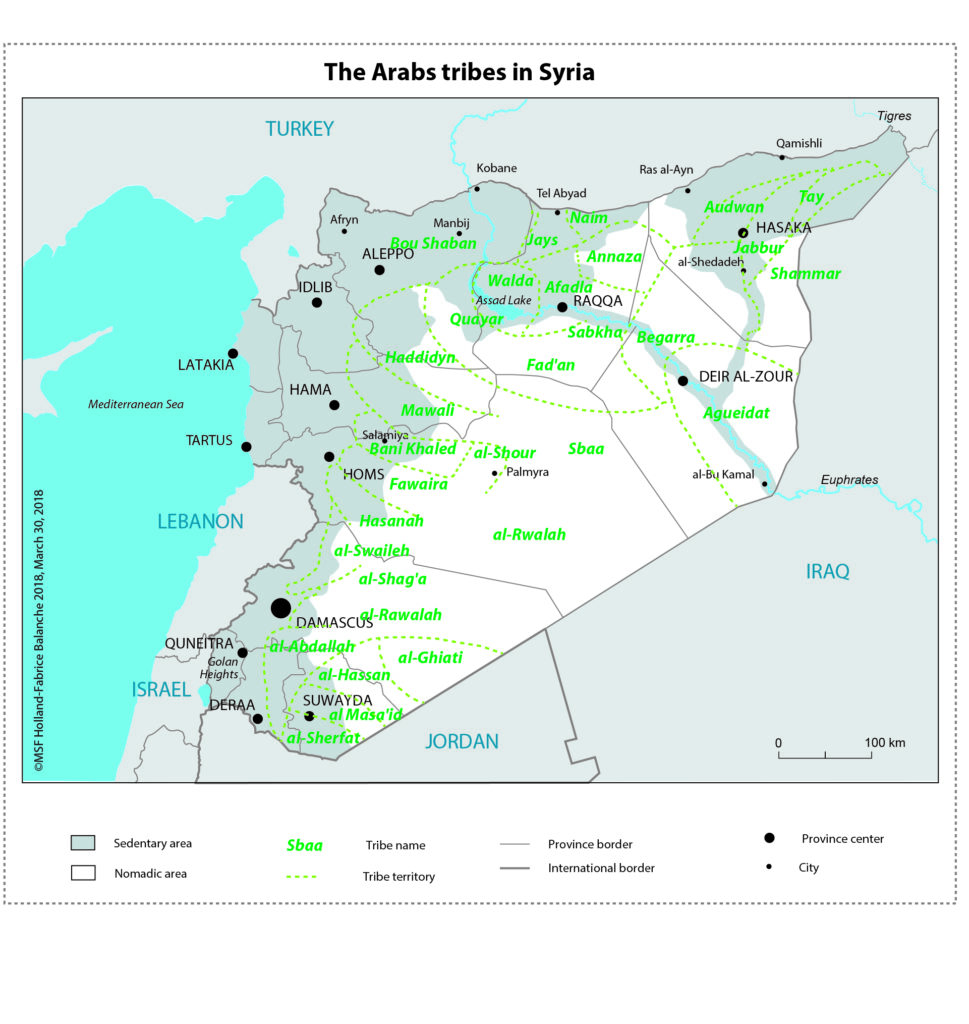
As the Syrian president signed a fragile ceasefire in Damascus, on the ground in Deir Ez-Zour and Raqqa, sporadic fighting continues between the SDF and government forces backed by Arab tribal groups.
DEIR EZ-ZOUR, SYRIA—On Monday, in Deir Ez-Zour, Syria, huge amounts of military traffic clogged a rickety pontoon bridge, as Syrian government forces moved east across the Euphrates River. The river, which cuts the province of Deir Ez-Zour down the middle, has been the front line between Syrian government forces and Kurdish-majority Syrian Democratic Forces for months. The pontoon bridge was the last remaining crossing point for hundreds of miles; Syrian government forces were pushing forward into the newly captured territory, to deploy alongside their new tribal allies.
The months-long standoff between the SDF and the Damascus government turned in the government’s favor on Sunday when Arab tribes in the provinces of Raqqa and Deir Ez-Zour—who had for years been close allies of the SDF in its fight against ISIS—defected to the government and turned their guns on their former comrades. In response, the SDF rapidly withdrew from these largely Arab provinces and established their line of defense further north in the Kurdish heartlands of Qamishli, Kobani, and Hasake.
By Monday, it appeared that a deal had been reached between the two sides to end the killing and integrate the SDF fighters into the military on an “individual” basis. If put into effect, that deal would be a capitulation for the SDF, which had long demanded that its fighters integrate under the new Syrian Ministry of Defense as whole divisions, which would allow them some degree of autonomy from the government. In a stunning coup, Syria’s president, Ahmad Al-Sharaa, seemingly managed to unify Syria with a relatively small price in blood, and on his own terms.
On the far side of the river, large numbers of tribesmen were visible heading north toward Hasake. Osama, a young member of the local Ogaidat tribe, told Drop Site News that he, too, had been deployed to the fight there. For Osama, Sunday was a day as significant as the fall of Bashar Al-Assad’s regime. Many Arabs in SDF-territory accuse the SDF of systematic discrimination against the Arab population.
“Thanks be to God, we are so joyful,” he said. “Our lives were deprived under the SDF, we used to live together with the Kurds until the SDF came.”
“This revolution is not over until we liberate Qamishli, Kobani and Hasake. After we have finished here, we will go to Sweida, Quneitra, and then the Golan,” he vowed.
In July 2025, Arab tribal elements battled Druze militias in Sweida, committing a number of massacres against them, which prompted Israel to launch a series of airstrikes it claimed was on behalf of the Druze. Since then, the region has been cut off from the country by Damascus, which limits exit and entry to the province. Quneitra and the Golan have been illegally occupied by Israel since 2024 and 1967 respectively.
“For many Kurds, this [threat] now appears existential, the [Syrian] army that they have witnessed kill over a thousand Alawite civilians on the coast and in Sweida last year are now approaching, seeking to punish them for their attempt at self-governance,” Alexander McKeever, researcher and author of the newsletter “This Week in Northern Syria said
“Additionally there have been abuses committed [by government forces in recent fighting], which will only radicalize the Kurdish population further.”
Source: DROP SITE
