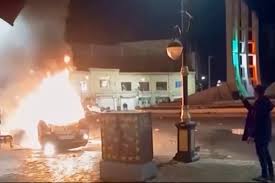
More than 200 reported killed by live amm in Tehran by six hospitals as protests swelled in all Iranian provinces and as the regime appears weaker than ever since the 1979 revolution
As protests against Iran’s government swelled significantly in size on Thursday night, the regime responded in many places by opening fire. A Tehran doctor told TIME on condition of anonymity that just six hospitals in the capital had recorded at least 217 protester deaths, “most by live ammunition.”
The death count, if confirmed, would signal a feared crackdown presaged by the regime’s near-total shutdown of the nation’s Internet and phone connections since Thursday night. It would also constitute a direct challenge to U.S. President Donald Trump, who earlier in the day warned that the regime would “pay hell” if it killed protesters who have taken to the streets in growing numbers since Dec. 28.
The demonstrations, which now span all 31 provinces, began as a protest against an economy in freefall. But they soon broadened to demand the overthrow of the authoritarian Islamic regime that has ruled the nation of around 92 million since 1979. Though the rallies have been largely peaceful, with chants of “Freedom” and “Death to the Dictator,” some government buildings have been vandalized.
The doctor said authorities removed corpses from the hospital on Friday. Most of the dead were young people, he said, including several killed outside a northern Tehran police station when security forces sprayed machine gun fire at protesters, who died “on the spot.” Activists reported at least 30 people were shot in the incident.
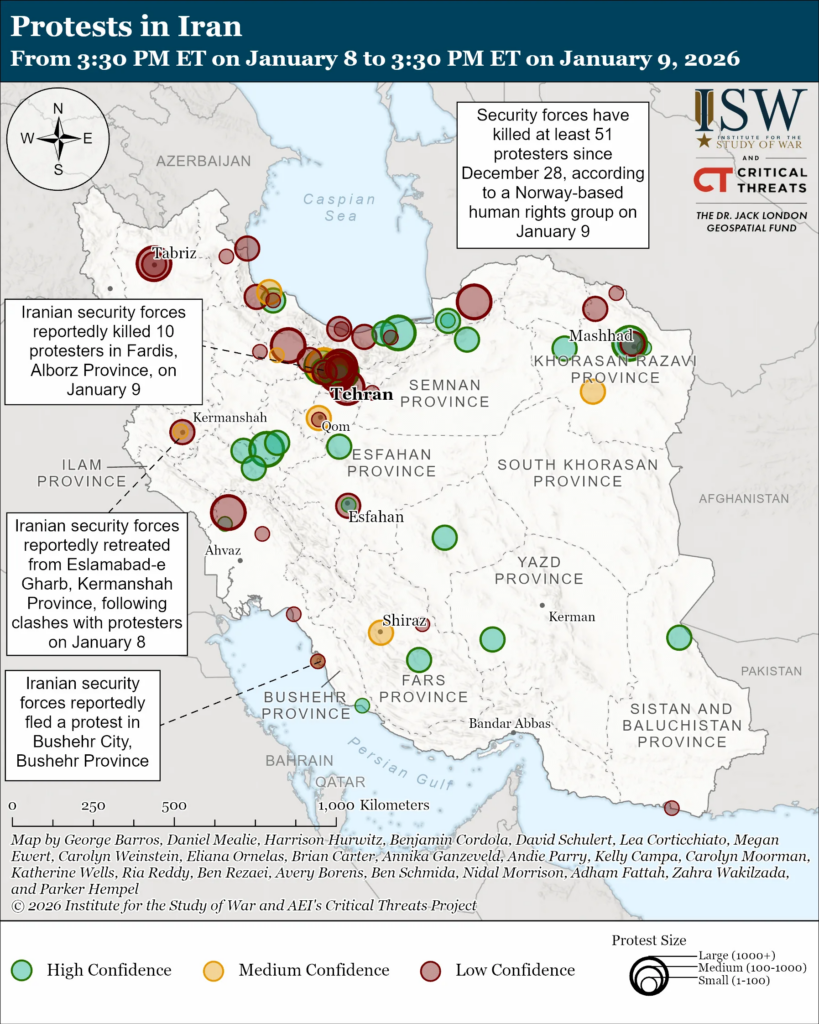
Human rights groups on Friday reported much lower death tolls than the physician, though the discrepancy might be explained by differing reporting standards. The D.C.-based Human Rights Activist News Agency, which tallies only victims who have been identified, reported at least 63 deaths since the start of the protests, including 49 civilians.
TIME has been unable to independently verify these figures.
The death tolls arrived as the regime broadcast a series of ominous messages. “The Islamic Republic will not back down in the face of vandals” seeking to “please” Trump, Supreme Leader Ayatollah Ali Khamenei said in a speech broadcast on Friday. Meanwhile, Tehran’s prosecutor declared that protesters could face the death penalty. And on state television, an Islamic Revolutionary Guard official warned parents to keep their children away from protests, saying, “If… a bullet hits you, don’t complain.”
For the first 11 days of protests, uncertainty had surrounded the regime’s response. “There is a lot of disagreement now among security forces” over whether a massive crackdown will restore order or further inflame public anger, a black-clad riot-police officer in a Kurdish city in northwest Iran told TIME on Wednesday. “There is 100% confusion” within the riot police, he said, speaking anonymously.
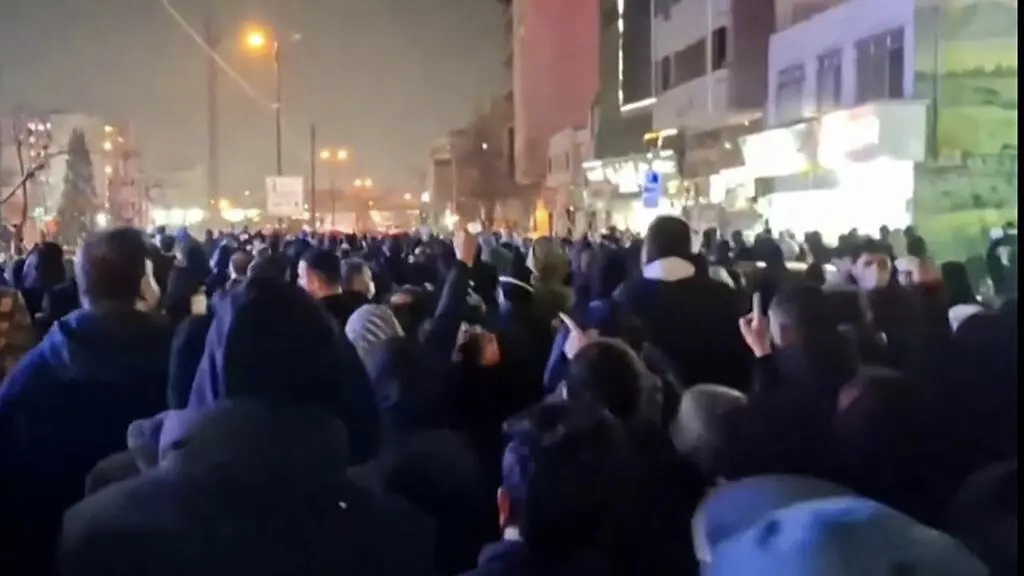
Protests against the high cost of living have erupted in Iranian cities on 12, 28 2025. © ©AFP via UGC
Key decisions were being made in meetings that were not being communicated to officers like him, he said. “I’m a senior rank here, and I don’t know what’s happening. They’re doing things in secret, and we’re afraid of what’s coming.”
“There is chaos everywhere, in the city, in homes, in the streets and within the police forces, too,” he added. “I know all the officers in my station, and they believe the regime is collapsing.”
But bloody social media posts emerging on Friday, coupled with the blunt warnings from the regime, appeared to signal clear orders had been issued.
“I think that under current circumstances, since the protests have extended to middle-class areas, the regime will not hesitate in using brute force,” as it has to quell previous unrest, said Hossein Hafezian, a New Jersey-based Iran expert and political scientist. “At this time, it is considered an existential threat.”
“From now on, the casualties will increase rapidly,” he predicted, but added, “if Trump attacks a few anti-riot police barracks, it might be a game changer!”
Trump’s threats, along with the U.S. capture of Nicolás Maduro, the sitting President of Venezuela, were offered as one explanation for the uneven response of Iranian authorities during the earlier days of the protests. In Malekshahi, in western Ilam province, at least five protesters were killed by gunfire outside a building operated by Iran’s Basij paramilitary forces, according to Paris-based Kurdistan Human Rights Network. But at the original source of the protests, Tehran’s Grand Bazaar, a traditional base of regime support, security forces had largely dispersed crowds using tear gas and arrests rather than live fire.
Others noted the sheer number of challenges facing the Islamic Republic. “It’s still a very solid regime,” said Afshon Ostovar, a professor of international security at the Naval Postgraduate School in California and the author of two books on Iran, “but if you… look around, it’s weaker than it’s ever been on just about every front” since just after the 1979 Islamic Revolution.
“Time Magazine “
