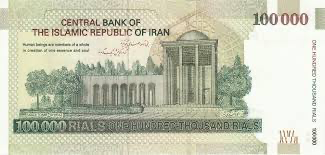
100, 000 rial banknote would have been worth over $1430 before the islamic regime took over in 1979. today you need to at 14 of these banknotes to buy one dollar. The free market exchange rate on Monday was $= 1.42 million rials . The rial has lost about 40 per cent of its value since the 12-day war in June,
By Ben HubbardSanam Mahoozi and Leily Nikounazar
Ben Hubbard reported from Istanbul, Sanam Mahoozi from London and Leily Nikounazar from Brussels.
Protesters took to the streets of the capital, Tehran, and other cities in Iran on Monday to decry surging inflation and the collapse of the national currency, which have thrown markets into chaos and punched holes in family budgets.
The currency plunged to a record low this past weekend against the U.S. dollar and the annual inflation rate rose to 42.2 percent in December.
Amid the turmoil, the head of Iran’s central bank, Mohammad Reza Farzin, resigned on Monday, pending the president’s acceptance, local news media reported. A former economy minister, Abdolnaser Hemmati,
A photo released by Iranian state media shows a protest in Tehran on Monday, a day after Iran’s currency hit a new low against the U.S. dollar.
woses a new challenge for Iran’s leaders as they seek to maintain control of their country of 92 million people while recovering from attacks on its nuclear facilities in June by Israel and the United States and a campaign of “maximum pressure” from the Trump administration aimed at securing a new agreement about Iran’s nuclear program.
President Masoud Pezeshkian responded to the demonstrations late Monday on social media.
“The livelihood of the people is my daily concern,” Mr. Pezeshkian said in a post on X. He said the government has actions planned to “reform the monetary and banking system and preserve the purchasing power of the people,” adding that he had also asked the interior minister to “hear the legitimate demands of the protesters through dialogue with their representatives.”
Mr. Pezeshkian’s conciliatory message and his earlier move to swiftly replace the central bank chief suggest he is seeking to project responsiveness and a sense of de-escalation.
Iran has experienced repeated waves of protests fueled by economic woes, drought and other grievances since 2017, and it was not immediately clear whether these new demonstrations would grow and spread to additional cities.
Iranian security forces have repressed previous protests with deadly force and arrests, raising the stakes for those who make their complaints public. Videos shared online on Monday showed security forces firing tear gas to disperse some of the protests in Tehran and at least two other cities.
Experts attribute Iran’s deepening economic pain to a host of factors from poor management to policies that keep the country’s economy closed. The stepped-up efforts by the Trump administration to limit Iran’s oil sales to foreign countries and the war with Israel in June, during which the government tapped Iranian banks to cover its costs, have also contributed to the worsening economy.
The government has few options to address the crisis swiftly, said Amir Hossein Mahdavi, a doctoral candidate in political science at the University of Connecticut who studies Iran’s economy.
It could change its relationship with the United States in exchange for relief on sanctions, he said, or drastically cut government spending, but neither option appears likely.
“At present, the risk of sustained high inflation, and a repetition of recent experiences such as those of Venezuela and Argentina, is increasingly growing,” Mr. Mahdavi said.
The proposed 2026 budget showed the government’s dilemma, reflecting a substantial decrease in oil revenue and an increased reliance on tax revenue.
On Monday, the Parliament rejected the proposed budget, the semiofficial Tasnim News Agency reported. T
The Economy and Foreign Affairs Ministries did not immediately respond to requests for comment.
The currency collapse has been painful for ordinary Iranians, who have watched the value of their salaries and savings drop while prices for goods and services skyrocketed.
Omid, a 42-year-old sales manager in Tehran, said the value of his monthly income has dropped to the equivalent of $200 per month from $300 in just two months, giving him anxiety.
He said he worried about being able to cover his elderly parents’ medical bills and that his car would break down and he would be unable to fix it.
“These days, even hanging out with friends feels restricted, as we’re constantly calculating like human calculators whether we can squeeze in the cost of a simple coffee,” he said.
(The New York Times)
