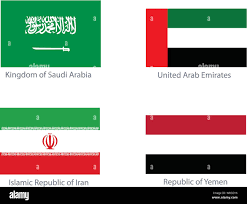
Inaction Could Trigger a Saudi-UAE Clash, Empower Iran, and Destabilize the Middle East
By: Ya Libnan Editorial Board , Op-Ed
The war in Yemen has entered a perilous phase where the cost of inaction may soon exceed the cost of compromise. What was once viewed as a contained civil war now threatens to ignite a broader conflict in the Gulf—one that could pit close partners against each other and redraw regional fault lines.
The most alarming risk is a potential confrontation between Saudi Arabia and the United Arab Emirates. While both governments publicly support de-escalation and political unity in Yemen, their competing local allies tell a different story. UAE-backed southern separatists continue to clash with Saudi-supported government forces, exposing deep fractures within the anti-Houthi camp. If these proxy confrontations escalate, Riyadh and Abu Dhabi could find themselves dragged into a conflict neither seeks—but neither may be able to avoid.
Such a scenario would hand a strategic windfall to Iran. As southern factions turn on one another, the Houthis—already entrenched in northern Yemen—appear firmly in the driver’s seat. Every new division among their opponents strengthens Iran’s most effective proxy on the Arabian Peninsula, expanding Tehran’s leverage over Gulf security, Red Sea shipping lanes, and regional energy routes.
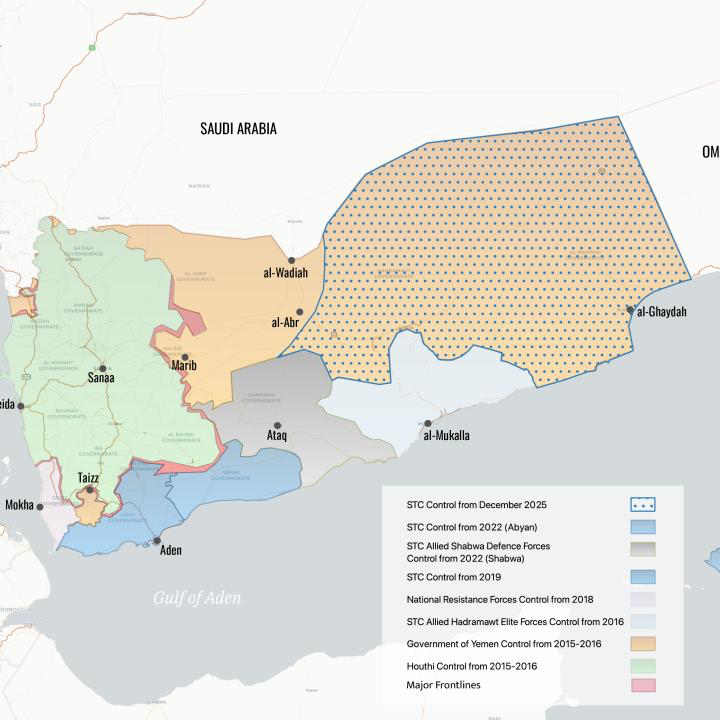
U.S. allies Saudi Arabia and the UAE are on a collision course in Yemen, as local forces threaten to reopen a war that could boost the Houthis, deepen Red Sea instability, and otherwise undermine the Trump administration’s Middle East goals.
Meanwhile, Yemen’s humanitarian catastrophe has reached a point beyond repair through emergency aid alone. Years of war have destroyed state institutions, shattered the economy, displaced millions, and deprived an entire generation of education, healthcare, and opportunity. Even a lasting ceasefire will not restore a centralized system that has repeatedly failed to govern Yemen’s deeply diverse society.
This is why Yemen’s stabilization requires more than ceasefires and fragile power-sharing arrangements. A realistic path forward may lie in federalism—one that recognizes Yemen’s regional, political, and social realities while preserving the country’s territorial integrity. Federal governance could reduce zero-sum struggles for control of the central state, empower local administrations, and limit external manipulation by making armed dominance less rewarding.
Federalism is not a perfect solution. But clinging to an unworkable centralized model is far more dangerous. Without a new political framework, Yemen risks permanent fragmentation—transforming it into a long-term proxy battleground and a chronic source of Gulf instability.
Ending the Yemen crisis is no longer just a humanitarian obligation; it is a strategic imperative. Failure to act decisively now risks a Saudi-UAE rupture, deeper Iranian entrenchment, and a wider Middle East conflict whose consequences would extend far beyond Yemen’s borders. The time for half-measures has passed. The cost of delay will be paid not only by Yemen, but by the entire region.
