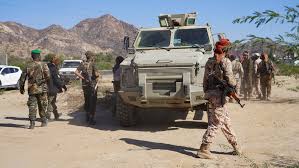
Members of the forces of Yemen’s main separatist group, the Southern Transitional Council, gather in a mountainous area where they are launching a military operation in the southern province of Abyan, Yemen, December 15, 2025. REUTERS/Stringer
U.S. allies Saudi Arabia and the UAE are on a collision course in Yemen, as local forces threaten to reopen a war that could boost the Houthis, deepen Red Sea instability, and otherwise undermine the Trump administration’s Middle East goals.
The Saudi-led coalition in Yemen warned Saturday it would immediately respond to any military movements of separatists backed by the United Arab Emirates that undermine de-escalation efforts in the southern region of the country, as the United States urged diplomacy.
“Any military movements that violate these efforts will be dealt with directly and immediately in order to protect civilian lives and ensure the success of restoring calm,” said Brig. Gen. Turki al-Maliki, a coalition spokesman, according to the Saudi Press Agency.
Al-Maliki also accused the Southern Transitional Council separatists of “serious and horrific human rights violations against civilians,” without providing evidence.
This came a day after separatists accused Saudi Arabia of targeting their forces with airstrikes, something not formally acknowledged by the kingdom, whose relations with the UAE have been strained due to STC actions.
U.S. Secretary of State Marco Rubio said in a statement Saturday that his country was “concerned by recent events in southeastern Yemen” and urged restraint and diplomacy to reach “a lasting solution.” He also expressed gratitude “for the diplomatic leadership of our partners, the Kingdom of Saudi Arabia and the United Arab Emirates.”
Yemen, engulfed in a civil war for more than a decade, has the Iran-backed Houthis controlling much of the northern regions, while a Saudi-UAE-backed coalition supports the internationally recognized government in the south. However, the UAE also backs the southern separatists who call for South Yemen to secede once again from Yemen.
The Council moved earlier this month into Yemen’s governorates of Hadramout and Mahra and seized an oil-rich region. That had pushed out forces affiliated with the Saudi-backed National Shield Forces, another group aligned with the coalition in fighting the Houthis.
On Friday, the STC rejected a Saudi call to withdraw from areas it seized earlier in December, saying it would continue securing the eastern provinces of Hadramout and Mahra.
Saudi Defence Minister Prince Khalid bin Salman urged the STC in a post on X to respond to mediation efforts and resolve disputes by consensus.
“It is time for the STC to respond to Saudi-Emirati mediation efforts by ending escalation, withdrawing forces from camps in the two provinces (Hadramout and Mahra) and handing them over peacefully” to local authorities, the minister said.
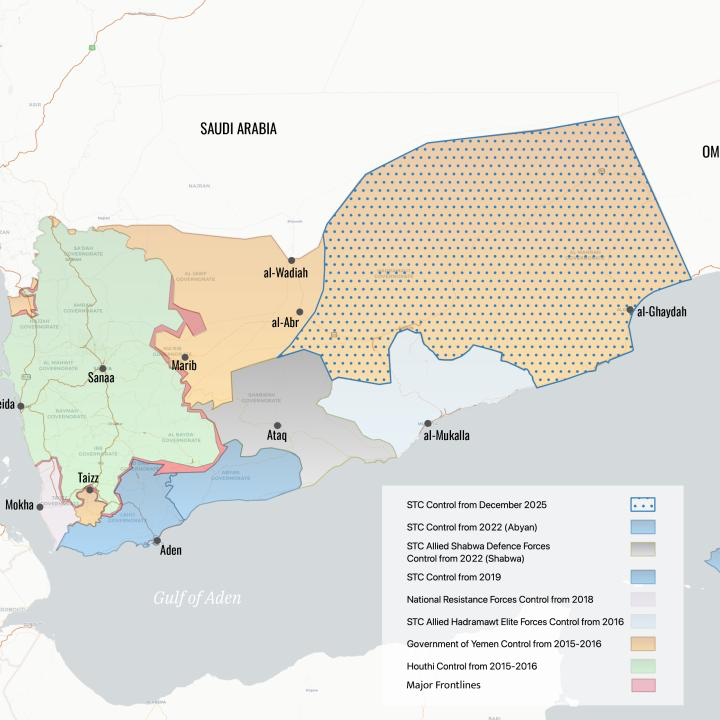
U.S. allies Saudi Arabia and the UAE are on a collision course in Yemen, as local forces threaten to reopen a war that could boost the Houthis, deepen Red Sea instability, and otherwise undermine the Trump administration’s Middle East goals.
“The southern issue will remain present in any comprehensive political settlement and must be resolved through consensus, honoring commitments and building trust among all Yemenis, not through adventurism that serves only the enemy of all,” he added.
AP/ Reuters/ Washington Institute
