BY Vlad Green, opp-Ed
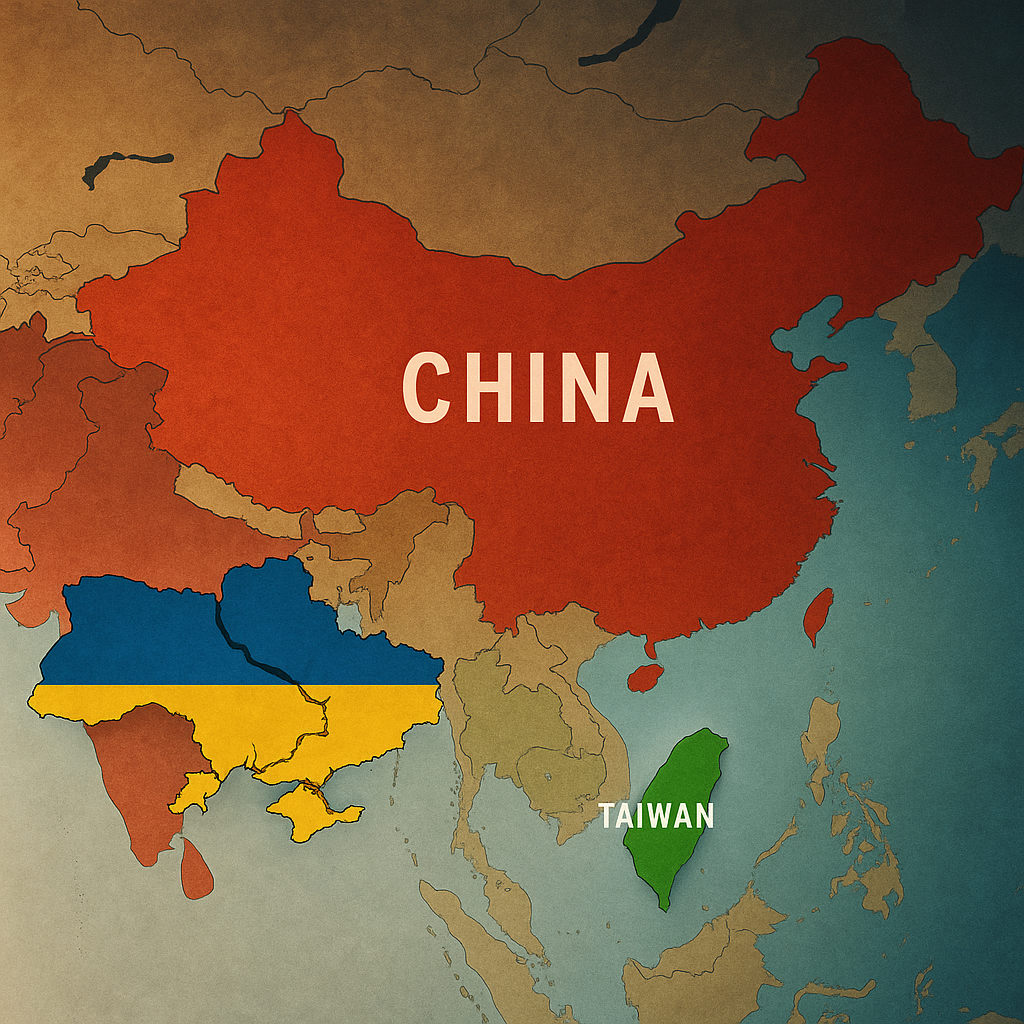
History rarely repeats itself in the same form, but it almost always repeats the lesson. Today, that lesson is unfolding in Ukraine—and Taiwan, along with the rest of Asia, is watching closely.
Any so-called peace plan that pressures Ukraine to surrender territory to Russia in exchange for an end to the war would be more than a betrayal of a sovereign nation. It would establish a dangerous precedent: that aggression pays, borders are negotiable by force, and democratic nations can be coerced into submission for the sake of short-term calm.
For Beijing, this would be an invitation.
China does not view the war in Ukraine as a distant European conflict. It sees it as a test case. If Russia can invade a democratic neighbor, absorb sanctions, commit atrocities, and still walk away with land under the banner of “peace,” the lesson for authoritarian regimes is unmistakable: persistence beats principle.
That lesson would apply directly to Taiwan.
Beijing portrays Taiwan as a “domestic issue,” but its ambitions extend far beyond the island. China has already established itself as the primary bully of Asia—pressuring Japan around the Senkaku Islands, harassing Philippine vessels in the South China Sea, coercing Vietnam, threatening South Korea, and engaging in repeated military standoffs with India along their disputed Himalayan border. These actions are not isolated incidents or misunderstandings; they are part of a deliberate strategy to rewrite regional norms through intimidation, economic coercion, and incremental force.
If China is allowed to take Taiwan, every country in Asia will feel the shock. Japan’s southern islands would become exposed. The Philippines would face even more aggressive encroachment. Southeast Asian nations would be forced to choose between rapid militarization or political submission. The message would be unmistakable: resistance is punished, alliances are unreliable, and international law offers no protection against raw power. Taiwan’s fall would not stabilize Asia—it would terrorize it.
What has restrained China so far is not goodwill, but deterrence—the belief that the cost of aggression would outweigh the gains. That deterrence depends heavily on how the world responds to Russia’s invasion of Ukraine. If Ukraine is forced to trade land for peace, Beijing will conclude that the West ultimately chooses quiet over credibility.
This is not diplomacy; it is appeasement dressed up as pragmatism.
Hong Kong already showed the world what happens when authoritarian promises go unchallenged. Ukraine now stands as the frontline defense of the post-World War II international order. If it is sacrificed for expediency, Taiwan will not be far behind—and neither will Asia’s fragile balance of power.
Defending Ukraine’s sovereignty is not only about Europe. It is about preserving a global red line: that borders cannot be changed by force and that bullies cannot be rewarded for aggression.
If that line collapses in Ukraine, the next crisis will not be a question of if, but where. And Taiwan will be first—followed by a region holding its breath.
